A printmaking press is essential for artists expanding into handmade products because it helps you produce consistent, professional-quality prints efficiently. Modern presses feature digital controls and eco-friendly materials, making it easier to adjust pressure, align designs, and reduce environmental impact. Whether you’re working on small or large projects, a press streamlines your workflow and guarantees high-quality results every time. Keep exploring to discover how the right press can elevate your craft even further.
Key Takeaways
- Choose a press size and type suitable for your product scale and detail complexity.
- Consider modern presses with digital controls for precise, consistent print results.
- Opt for eco-friendly materials to align with sustainable practices and reduce environmental impact.
- Ensure the press supports your preferred printmaking techniques, like etching or lithography.
- Use digital integration to streamline workflow and easily transfer artwork for handmade product production.

A printmaking press is an essential tool that transforms your artwork into a polished, professional print. Whether you’re moving from digital design to handmade production or looking to add a tactile element to your work, understanding the basics of a press helps you achieve consistent, high-quality results. Modern presses often incorporate digital integration, allowing you to connect your devices for precise adjustments and even automate parts of the process. This integration makes it easier to replicate complex designs or make quick modifications without sacrificing quality. Additionally, many presses are now designed with eco-friendly materials, aligning your craft with sustainable practices and reducing environmental impact. Choosing a press built with recycled or biodegradable components not only benefits the planet but also enhances your reputation as an environmentally conscious artist.
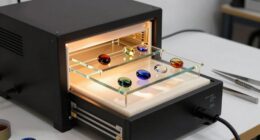
A modern printmaking press combines digital precision and eco-friendly materials for professional, sustainable results.
When you’re selecting a press, consider its size and capacity. Smaller presses are ideal for detailed, delicate prints or limited editions, while larger presses suit bigger projects or multiple prints at once. The type of press matters, too—manual presses like etching or lithography presses give you hands-on control, whereas automated or semi-automated models can save time and effort. If you’re expanding into handmade products, investing in a versatile press that supports various techniques is a smart move. Look for features that allow easy adjustments, ensuring you can switch between different materials and mediums seamlessly.
Digital integration isn’t just about ease; it offers precision. Some modern presses feature digital controls for pressure and alignment, ensuring each print is consistent. This consistency is vital when you’re producing a series of handmade products for sale or exhibition. Plus, digital features can include connectivity with design software, enabling you to transfer artwork directly to the press without manual input, reducing errors and saving time. Incorporating digital control systems into your workspace can also streamline your workflow and improve productivity.
Eco-friendly materials in press construction are more than a trend—they reflect a commitment to sustainability. Materials like bamboo, recycled steel, or biodegradable plastics are becoming more common, reducing the carbon footprint of your studio. Using eco-conscious materials also ensures your workspace remains healthier, with fewer fumes and toxins. When you combine digital integration with eco-friendly design, you get a press that not only produces beautiful prints but also aligns with your values as a responsible artist.
In essence, a modern printmaking press equipped with digital features and constructed from eco-friendly materials empowers you to expand your craft confidently. It streamlines your process, enhances the quality of your prints, and supports sustainable practices—all vital elements as you venture into creating handmade products that stand out.

PreAsion Etching Press Machine Etching Printing Press Printmaking Letterpress Machine Printmaking Rubbing Machine Plaster Wood Paper Slab Roller Size: 28 * 10cm (11 * 3.9 ")
- Size and Stability: Moderate size with adjustable feet
- Adjustable Roller: Roller height adjustable up to 4cm
- Roller Dimensions: 11 x 3.9 inches for better printing
As an affiliate, we earn on qualifying purchases.
As an affiliate, we earn on qualifying purchases.
Frequently Asked Questions
How Do I Choose the Right Press for My Artwork?
To choose the right press for your artwork, start by considering your desired press bed size—ensure it fits your largest pieces comfortably. Next, evaluate the press type, such as etching presses or proofing presses, based on your printmaking techniques. Think about your budget and space, and opt for a sturdy, reliable model that matches your skill level. This way, you’ll find a press that enhances your creative process effectively.
What Safety Precautions Are Necessary When Operating a Press?
To guarantee press safety and prevent injury, always wear protective gear like gloves and safety glasses. Keep your hands clear of moving parts and never rush the process. Regularly inspect the press for worn or damaged components, and ensure it’s properly maintained. Follow manufacturer instructions carefully, and stay focused during operation. These precautions help you avoid accidents, maintain a safe workspace, and keep your creative process smooth and injury-free.
How Do I Maintain and Clean My Printmaking Press?
Did you know that regular maintenance can extend your press’s lifespan by up to 30%? To keep it in top shape, regularly clean the press bed alignment and make certain it’s free of debris. Wipe down the ink roller maintenance with a mild solvent to prevent ink buildup, which can affect print quality. Lubricate moving parts sparingly, and always follow your manufacturer’s cleaning instructions for best results.
Can I Use a Printmaking Press for Materials Other Than Paper?
Yes, you can use your printmaking press for alternative materials besides paper, such as fabric, metal, or plastic. Just verify the materials are compatible with your press’s pressure and size limits. Using different materials allows you to create unique textures and artistic effects that aren’t possible with traditional paper. Always test small pieces first, and adjust pressure as needed to achieve the desired artistic textures without damaging your press or materials.
What Are Common Troubleshooting Issues With Printmaking Presses?
You might encounter issues like uneven ink transfer or misaligned prints. Check your press alignment regularly to guarantee even pressure across your material. If the ink isn’t transferring properly, verify that your inking process is consistent and the pressure is appropriate. Also, inspect for worn rollers or damaged plates. Proper maintenance and adjustments help resolve common troubleshooting issues, leading to cleaner prints and more consistent results.
Conclusion
Now that you understand the basics of printmaking presses, you’re ready to expand your creative horizons with handmade products. Did you know that the global art print market is projected to grow at a CAGR of 4.5% through 2027? This growth offers exciting opportunities for artists like you to turn your passion into a thriving business. So, keep experimenting, refining your techniques, and embracing new possibilities—your unique prints could soon find a wide and enthusiastic audience.