
To shape rug results, you need a sturdy, adjustable frame that provides stability and even tension, ensuring your rug remains symmetrical and free of wrinkles. Use cloth as a backing to secure edges and make subtle adjustments, while specialized trimming tools like scissors and rotary cutters help refine borders and intricate details. Finishing touches with edge treatments improve durability and overall appearance. If you keep exploring, you’ll uncover even more tips to perfect your rug-making process.
Key Takeaways
- The frame provides stability and even tension to ensure precise shaping and symmetrical patterns in rug creation.
- Cloth acts as a backing or overlay to secure edges and facilitate subtle dimension adjustments.
- Trimming tools like scissors and rotary cutters are essential for shaping, straightening, and finishing rug borders.
- Proper edge finishing techniques enhance durability and give the rug a polished, professional appearance.
- Using the right frame, cloth, and trimming tools together results in more accurate, vibrant, and durable decorative rugs.
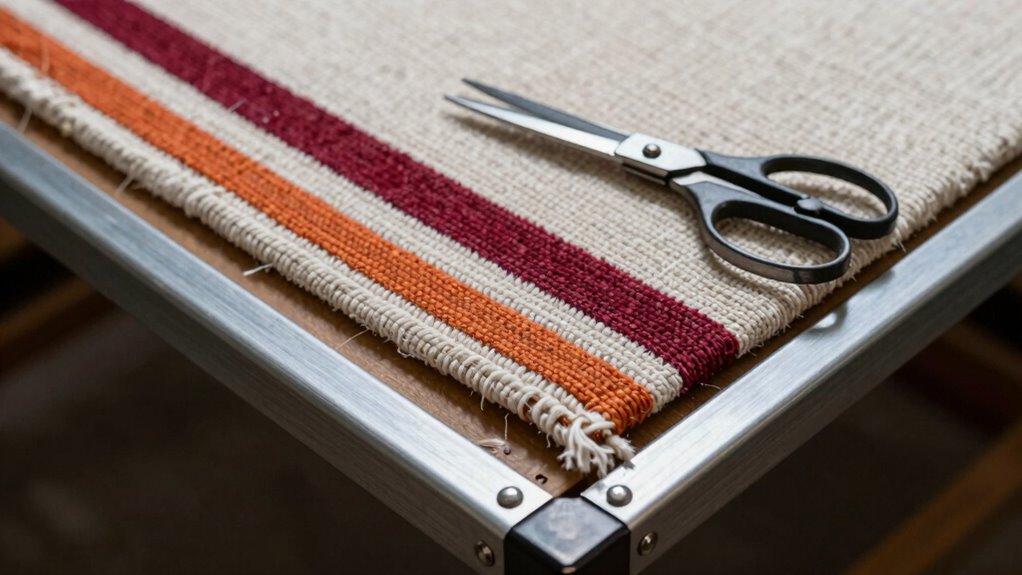
Shaping rugs to achieve the perfect fit or design requires the right tools and techniques. Whether you’re creating a custom piece or refining an existing one, understanding how to manipulate the rug’s shape is essential. One key aspect involves using the proper frame, cloth, and trimming tools to bring your vision to life. The frame acts as the foundation, providing stability and tension during the shaping process. A sturdy, adjustable frame ensures you can stretch the rug evenly, preventing wrinkles and distortions. This is especially important when working with decorative rug patterns, as maintaining symmetry and precise designs is critical.
Using an adjustable frame ensures even stretching and maintains symmetry in decorative rug designs.
Cloth, often used as a backing or overlay, plays an indispensable role in the shaping process. It helps secure the rug’s edges and can be used to adjust the rug’s dimensions subtly. When working with vibrant or complex decorative patterns, you might also incorporate specialized fabrics that allow for better dye absorption or color retention. This is where rug dyeing techniques come into play. If you’re adding color or modifying existing hues, understanding how different dyes interact with your fabric and fibers ensures your decorative rug patterns stay vibrant and true to your vision. Proper dyeing techniques also enable you to create gradients or subtle shading effects that enhance the overall design. Additionally, mastering dyeing techniques can help you achieve more intricate and customized decorative effects. Being familiar with fiber types and their responses to dyes can further improve your results and prevent unintended color shifts.
Trimming tools are the finishing touch, helping you refine the rug’s shape and edges once the main work is done. Sharp scissors, rotary cutters, or specialized trimming knives allow you to carefully cut away excess material, straighten uneven borders, or shape intricate details. When working with decorative patterns, precise trimming ensures that the design remains crisp and well-defined. You’ll want to pay particular attention to the edges, as they frame the entire piece and influence its overall aesthetic. Using the right trimming tools prevents fraying and gives your finished rug a polished, professional look. Proper edge finishing techniques are also crucial for durability and a clean appearance. Developing skills in trimming precision**** can significantly enhance your final product’s appearance and longevity.
Together, these tools—frames, cloth, and trimming implements—are essential for shaping rugs with precision. They help you maintain control over the dimensions, color, and details of your project. Mastering their use gives you the flexibility to experiment with decorative rug patterns, incorporate unique dyeing techniques, and achieve a final result that’s both beautiful and functional. Whether you’re customizing a small accent piece or crafting a large statement rug, the right tools empower you to execute your creative ideas with accuracy and confidence. Developing a good understanding of rug shaping techniques can significantly improve your overall results.

Lezbanz Rug Tufting Frame Kit with Aluminum Nails for Extra Firm Fixing, Tufting Cloth Stand, Adjustable Rug Tufting Frame for Rug Making, Suitable for Beginners & Lovers (55''H×47''L)
- High-Quality Aluminum Nails: Strong, wear-resistant clamping for tufting cloth
- Stable & Lightweight Frame: Made of premium aluminum alloy for durability and ease of movement
- Easy Assembly: Includes hardware and instructions for quick setup
As an affiliate, we earn on qualifying purchases.
As an affiliate, we earn on qualifying purchases.
Frequently Asked Questions
How Do I Choose the Right Frame Size for My Rug?
You should choose a frame size based on your rug’s weaving techniques and traditional patterns. Measure the area where you want the rug, then add extra space for fringes and borders. If you’re replicating traditional patterns, make certain the frame accommodates the detailed designs without distortion. Select a sturdy, appropriately sized frame that supports your weaving process, allowing you to maintain consistent tension and achieve the desired rug shape and size.
What Types of Cloth Are Best for Rug Backing?
You should choose rug backing materials that are durable and compatible with your fabric adhesion techniques, like latex or felt, which provide strong adhesion and stability. Opt for natural fabrics like burlap or cotton for a breathable backing, or synthetic options for added durability. Consider your rug’s use and environment to select the best backing, ensuring it remains securely attached and maintains its shape over time.
Can Trimming Tools Damage Delicate Rug Fibers?
Yes, trimming tools can damage delicate rug fibers if you’re not careful. Fiber sensitivity varies, so using the wrong trimming techniques might cut or fray fibers, weakening the rug’s structure. To avoid this, you should use sharp, precise tools and gentle motions tailored to the specific fibers. Always test on a small area first, and take your time to prevent accidental damage and maintain the rug’s integrity.
How Often Should I Replace My Rug Shaping Tools?
You should replace your rug shaping tools when they become dull or damaged, which can happen over time with frequent use. Sharp tools help you achieve precise cuts and maintain intricate designs, especially for detailed work like replicating historical rug patterns or using specific rug dye techniques. Regularly inspecting your tools guarantees you get clean edges and avoid damaging delicate fibers, maintaining the quality of your finished rug.
Are There Eco-Friendly Options for Rug Trimming Tools?
Yes, there are eco-friendly options for rug trimming tools. You can choose tools made from eco-friendly materials like bamboo, recycled metals, or biodegradable plastics. Look for sustainable trimming options that prioritize durability and minimal environmental impact. These tools reduce waste and are safer for the environment, so you can shape your rugs responsibly while maintaining quality. Switching to sustainable trimming options helps protect the planet without compromising your craft.
Conclusion
By mastering the frame, cloth, and trimming tools, you truly shape not just your rug’s appearance but its very essence. Some believe that the right tools alone determine a rug’s quality, but it’s your skill and intuition that bring it to life. While tools set the foundation, it’s your creativity and experience that transform raw materials into a masterpiece. Remember, even the best tools can’t replace the artistry behind each carefully crafted rug.