If your UV resin stays sticky after curing, it’s often due to insufficient UV exposure, incorrect mixing ratios, or environmental issues like humidity and temperature. Make sure you use a proper curing light for the right amount of time—usually 2-3 minutes per millimeter—and mix ingredients thoroughly. Proper storage and controlled conditions help too. Keep in mind, fixing or preventing this involves checking your setup; explore further to get flawless results.
Key Takeaways
- Inadequate UV exposure or incorrect curing time leaves resin tacky; ensure sufficient light intensity and proper duration.
- Poor mixing or incorrect resin-to-hardener ratios can prevent complete curing, causing stickiness.
- Low curing temperature or high humidity interferes with full hardening, resulting in a sticky surface.
- Insufficient curing time or light exposure for thick layers leaves resin partially cured and tacky.
- Proper storage, environmental control, and thorough curing practices prevent and fix sticky UV resin pieces.
Why Does My UV Resin Stay Sticky After Curing?
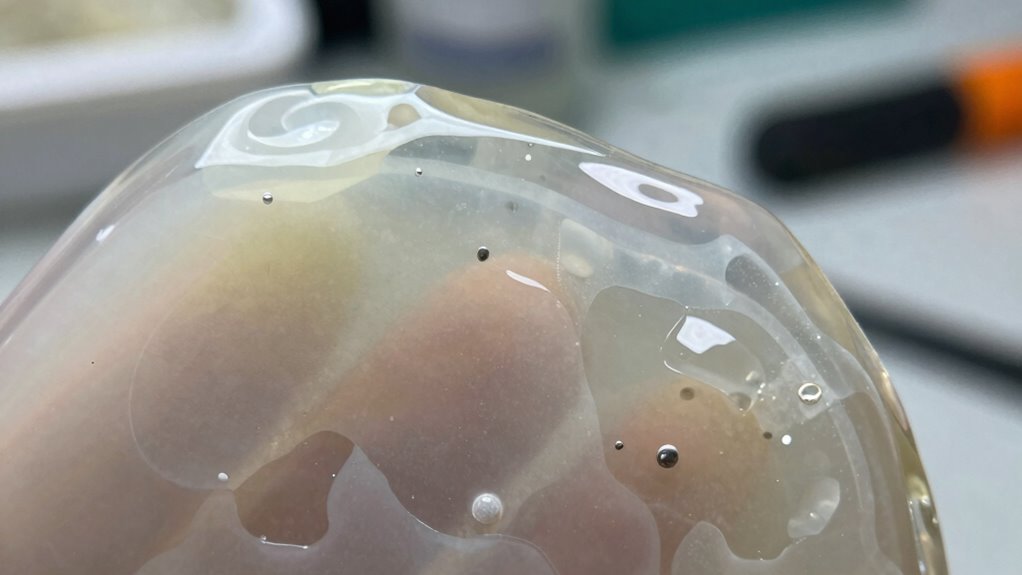
If your UV resin remains sticky after curing, it’s usually because the resin hasn’t fully hardened or the curing process was incomplete. Proper resin storage is crucial; keep it in a cool, dark place to prevent premature curing or degradation. Additionally, curing temperature plays a key role—if it’s too low, the resin may not cure fully, leaving a sticky surface. Make sure you cure your resin at the recommended temperature, typically around 60°C (140°F), to achieve ideal hardening. Avoid exposing resin to fluctuating temperatures or direct sunlight during storage or curing. Controlling environmental conditions and maintaining the correct curing temperature help prevent incomplete curing. Inadequate UV light exposure is another common cause of stickiness, so ensuring sufficient light exposure is essential. It is also beneficial to use a curing light with the appropriate wavelength and intensity to ensure complete polymerization, as the UV wavelength directly affects curing efficiency. Proper resin storage practices are vital to keep your resin in optimal condition and prevent curing issues.
What Causes UV Resin to Remain Sticky? (Mixing, Curing, Environment)
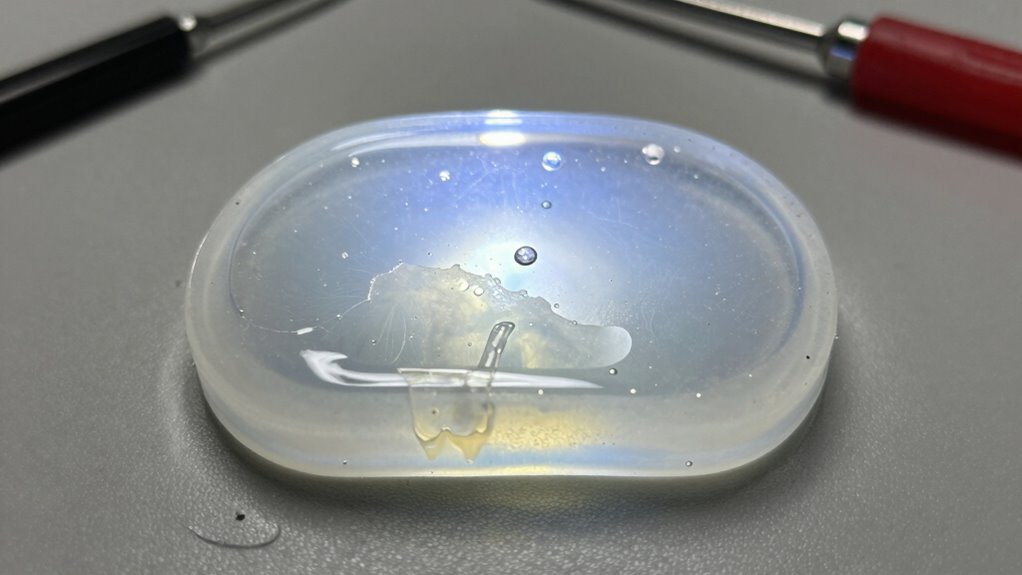
If your UV resin stays sticky after curing, it might be due to improper mixing or insufficient curing conditions. You could have missed a step in blending the components or didn’t expose it to enough UV light. Understanding these factors helps you troubleshoot and achieve a smooth, fully cured finish.
Improper Mixing Techniques
Poor mixing techniques are a common culprit behind UV resin remaining sticky after curing. If you don’t mix thoroughly, the resin’s consistency becomes uneven, leaving unreacted components that stay tacky. Proper mixing techniques ensure the resin’s ingredients blend seamlessly, promoting complete curing. To improve your process, consider these tips:
- Stir slowly and evenly to prevent introducing air bubbles.
- Use a clean, flat surface to mix consistently.
- Mix for the recommended time to achieve uniform resin consistency.
Skipping or rushing these steps can leave pockets of unmixed resin, resulting in a sticky finish. Mastering proper mixing techniques helps ensure your UV resin cures fully, giving you a smooth, glossy final piece.
Inadequate Curing Conditions
Inadequate curing conditions are a common reason why UV resin remains sticky even after exposure to light. If your resin isn’t stored properly or the curing temperature is too low, it won’t cure fully. Proper resin storage involves keeping it in a cool, dark place to prevent premature curing or degradation. The curing temperature should be _ideal_, usually between 20°C and 25°C, to _guarantee_ complete polymerization. Here’s a visual to help you understand:
| Condition | Impact |
|---|---|
| Resin storage | Exposure to heat or light causes incomplete curing |
| Curing temperature | Too low prevents proper hardening |
| Exposure time | Insufficient time leaves resin sticky |
| Environment humidity | High humidity can interfere with curing |
Additionally, ensuring proper mixing of the resin components is crucial because improper mixing can lead to incomplete curing and a sticky finish. Avoid these pitfalls to achieve a smooth, fully cured finish.
How Do Mixing Ratios Affect Resin Curing?
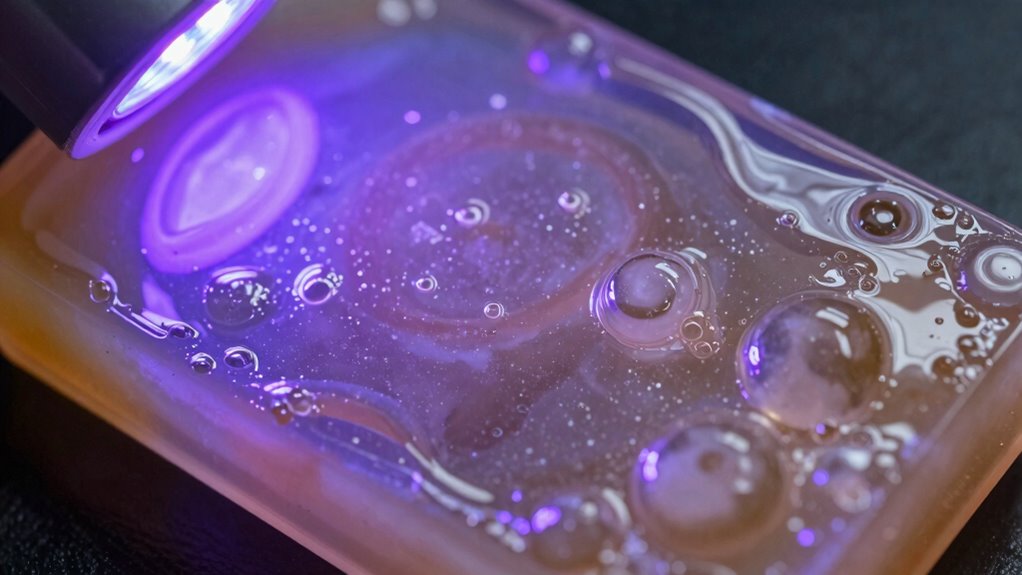
Using proper resin ratios guarantees your project cures evenly and fully. Overmixing can introduce air bubbles or alter the curing process, causing defects. Accurate measuring techniques help you maintain consistent results every time. Additionally, understanding smart appliance features can assist in achieving precise measurements and controlled curing conditions.
Proper Resin Ratios
The right resin-to-hardener ratio is essential for ensuring proper curing and ideal results in UV resin projects. If the ratio is off, your resin might stay sticky or fail to fully harden. Proper mixing affects resin color, ensuring clarity and vibrancy, and influences how the resin responds to curing temperature. When ratios are accurate, the resin cures evenly, with consistent color and transparency. Conversely, improper ratios can lead to uneven curing, dull color, or stickiness. To get it right, follow these guidelines:
- Measure carefully to maintain the recommended ratio.
- Adjust for curing temperature, as higher temperatures may require slight ratio modifications.
- Mix thoroughly to ensure uniform distribution without introducing air bubbles.
- Understanding resin ratios is crucial for achieving professional-looking results and avoiding common issues like stickiness or incomplete curing.
Impact of Overmixing
When you overmix resin, the effects on curing can be just as problematic as using the wrong ratio. Overmixing disrupts the mixing consistency, introducing too much air and causing uneven curing. This can result in sticky or cloudy surfaces and incomplete hardening. Environmental factors, like temperature and humidity, amplify these issues by affecting how the resin reacts during curing. If you stir too vigorously or for too long, you risk creating bubbles or inconsistent resin mixtures that won’t cure properly. To avoid these problems, mix gently and only until the components are thoroughly combined. Maintaining a steady, controlled environment helps guarantee your resin cures evenly and fully, preventing sticky patches and achieving a professional finish.
Measuring Techniques Accuracy
Accurate measurement of resin components is essential because even small deviations in mixing ratios can considerably impact curing quality. Precise measurement guarantees proper polymerization and prevents sticky or undercured pieces. To achieve measurement precision, consider these steps:
- Use high-quality digital scales calibrated regularly with certified calibration techniques to maintain accuracy.
- Employ standardized measuring tools like syringes or graduated cups for consistent ratios.
- Double-check your measurements before mixing to prevent errors caused by misreading or device drift.
- Understanding the importance of mixing ratios helps prevent issues like sticky resin and ensures a durable finish. Additionally, being aware of resin curing techniques can further improve your curing results and prevent common problems. Proper resin curing methods are crucial for achieving professional-quality pieces.
How Much UV Light Do I Need to Cure Resin?
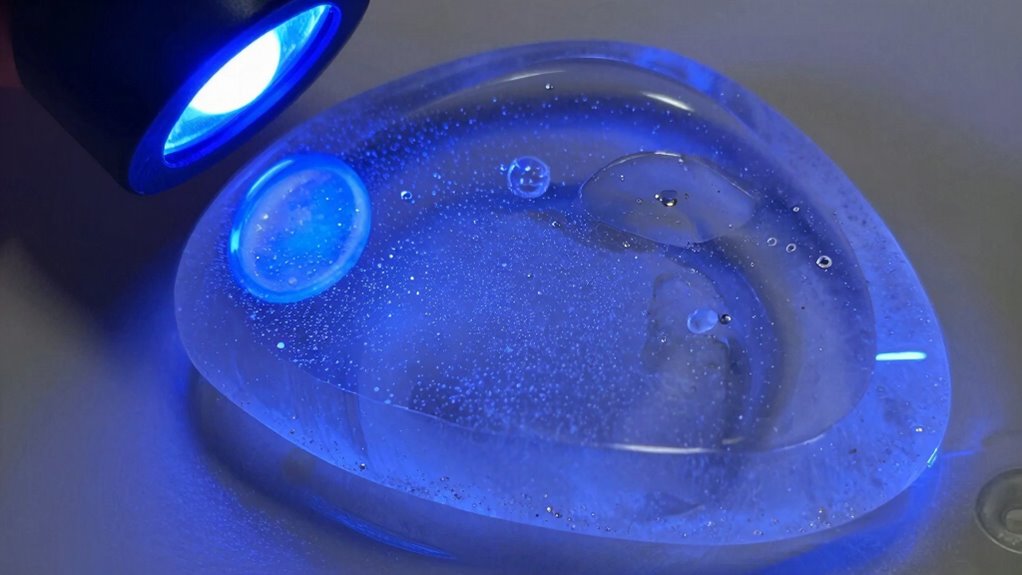
To guarantee your resin cures properly, you need to provide enough UV light to activate the polymerization process. The amount of UV light required depends on the UV light intensity and your resin’s transparency. Higher UV light intensity speeds up curing, so a stronger light source can reduce curing time. Resin transparency also plays a role; clearer resins allow UV light to penetrate deeper, ensuring thorough curing throughout. If your resin is cloudy or pigmented, it may need more exposure or stronger UV light to cure completely. Keep in mind that insufficient UV exposure leaves the resin sticky, while overexposure can cause brittleness. Adjust your UV light source based on resin type, transparency, and the desired curing speed for ideal results. Additionally, understanding UV light requirements is essential for achieving consistent curing outcomes.
How Long Should I Cure UV Resin for a Smooth Finish?
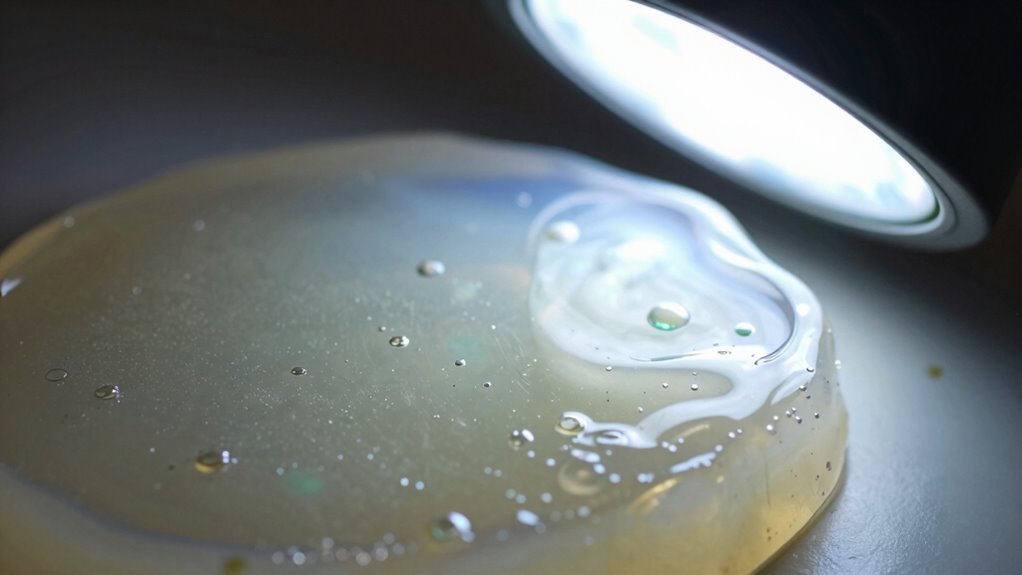
Achieving a smooth, glossy finish with UV resin depends largely on curing times. The proper duration ensures resin safety and *ideal* curing temperature, preventing stickiness. Overcuring can cause brittleness, while undercuring leaves a tacky surface. To get it right:
- Cure for 2-3 minutes per millimeter of resin thickness under UV light.
- Adjust curing time based on ambient temperature; higher temperatures can speed up curing.
- Use a reliable UV light source to ensure consistent resin safety and thorough curing.
- Regularly check your power tools and equipment for optimal performance during curing to avoid uneven results.
- Proper curing practices are essential to prevent residual tackiness and ensure a durable finish. Additionally, understanding how curing duration impacts the final appearance can help you fine-tune your process. Proper resin formulation can also influence curing behavior and surface finish. Monitoring UV light intensity is crucial to achieve consistent results and prevent under- or overexposure.
Always monitor your resin during curing to avoid under- or overexposure. Proper timing guarantees a smooth, glossy finish and minimizes stickiness, especially when temperature fluctuations affect curing speed.
How Can I Fix Sticky UV Resin Step-by-Step?
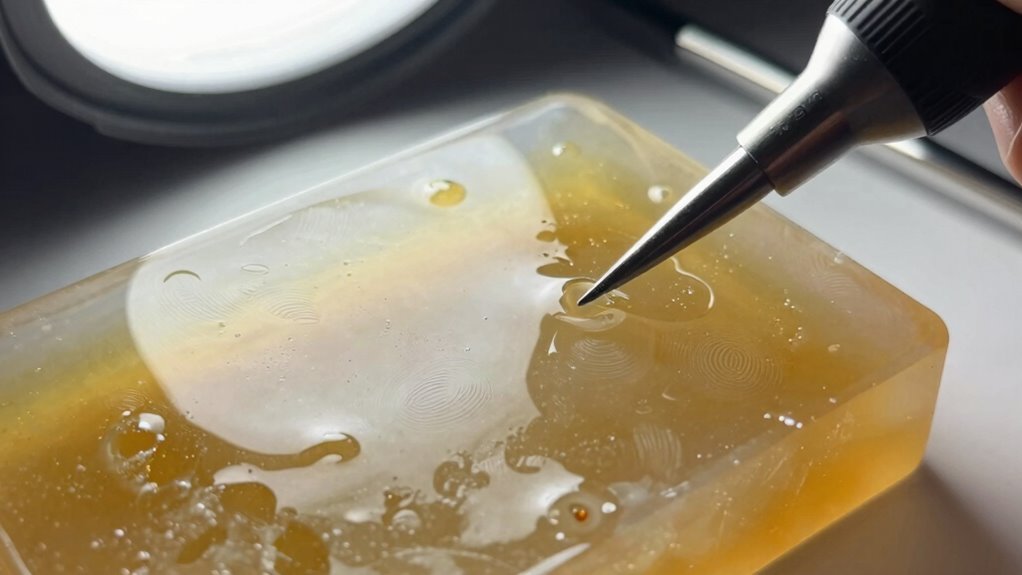
Sticky UV resin can be frustrating, but fortunately, you can fix it with a simple process. First, guarantee proper resin storage; keep your resin in a cool, dark place to prevent premature curing or degradation. Start by gently cleaning the surface of your piece with isopropyl alcohol to remove any uncured resin or surface contaminants. Use a soft cloth or brush for thorough surface preparation. If the resin remains sticky, cure it further under your UV light for an additional 30-60 seconds, ensuring even coverage. After curing, wipe again with alcohol if needed to remove any tacky residue. Proper surface preparation and correct storage are key to preventing stickiness, but if issues arise, this step-by-step approach helps restore your finished piece. Understanding UV resin curing can help you troubleshoot and improve your results more effectively. Additionally, familiarizing yourself with artistic techniques can enhance your overall resin crafting skills. To prevent future issues, always monitor your resin’s storage conditions and maintain your curing setup properly, including UV light intensity and exposure time. Being aware of resin formulation can also help you select the right type for your projects to avoid similar problems.
How to Prevent Sticky Residue in Future Projects
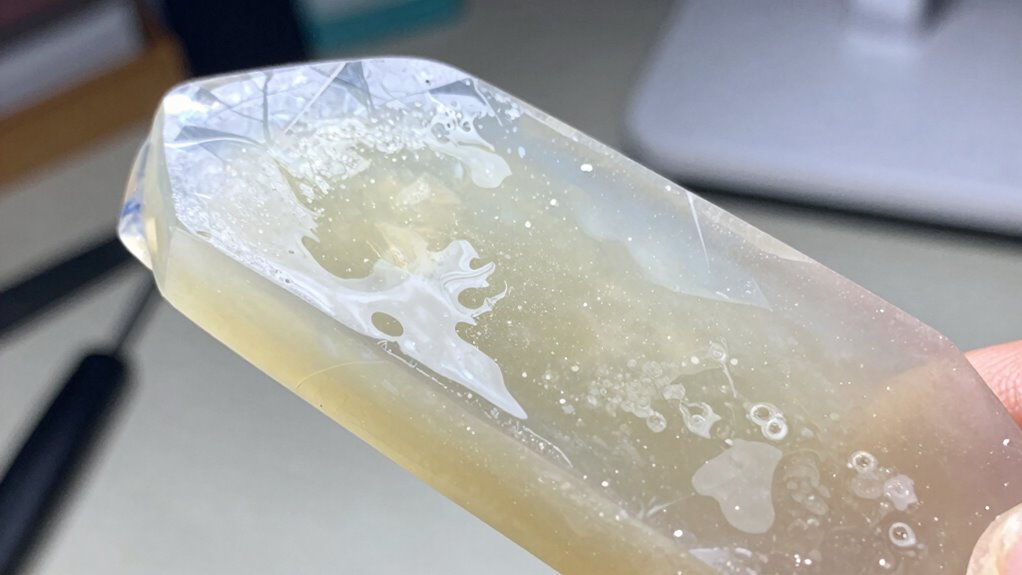
Preventing sticky residue in future UV resin projects starts with proper planning and preparation. First, verify you’re using high-quality resin and curing equipment that promotes complete curing. Proper resin safety practices include reading instructions carefully and mixing thoroughly to avoid incomplete polymerization. Using the correct curing process can help ensure even and thorough curing, reducing sticky patches. Second, always work in a dust-free environment to prevent contaminants from interfering with curing. Third, follow recommended curing times and use the correct light intensity; under-curing often leaves residues. Additionally, monitor your curing equipment regularly to maintain consistent output. Consistent curing techniques can significantly reduce the risk of sticky surfaces. Ensuring proper ventilation during curing can also help dissipate any residual chemicals and improve curing quality. Furthermore, understanding cybersecurity principles can assist in protecting your equipment and digital tools from vulnerabilities that could affect your curing setup. By adhering to these steps, you minimize the risk of sticky residues. Proper preparation and equipment maintenance are key to achieving smooth, fully cured pieces and avoiding future issues with sticky surfaces.
When Should I Seek Help or Replace Resin Supplies?
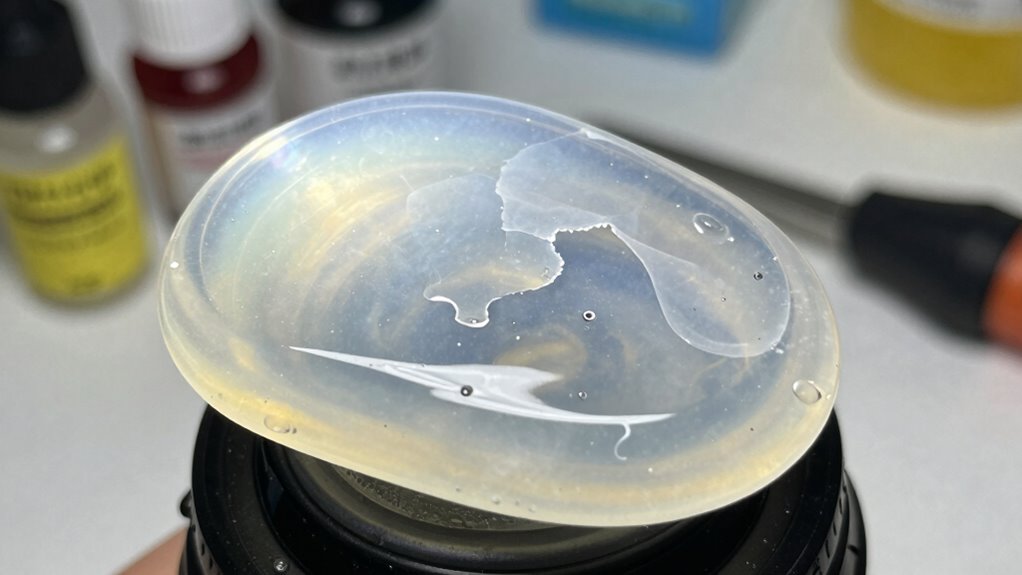
Knowing when to seek help or replace your resin supplies can save you time and frustration. If your resin’s quality has decreased—such as thickening, discoloration, or uneven curing—it’s a sign the supplies may be expired or compromised. Additionally, an unsuitable curing environment, like excessive heat, humidity, or poor light exposure, can cause sticky or under-cured pieces. If you’ve tried adjusting your process but still encounter issues, it’s time to substitute your resin or upgrade your curing setup. Relying on fresh, high-quality resin ensures better results. Always check the manufacturer’s recommended shelf life and storage instructions. When problems persist despite troubleshooting, replacing supplies or improving your curing environment is the best way to achieve smooth, fully cured projects.
Frequently Asked Questions
Can Temperature Affect UV Resin Curing Times and Stickiness?
Yes, temperature effects can influence UV resin curing times and stickiness. Higher temperatures typically speed up curing, making your pieces set faster and reducing stickiness. Conversely, cooler temperatures slow down curing, which can cause incomplete hardening and sticky surfaces. To get the best results, make certain you work in a warm, well-lit environment, or use a UV curing lamp with sufficient power to optimize curing speed and prevent stickiness.
Does the Type of UV Light Source Impact Curing Effectiveness?
Your UV light source dramatically influences curing effectiveness, like a lighthouse guiding ships through fog. Different UV lights emit varying UV light spectrum ranges, affecting resin penetration and curing speed. A high-quality UV light guarantees thorough resin curing, reducing stickiness. Lower-quality or incorrect UV sources may lack sufficient UV spectrum, leading to incomplete curing. Always select a UV light designed for resin curing to achieve perfectly hardened pieces without stickiness.
Are There Specific Additives to Prevent Sticky Residues?
You can add resin additives designed to improve curing and reduce stickiness, but be cautious of curing inhibitors that may slow down the process. Look for additives specifically formulated for UV resin to enhance curing without compromising clarity or finish. Always follow the manufacturer’s instructions, and test small amounts first to verify they don’t interfere with the curing process or cause unwanted residues.
How Does Humidity Influence UV Resin Curing?
Humidity impact can turn your UV resin project into a foggy mirror, as moisture interference slows or halts curing. High humidity introduces unseen moisture that competes with UV light, leaving your piece sticky and dull. To keep your creations flawless, work in a dry environment, use silica gel packs, and guarantee proper ventilation. Managing humidity levels helps your resin cure smoothly, transforming sticky messes into crystal-clear masterpieces.
Is It Safe to Re-Cure Sticky Resin With Additional UV Light?
Yes, you can re-cure sticky resin with additional UV light, but you should consider resin safety first. Make sure the resin is compatible with re-curing, as some may degrade or emit fumes. Extending the curing process helps solidify the resin, but only if done carefully. Always work in a well-ventilated area and follow manufacturer instructions to guarantee safe resin handling and effective curing.
Conclusion
If your UV resin stays sticky, it’s likely due to incomplete curing or mixing errors. Some believe a thin, even layer and proper UV light exposure can fix this, but recent studies suggest that thicker layers or insufficient light actually cause curing issues. So, always guarantee you follow the recommended curing time, use quality resin, and apply light evenly. With patience and correct technique, you can achieve a smooth, durable finish every time.