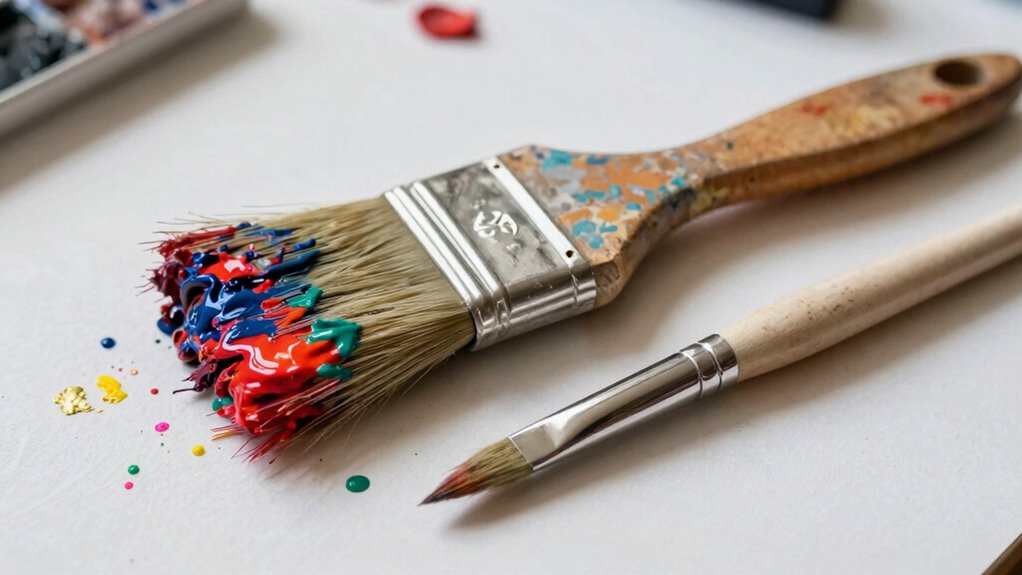

You might find that cheap brushes sometimes outperform expensive ones because their simple design and dense bristles guarantee even paint distribution and easier control. Proper maintenance and technique can also make a big difference, regardless of price. High-quality materials aren’t always necessary for a smooth finish if you choose the right brush and take care of it. Keep exploring to discover how tools you pay less for can often deliver surprisingly great results.

Get business pricing on tools and workshop supplies
- Business-only prices and quantity discounts
- Tax-exempt purchasing
- Multiple users, one account, clear invoices
Key Takeaways
- Proper maintenance and cleaning can extend the lifespan of inexpensive brushes, enhancing their performance over time.
- Simple, durable designs in budget brushes reduce shedding and improve reliability during use.
- Synthetic bristles in cheap brushes are often more durable and easier to handle than fragile natural bristles in expensive ones.
- Technique and correct application can compensate for lower-cost tools, achieving smooth finishes comparable to expensive brushes.
- Cost-effective brushes with dense bristles can provide even paint distribution, sometimes outperforming pricier options.
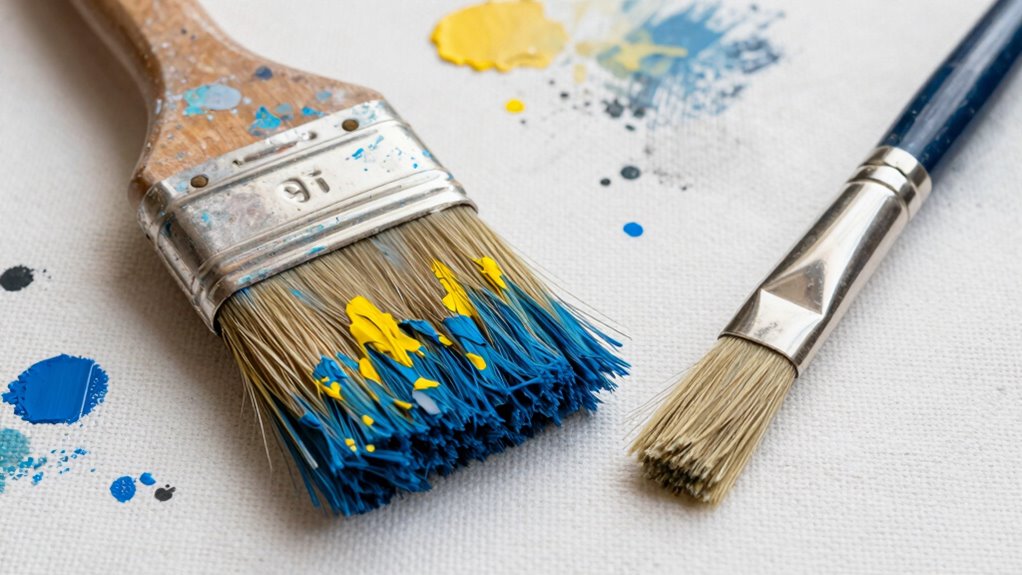
When it comes to painting supplies, many assume that spending more guarantees better results, but that’s not always the case. Cheap brushes can often outperform their expensive counterparts, especially when it comes to specific projects or personal preferences. The key lies in understanding what makes a brush effective: brush durability and paint application. While high-end brushes may seem appealing, they don’t automatically ensure superior performance. Sometimes, a less costly brush can deliver just as much, if not more, depending on how you use it.
Brush durability is a significant factor. Expensive brushes are often made with high-quality bristles designed to last through many projects, but they can also be fragile if mishandled. Conversely, some budget-friendly brushes are surprisingly tough, especially when used correctly. For example, synthetic brushes are often quite durable and resist wear better than you might expect, especially if you’re working with latex or water-based paints. Proper cleaning after each use can extend their lifespan, making them more cost-effective over time. So, don’t dismiss cheap brushes outright—they can hold up well if you treat them right. Additionally, understanding the materials used in brushes, like synthetic versus natural bristles, can influence their durability and performance. Recognizing brush design and how it affects your work can help you make smarter choices regardless of the price.
Synthetic brushes are surprisingly durable and ideal for water-based paints with proper cleaning.
Knowing how to select the right brush type for your project is also crucial, as different designs can impact the ease and quality of your work. Paint application is another area where cheaper brushes can shine. You might think that pricier brushes create smoother finishes, but that’s dependent on the brush’s design and your technique. Some inexpensive brushes feature densely packed bristles that help distribute paint evenly, leading to a clean, professional look. The shape and stiffness of the bristles matter more than the price tag. For detail work or small projects, a basic brush with firm bristles might be easier to control than a costly, overly delicate one. Plus, cheaper brushes tend to have simpler designs, reducing the chance of shedding bristles mid-application—an annoyance that can ruin a paint job. Proper brush maintenance can further enhance the performance and longevity of budget-friendly options, making them even more valuable for your projects.
Ultimately, the choice of brush depends on your project and how you handle your supplies. A cheap brush, if chosen wisely and maintained properly, can give you excellent paint application results and last through multiple uses. You don’t need to spend a fortune to get good coverage or a smooth finish. Instead, focus on selecting a brush that fits your needs and taking care of it. Clean it properly after each use, store it correctly, and it will serve you well regardless of its price. Sometimes, the best tool isn’t the most expensive; it’s the one you understand and know how to use effectively.
As an affiliate, we earn on qualifying purchases.
Frequently Asked Questions
Do Cheaper Brushes Last Longer Than Expensive Ones?
Cheaper brushes usually don’t last longer than expensive ones because their brush durability is often lower. The material quality in budget brushes tends to be inferior, causing bristles to fray or fall out sooner. If you want a brush that lasts, invest in higher-quality materials and better construction. While it might cost more upfront, you’ll find your brushes stay in good shape longer, making them more cost-effective over time.
Can Inexpensive Brushes Be Used for Professional Art Projects?
Yes, inexpensive brushes can be used for professional art projects if they have quality brush material and ergonomic design. Look for brushes with good bristles that hold paint well and maintain their shape. An ergonomic design helps you work comfortably for longer periods. While they might not last as long as pricier options, choosing the right materials and design guarantees your work stays consistent and professional, regardless of cost.
How Do I Clean and Maintain Cheap Brushes?
You get what you pay for, but with cheap brushes, proper cleaning techniques can extend their life. Rinse brushes immediately after use, gently reshape the bristles, and avoid soaking them for too long. Use mild soap or brush cleaner to preserve bristle integrity. Store them flat or hanging to prevent damage. Good maintenance boosts brush longevity, ensuring your tools stay effective and ready for your next masterpiece.
Are There Specific Brands That Offer Better Cheap Brushes?
Some brands stand out for offering better cheap brushes because of their consistent quality assurance and positive brush brand comparisons. Look for reputable brands like Princeton, Winsor & Newton, or Royal & Langnickel, which are known for affordable yet reliable brushes. These brands often provide better durability and performance, making them a smart choice if you’re seeking budget-friendly options without compromising quality. Always check reviews to guarantee you’re getting the best value.
Do Cheap Brushes Work Better With Certain Paints or Mediums?
Ever wondered if cheap brushes perform better with certain paints or mediums? They often do, especially with acrylics or watercolors, because their brush compatibility and paint absorption are suited to these mediums. Less expensive brushes tend to absorb more paint, reducing waste and allowing for smoother application. If you’re working with quick-drying or fluid paints, a cheap brush might serve you better, providing control and ease that more expensive brushes sometimes lack.
Conclusion
So, next time you pick up a brush, remember it’s not just about the price tag. Sometimes, a humble tool can paint your masterpiece better than the costly one. Think of your brushes as your trusted allies—what matters most is the connection you build with them. In the end, it’s not the shine of the handle but the stroke of your hand that truly brings your vision to life. Trust your touch.
Fall Picks
fall essentials
As an affiliate, we earn on qualifying purchases.