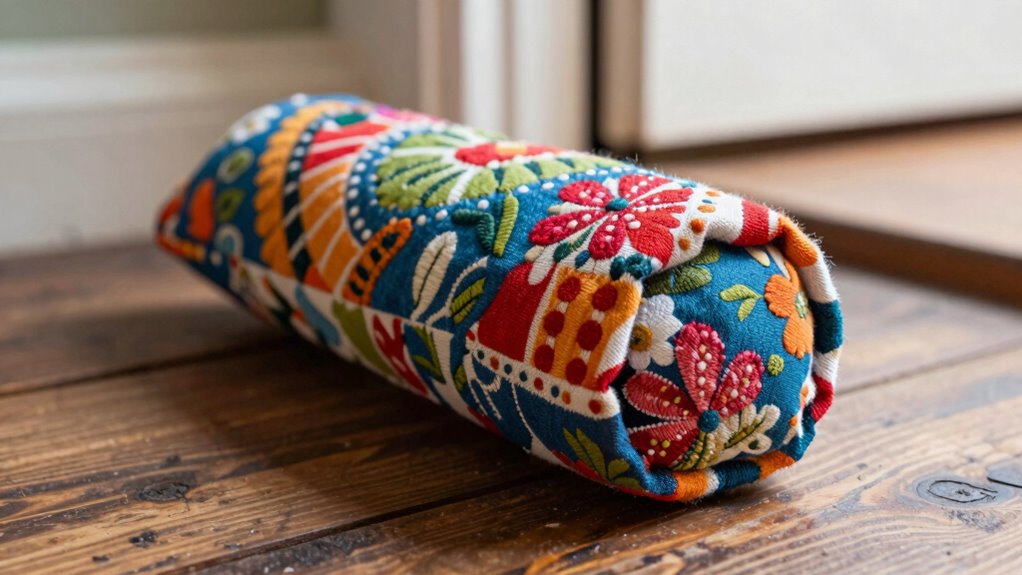

To create a handmade doorstop, start by choosing sturdy fabrics like canvas or denim, and cut them into rectangles around 8×4 inches. Sew around the edges, leaving a small opening to add your weighted filling, such as sand or small pebbles. Distribute the filling evenly and securely sew the opening shut. Add decorative touches if desired, ensuring all parts are safely attached. To discover more tips on crafting a secure, stylish doorstop, keep exploring the next steps.

Get business pricing on tools and workshop supplies
- Business-only prices and quantity discounts
- Tax-exempt purchasing
- Multiple users, one account, clear invoices
Key Takeaways
- Select durable fabrics like canvas or denim and personalize with decorative embellishments for style.
- Cut fabric into rectangles or squares, then sew around edges with a small opening for filling.
- Fill with heavy, non-toxic materials such as sand or small pebbles, ensuring even distribution.
- Securely sew the opening shut and reinforce seams for durability and safety.
- Place the finished doorstop at the bottom of the door to hold it open or closed effectively.
Ever wondered how to make a simple, effective doorstop by hand? Crafting your own doorstop with fabric and weight is a straightforward project that allows you to add decorative accents to your space while guaranteeing safety considerations are met. It’s a practical DIY that combines creativity with functionality, perfect for sprucing up your home or office without relying on store-bought options. Plus, you get to choose your preferred fabric and design, making it a personalized touch for any room.
Start by selecting a sturdy fabric that complements your decor. Durable options like canvas, denim, or thick cotton work well because they can withstand frequent use and hold the weight securely. If you want to add decorative accents, think about choosing fabrics with patterns or colors that match your interior style. You might also consider sewing on embellishments like buttons, embroidery, or appliqué to make your doorstop truly unique. Keep in mind that decorative accents should be securely attached to prevent them from falling off during use, which is an important safety consideration.
Choose sturdy, decorative fabrics and securely attach embellishments for a personalized, safe, and stylish doorstop.
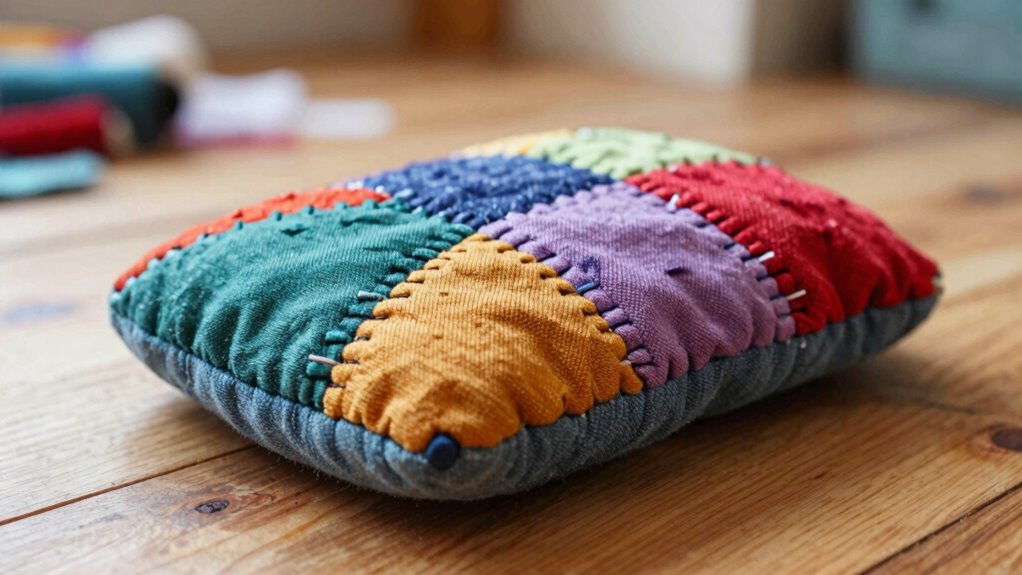
Once you’ve picked your fabric, cut it into a rectangular or square shape—about 8×4 inches or larger, depending on how heavy and sizable you want your doorstop. Fold the fabric in half with the right sides facing each other, then sew around the edges, leaving a small opening. Turn the fabric right side out and fill it with a heavy, dense material such as sand, small pebbles, or metal nuts. These weights ensure your doorstop stays in place and functions effectively. Choosing the right filling material is essential to ensure both safety and durability, as different weights and textures can impact performance. Making sure the filling is evenly distributed** is essential to prevent lumps that could compromise stability or safety. Incorporating a safety-conscious approach during construction helps prevent potential hazards associated with heavy, unsecured objects. Additionally, considering the weight distribution is key to achieving optimal stability. Paying attention to the handling instructions** of your chosen materials can further enhance the longevity and safety of your finished doorstop.
After filling, sew the opening shut securely. To enhance safety considerations, double-stitch the seam to prevent the filling from spilling out over time. If you want to add a decorative touch, consider sewing on a fabric label or attaching a decorative bow or ribbon. This not only personalizes your doorstop but also adds a charming visual element that can blend seamlessly with your home decor.
Finally, place your handmade doorstop at the bottom of your door to hold it open or closed as needed. With your own craftsmanship, you’ve created a functional object that’s both stylish and safe. Remember, safety considerations include using non-toxic, heavy materials and ensuring all seams are secure to prevent any accidental spills or hazards. Your handmade doorstop isn’t just a practical tool—it’s a creative project that reflects your personal style while providing a reliable solution for door management.
As an affiliate, we earn on qualifying purchases.
Frequently Asked Questions
What Types of Fabric Are Best for Doorstops?
For a durable, effective doorstop, choose tightly woven fabrics like denim, canvas, or heavy cotton. These materials resist wear and tear, ensuring your doorstop lasts longer. Opt for fabric patterns that hide dirt and stains, like darker colors or busy prints, to keep it looking good over time. Avoid lightweight or flimsy fabrics, as they may not provide enough weight or durability to hold your door securely in place.
How Much Weight Is Ideal for a Sturdy Doorstop?
Did you know a doorstop weighing about 2 to 5 pounds can effectively hold most doors open? For your DIY projects, a sturdy doorstop usually needs that weight range to stay in place without damaging floors. Material options like sand, rice, or small pebbles inside a fabric cover work well. Choose a weight that’s heavy enough to be reliable but easy to handle during your crafting process.
Can I Make a Doorstop Suitable for Outdoor Use?
Yes, you can make a doorstop suitable for outdoor use. Use weatherproof materials like waterproof fabric, sealed seams, and rust-resistant weights to withstand the elements. Incorporate outdoor decoration elements to match your garden or patio aesthetic. Make certain the weight is heavy enough to hold the door securely, even in windy conditions. Properly sealing and selecting durable, weather-resistant fabrics will keep your doorstop functional and attractive outside.
What Safety Precautions Should I Take While Sewing?
While sewing, you should wear safety gear like glasses to protect your eyes from sharp tools. Always handle sharp tools carefully, keeping blades away from your fingers, and use a cutting mat or surface to prevent accidents. Keep your workspace organized to avoid tripping or cutting mishaps. Also, unplug or turn off sewing machines when not in use. Being cautious guarantees you stay safe and avoid injuries during your sewing project.
How Do I Customize a Doorstop’s Appearance?
To customize your doorstop’s appearance, start by selecting decorative accents like buttons, ribbons, or embroidery that match your style. Use color coordination to guarantee it complements your room’s decor—pick fabrics and accents in harmonious shades. You can also add personalized touches like monograms or themed appliqués. With some creativity, your doorstop will become both functional and a charming decorative piece that reflects your unique taste.
Conclusion
Creating your own fabric doorstop is a simple, rewarding project that adds a personal touch to your home. Don’t worry if you’re not a sewing pro—just follow the steps, and you’ll have a sturdy, charming doorstop in no time. Even if you think it won’t hold up, choosing a heavy material and properly filling it will guarantee it stays in place. Give it a try, and enjoy your handmade, functional decor!
Fall Picks
fall essentials
As an affiliate, we earn on qualifying purchases.