
TL;DR
A video by YouTuber ArminBushcraft shows a large, hollow tree stump converted into a small hideaway. The build includes a widened entrance, a roof made from branches and moss, and an interior treatment involving fire; the video description does not establish its safety, durability or weather performance.
YouTuber ArminBushcraft has shown a build that turns an already hollow, oversized tree stump into a small hideaway, using hand tools to shape an entrance and a roof assembled from branches and moss. The project is an unusual example of backyard-style construction, but the available description does not provide details on the stump’s location, the build’s dimensions or whether the shelter is intended for regular use.

Get business pricing on tools and workshop supplies
- Business-only prices and quantity discounts
- Tax-exempt purchasing
- Multiple users, one account, clear invoices
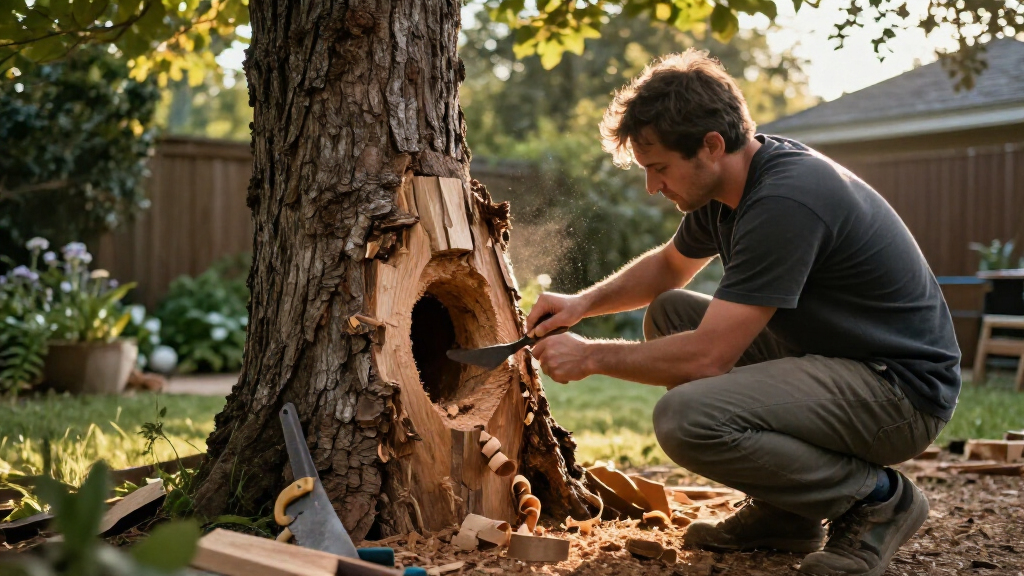
The stump in the video is described as large and hollow at the center, with a small notch that ArminBushcraft widens with an axe to form a doorway. The listed tools include a small axe, hammer and folding saw. The creator trims the stump around its top to establish a more level roof line, then clears debris from inside.
For the covering, the video shows a flat roof made from branches gathered in the surrounding woods, topped with green moss. The description says the moss is intended to help make the structure weather-tight, but it does not provide test results or information about how well the roof performs in rain or over time.
The interior treatment shown involves spraying an accelerant into the stump and setting it alight. The accompanying description compares this to a “pseudo version” of Japanese shou sugi ban, a wood-sealing method. That comparison is the description’s characterization; it does not establish that the fire treatment follows the traditional process or that it makes the stump safe or durable. No construction measurements, fire-safety steps or independent assessment are provided.
A hideaway inside a hollow tree stump
ArminBushcraft shaped an existing hollow stump into a small hideaway. Its safety, durability and weather performance are unverified.
How the build took shape
The project began with a stump already hollow at the center.
An axe shaped a small notch into a doorway.
The top was trimmed for a level roof line, and debris was removed.
Branches gathered nearby were topped with green moss.
What the video describes
A naturally hollow stump
The existing interior is central to this one-off build; dimensions and location are not provided.
Branches and moss
Moss is intended to help make the roof weather-tight, but no rain or durability results are given.
Safety and performance remain unclear
The supplied account provides no construction measurements, fire-safety steps or independent assessment.
- Accelerant sprayed inside and ignited
- A branch-and-moss roof
- Whether the fire treatment is safe to copy
- Whether the shelter is stable or weatherproof
- Whether it meets local requirements
A different route for readers
The account suggests a stump-inspired structure using bark siding or a branch frame. A green roof would need a barrier, drainage and a waterproof membrane; no tested plan is provided.
A One-Off Build, Not a Standard Plan
The project attracts attention because it uses a naturally hollow tree stump rather than a conventional shed or cabin frame. It illustrates one way a creator can adapt material already on a property, while also making clear how unusual the starting conditions are: the stump must be large enough to enter and hollow enough to provide usable interior space.
That distinction matters for anyone considering a similar project. The video description does not establish that this build meets building requirements, provides safe shelter or can withstand regular weather exposure. In particular, lighting an accelerant inside a wooden stump presents an evident fire hazard. The clip should not be treated as a tested construction guide or as evidence that the method is safe to reproduce.
The description suggests a more accessible alternative for people without a suitable stump: build a small structure with a stump-like or woodland appearance. Bark could serve as rustic siding, while branches could form a rounded frame. Moss or other greenery on a roof would require an appropriate barrier, drainage and waterproof membrane, according to the supplied account. Those are design suggestions, not confirmation that any particular structure will be weatherproof.
Popular right now

KitchenAid Classic Series 4.5-Quart Tilt-Head Stand Mixer, Onyx Black

Ninja Foodi 8-Qt DualZone 6-in-1 Air Fryer, Grey (DZ201)

Breville BES870XL Barista Express Espresso Machine, Brushed Stainless Steel
As an affiliate, we earn on qualifying purchases.
From Hollow Stump to Shelter
The reported sequence begins with a stump that is already hollow; the video description does not show the creator excavating the interior. The entrance starts as a notch and is widened with an axe. The stump’s top is then cut back to create a level edge, and loose material is removed before the branch roof and moss are added.
The description notes that making a comparable shelter from a solid stump would require hollowing it out, a physically demanding job, and mentions a chainsaw as one possible tool. It also says waiting for a stump to rot naturally could take many years. Those options are presented as general observations, not as steps demonstrated in the reported build. The central feature of this particular project is its pre-existing hollow interior.
For a stump-inspired structure built from other materials, the account points to bark siding and a frame woven from branches. It also says a green roof needs a waterproof membrane, drainage and a barrier. The provided information does not identify a specific design, product or verified method for constructing such a roof.
““pseudo version” of Japanese shou sugi ban”
— Description of the ArminBushcraft video
Safety and Weatherproofing Unverified
The available account does not say where or when the video was filmed, how large the stump is, or whether the finished hideaway is used for sleeping or other regular activities. It also gives no information about the stump’s condition, stability or suitability for supporting a roof.
There is no stated evidence that the moss-covered roof has been tested in wet weather, that the interior treatment protects the wood, or that the build has been inspected against local rules. The accelerant and fire method is described without details about the substance used, precautions taken or how the fire was controlled. Its safety and long-term performance remain unconfirmed.
No Follow-Up Details Provided
The supplied account does not identify a scheduled follow-up, inspection or additional build stage. It also does not say whether ArminBushcraft plans to share measurements or updates on the shelter’s condition after exposure to weather.
For now, the confirmed development is limited to the video’s described construction sequence: shaping an entrance in a hollow stump, clearing its interior, applying a fire-based treatment, and adding a branch-and-moss roof. Any claims about the hideaway’s safety, longevity or performance would require further information beyond what is provided.
Source: rss
Key Questions
Who built the tree-stump hideaway?
The project is attributed to YouTuber ArminBushcraft in the supplied description.
How was the entrance made?
The stump already had a small notch. ArminBushcraft widened it with an axe to create a doorway.
What was used to make the roof?
The described roof uses branches from the surrounding woods, with green moss added on top. Its weather performance has not been independently established.
Is the fire treatment confirmed to be safe?
No. The description says an accelerant was sprayed into the stump and ignited, but provides no safety assessment or details about precautions. It does not establish that the method is safe to copy.
Can someone build a similar hideaway without a hollow stump?
The account suggests making a separate stump-inspired structure, using features such as bark siding or a branch frame. It also says a green roof needs a barrier, drainage and a waterproof membrane, but gives no tested construction plan.
Source: hunker.com