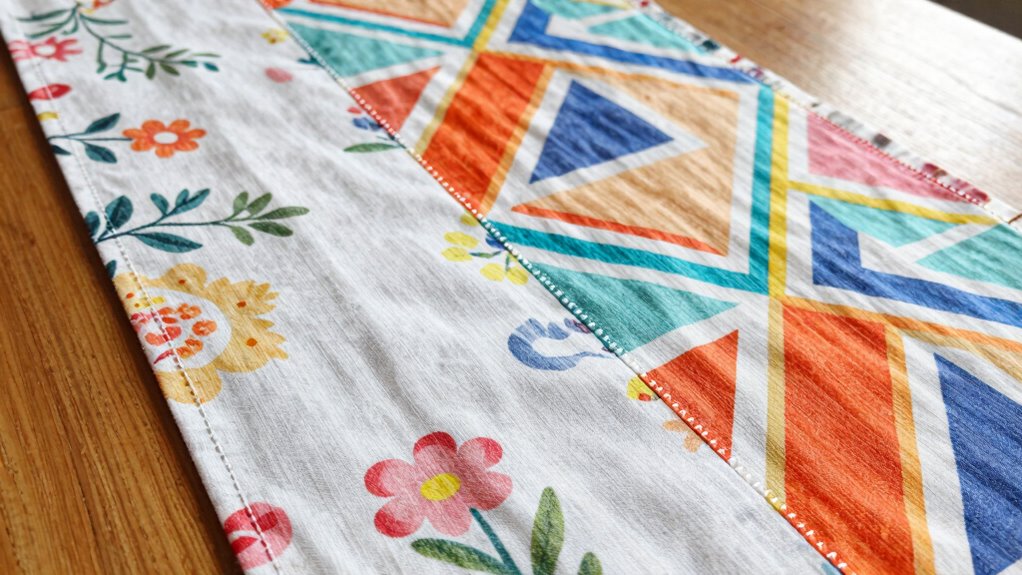

To sew a reversible table runner, start by choosing two contrasting fabrics with the right weight and style. Cut two pieces to your desired size, adding seam allowances, then pin right sides together. Sew around the edges, leaving a small opening to turn the piece right side out. Press and topstitch for a polished finish, adding decorative details if you like. To discover all the tips and tricks for making a perfect reversible runner, keep exploring the steps involved.

Get business pricing on tools and workshop supplies
- Business-only prices and quantity discounts
- Tax-exempt purchasing
- Multiple users, one account, clear invoices
Key Takeaways
- Select two contrasting fabrics, cut matching pieces with seam allowances, and sew right sides together, leaving an opening for turning.
- Turn the fabric right side out, press edges for a crisp finish, and topstitch around the entire edge for durability.
- Ensure the fabrics are aligned correctly, and add decorative stitches or borders for a polished look.
- Repeat the sewing process for both sides, then carefully align and sew the edges to secure the reversible design.
- Finish by pressing the final seams and trimming any excess threads for a professional, clean appearance.
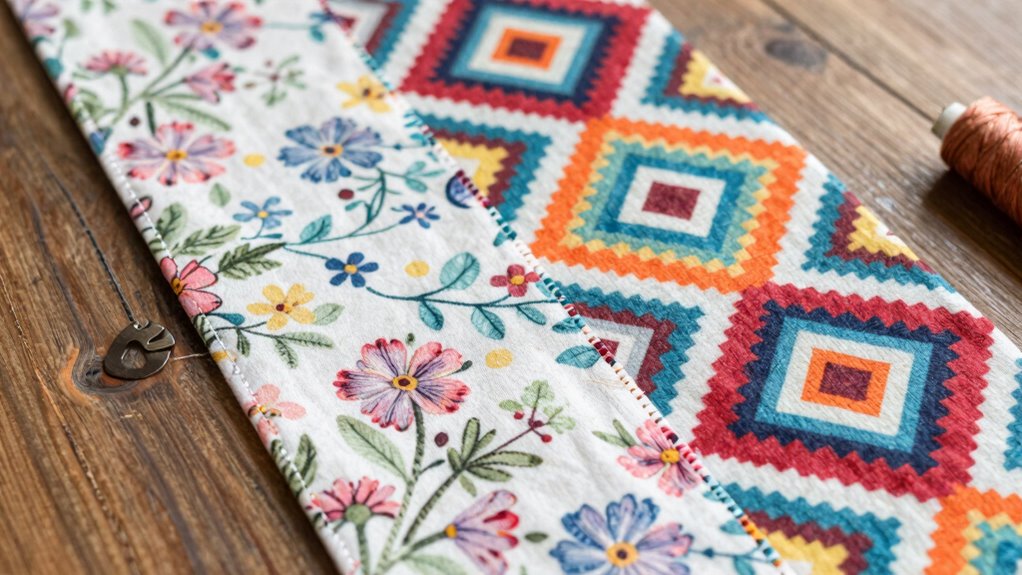
Creating a reversible table runner is a simple way to add versatility and style to your dining space. To start, you’ll need to carefully consider your fabric selection. Choose two contrasting fabrics that complement each other and match your decor. Natural fibers like cotton or linen are popular choices because they’re easy to work with and durable. Look for fabrics with a weight that holds its shape well without being too stiff. When selecting your fabrics, think about the overall look you want to achieve—whether it’s a classic, rustic, or modern vibe—and pick colors and patterns accordingly.
Choose two contrasting, durable fabrics to add versatile style to your table with a reversible runner.
Once your fabrics are chosen, gather your sewing tools. You’ll need a good pair of fabric scissors for clean cuts, a rotary cutter and cutting mat for precision, and pins or clips to hold your fabrics together. A seam ripper can be handy in case you need to fix mistakes, and a fabric marker or chalk helps with marking measurements. For sewing, a sewing machine with a straight stitch function works best, but you can also sew by hand if needed. Make sure you have matching thread that blends well with your fabrics to keep your stitches neat. A ruler or quilting square will aid in measuring and ensuring your edges are straight and even.
Next, cut out your fabric pieces. Measure the desired length and width of your table runner, adding a seam allowance—usually about half an inch—on all sides. Cut two pieces of fabric to these dimensions. To give your runner a professional finish, you’ll want to add a border or binding if you prefer. Pin the right sides of the two fabric pieces together, aligning the edges carefully. Sew around the edges, leaving a small turning gap on one side. Use your sewing tools to ensure straight, even stitches. Once sewn, turn the runner right side out through the gap, and press the edges flat with an iron to give it a crisp look.
Finally, topstitch around the entire edge of the runner, about a quarter inch from the edge, to secure the opening and give your piece a polished finish. Repeat the process on the other side if you’re adding decorative stitching or quilting for extra texture. Incorporating proper fabric choice, which involves understanding the qualities of different fabrics, can significantly impact the durability and appearance of your finished project. Being aware of fabric care can also help maintain your runner’s look over time. Understanding fabric properties can guide you in selecting the best fabrics for longevity and style. Additionally, knowing how to properly store and clean your fabric projects can extend their lifespan. Considering fabric weight and drape can help you choose fabrics that will hang well and look elegant. With these steps, your reversible table runner is ready to grace your table, offering two stylish looks in one piece. It’s a straightforward project that combines careful fabric selection and the right sewing tools to produce a functional, beautiful addition to your dining area.
reversible table runner sewing kit
As an affiliate, we earn on qualifying purchases.
As an affiliate, we earn on qualifying purchases.
Frequently Asked Questions
What Type of Fabric Is Best for a Reversible Table Runner?
You should choose a sturdy, medium-weight fabric like cotton or linen for a reversible table runner. Opt for fabric patterns that complement each other on both sides to create a balanced look. Using sewing techniques like double-stitched seams guarantees durability. Select fabrics that are easy to sew and manipulate, so your reversible table runner remains both functional and stylish, with patterns that pop on either side.
How Do I Prevent Fraying on the Edges?
Did you know that untreated fabric edges fray up to 50% faster? To prevent fraying, focus on edge finishing techniques like zigzag stitching, pinking shears, or applying a fabric sealant. Choosing fabric with a tighter weave also helps reduce fraying. When selecting fabric, opt for woven materials that hold up well to edge finishing methods, ensuring your reversible table runner remains neat and durable through many uses.
Can I Add Decorative Stitches to Enhance Durability?
Yes, you can add decorative stitches to enhance durability. Incorporate decorative stitches along the edges or seams to reinforce fabric and prevent fraying. Use a sturdy, contrasting thread to add visual interest while strengthening the table runner. These stitches improve fabric reinforcement, making your reversible runner more durable and stylish. Just make certain you select a suitable stitch pattern that complements your fabric choice and sewing skill level for best results.
How Do I Clean and Maintain a Reversible Table Runner?
To keep your reversible table runner looking its best, follow simple cleaning tips like gentle hand washing or using a delicate cycle in your washing machine. Always check the fabric selection first—cotton, linen, or blended fabrics usually withstand regular cleaning well. Avoid harsh detergents and high heat when drying. Spot clean any stains promptly, and store it in a cool, dry place to maintain its appearance and longevity.
What Size Should I Cut the Fabric Pieces?
You should cut your fabric pieces to the desired length and width, typically around 16-20 inches long and 12-16 inches wide, but the perfect size depends on your table. As you decide, consider fabric pattern options that match your decor and color coordination tips to create harmony. Keep in mind, the size you choose will influence the runner’s overall look, so measure carefully and plan your design for a stunning finished piece.
Conclusion
Now that you’ve sewn your reversible table runner, it’s like crafting a beautiful tapestry that tells two stories at once. It’s ready to be the centerpiece of your dining table, adding charm and versatility to your space. With each glance, you’ll see the effort and love you put into it, making mealtime feel even more special. Enjoy your handiwork, knowing it’s as functional as it is a work of art—truly a gift from your own hands.
Fall yard work Picks
leaf blowers
As an affiliate, we earn on qualifying purchases.