TL;DR

Get business pricing on tools and workshop supplies
- Business-only prices and quantity discounts
- Tax-exempt purchasing
- Multiple users, one account, clear invoices
Hunker reported on a DIY project shared by the @OurUpcycledLife channel that coats an old vase with glue and Epsom salt to create a frosted-looking decoration. The method uses basic craft supplies, but the report does not provide durability testing, costs, or details about the original video’s publication date.
Hunker has reported on a vase-upcycling project from the @OurUpcycledLife channel that uses glue and Epsom salt to give an old glass vase a frosted appearance. The idea offers a way to repurpose an unused household item with common craft materials, though the report provides no independent test of how long the finish lasts.
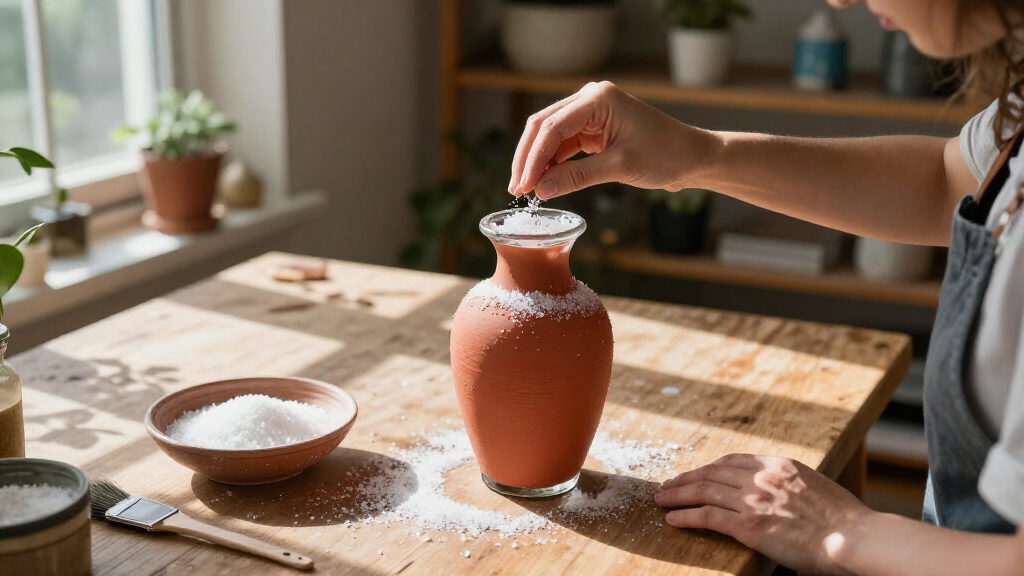
The method, as described by Hunker, begins with washing the vase in warm water and mild dish soap, removing any labels, and letting the glass dry completely. The crafter then coats the outside with a thin layer of PVA glue or Mod Podge and sprinkles Epsom salt over the wet adhesive. Working in small areas can help if the glue begins to dry before the salt is applied. The report says a brush can be used to spread the glue and suggests covering the work surface with newspaper.
For a different finish, the salt can be mixed with white glitter for a sparkling, snow-like effect, or with colored glitter or a few drops of food coloring. Hunker says the crafter can also spread the mixture on a paper plate and gently press glued sides of the vase into it. After the coating has had several hours to cure, another layer may be added, or the surface can be sealed with a product such as Mod Podge Clear Acrylic Sealer Spray.
The finished vase can be used as a decorative holder for battery-powered tealights or string lights, or filled with artificial flowers and seasonal items such as pine cones, holly, and berries. Hunker advises against putting real candles inside: heat may affect the salt coating, and candle soot may darken the glass. The article also suggests saving unused salt for later craft projects.
A Low-Cost Way to Reuse Glass
The project matters mainly as an accessible reuse idea rather than a tested product or major home-design development. It gives readers a practical option for redecorating with a vase they already own, instead of buying a new seasonal ornament. The described supplies—adhesive, Epsom salt, and an inexpensive brush—are widely used in craft projects, although Hunker does not provide a cost estimate or compare the method with other finishes.
Its appeal is also in how easily the look can be adapted. Glitter, colored additions, ribbons, lights, or artificial greenery can change the result without changing the basic technique. At the same time, readers should understand that the article describes a decorative craft, not a permanent glass treatment: it does not establish whether the coating withstands handling, moisture, or cleaning. That distinction matters if the vase will be used frequently or placed where the finish could be disturbed.
Popular right now

KitchenAid Artisan Series 5-Quart Tilt-Head Stand Mixer, Dried Rose (KSM150PS)

Ninja Flip Toaster Oven and Air Fryer, 8-in-1, Stainless Steel, SP151

Samsung 48-Inch S90H OLED 4K Smart TV (2026)
As an affiliate, we earn on qualifying purchases.
How the Frosted Finish Is Made
Hunker presented the idea as a seasonal home-decor project associated with the @OurUpcycledLife channel. The source frames it as a way to refresh vases that are no longer wanted or used, and says that the shape and size of the vessel do not need to be specific. It describes the steps and styling suggestions, but does not identify the vase, show product testing, or provide a measured comparison of time or expense.
The technique relies on a simple sequence: clean the glass so adhesive can stick, apply glue to the exterior, add the salt while the surface remains wet, then let the piece cure. Optional glitter or color changes the appearance, while a further adhesive layer or clear acrylic sealer may be used after the initial coating has set. Hunker describes the work as suitable for a straightforward craft session, but offers no formal assessment of its suitability for children or product-specific safety instructions.
“The shape and size of your vases don’t matter.”
— Hunker, reporting on the @OurUpcycledLife project
Durability and Care Are Untested
The source does not say how long the Epsom salt finish lasts, whether it flakes with regular handling, or how the vase should be cleaned. It also does not report tests comparing different glues, salt types, or sealers. Although Hunker says different Epsom salts and adhesives can be used, it gives no product-by-product results, so the finish may vary depending on the materials and application.
The report does not include a stated cost, the exact date the original social-media project appeared, or a direct comment from the creator beyond the project attributed to the channel. It also does not specify whether the finished vase is intended for water or fresh flowers. Readers should treat it as decorative and avoid assuming the coating is waterproof or suitable for food-related use.
Try the Craft With Battery Lights
Hunker’s report does not announce a follow-up test or additional update. For readers attempting the project, the described next steps are to prepare a clean, fully dry vase, protect the work surface, apply glue in manageable sections, and allow several hours for the coating to cure. A second layer or clear sealer is optional according to the article, but the source does not establish which option produces the most durable result.
Once the vase is dry, the suggested use is as a decorative accent with battery-powered tealights or string lights, or with artificial seasonal decorations. The report’s explicit caution is to avoid real candles. Whether the finish holds up over time, and how best to maintain it, remains unreported.
Key Questions
What supplies does the vase project use?
Hunker describes using an old glass vase, Epsom salt, PVA glue or Mod Podge, and a foam or bristle brush. Glitter, food coloring, and a clear acrylic sealer are optional additions.
How do you apply the Epsom salt?
Clean and fully dry the vase, brush a thin layer of adhesive over the outside, then sprinkle the salt onto the glue while it is wet. Hunker also describes pressing glued sections against salt spread on a paper plate.
Can the finished vase hold a real candle?
Hunker advises against real candles because heat may alter the salt coating and soot can darken the glass. It suggests battery-operated tealights or string lights instead.
Is the Epsom salt finish waterproof or long-lasting?
The source does not report durability or water-resistance testing. It does not establish that the vase can hold water, so the project is best treated as a decorative finish unless further product-specific guidance is available.
Source: hunker.com