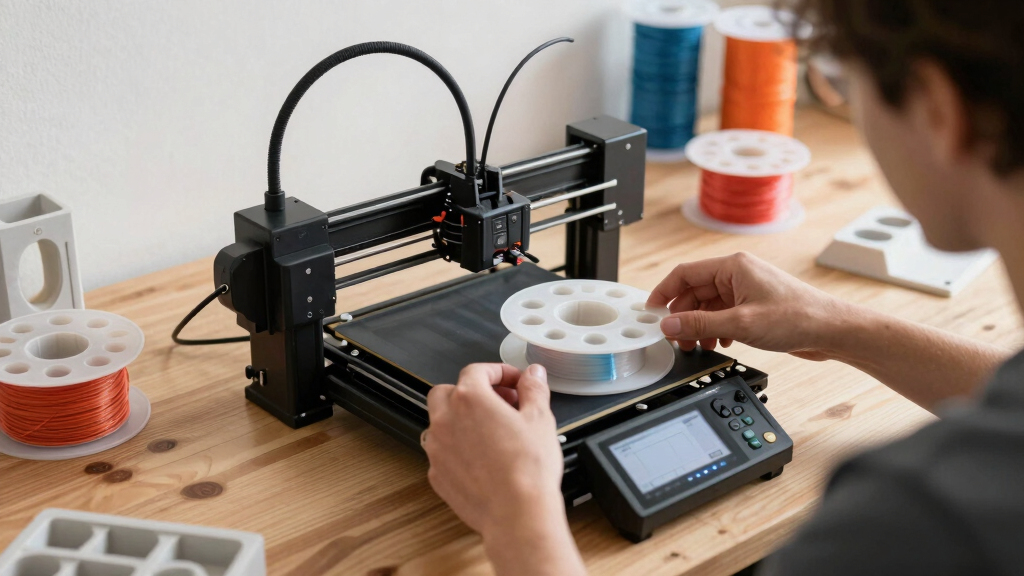
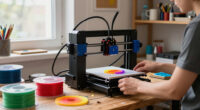
Finding the best 3D printer for small batch production involves balancing speed, reliability, build volume, and ease of use. The Creality Ender 5 Max stands out for its large build capacity and fast printing speeds, making it suitable for producing multiple items efficiently. The ELEGOO Saturn 4 Ultra offers high-resolution resin printing ideal for detailed prototypes, while the FlashForge Adventurer 5M balances high speed with user-friendly features. Each model prioritizes different aspects, and the right choice depends on your specific production needs and skill level. Continue reading for a detailed breakdown to help you pick the best machine for your small-scale manufacturing goals.
Key Takeaways
- Large build volume remains a priority for small batch production, with models like the Ender 5 Max leading the pack.
- Speed is a key differentiator, especially with high-speed options like the ELEGOO Centauri and Creality K2 Pro.
- Multicolor and resin printing options are gaining relevance but often come with higher complexity and cost.
- Auto-calibration and ease of setup are crucial for maintaining productivity in small batch runs.
- Price varies widely, but investing in a reliable, feature-rich machine often reduces long-term costs.


More Details on Our Top Picks
Creality Ender 5 Max 3D Printer 400×400×400mm Large Build Volume, 700mm/s Fast Printin Speed, 64-Point Auto Leveling, All-Metal Frame Dual & Gear Extruder, Multi-Printer Control Over WLAN
The Ender 5 Max stands out for its massive 400×400×400 mm build volume, making it ideal for batch-producing large parts or multiple smaller items simultaneously. Compared with the FLASHFORGE Adventurer 5M, it offers much greater capacity but sacrifices some speed and ease of use. Its ultra-fast 700 mm/s print speed paired with a rigid all-metal frame and linear rails ensures stability and consistency during high-volume runs. The 64-point auto leveling system minimizes setup time and ensures reliable first layers, crucial for batch efficiency. However, the large size and weight can be cumbersome, and the high-speed operation may generate more noise and vibrations. This model is better suited for dedicated print farms or studios needing oversized batches, but less ideal for small, quiet home setups. The all-metal dual gear extruder and rapid heating bed support a wide range of materials, boosting versatility for demanding production.
Pros:- Enormous 400×400×400 mm build volume for batch production
- High-speed printing at 700 mm/s with precision linear rails
- Automated 64-point bed leveling for consistent first layers
- All-metal frame ensures durability and stability
Cons:- Size and weight make it less suitable for small or portable setups
- High speed can produce more noise and vibrations
- Initial setup and calibration can be complex for beginners
Best for: Manufacturers or studios requiring large batch runs of sizeable parts with high throughput.
Not ideal for: Hobbyists with limited space or those prioritizing quiet, low-maintenance printers for infrequent use.
- Build Volume:400×400×400 mm
- Print Speed:700 mm/s
- Auto Leveling:64-point system
- Frame:All-metal linear rails
- Extruder:Dual gear direct drive
- Heated Bed:Rapid 1000W
- Material Compatibility:PLA, PETG, ABS, ASA, PA
- Connectivity:WLAN multi-printer control
- Weight:68.9 pounds
Bottom line: This printer is perfect for businesses or dedicated makers needing large-scale batch production with minimal manual intervention.
ELEGOO Saturn 4 Ultra 16K Resin 3D Printer
The ELEGOO Saturn 4 Ultra excels in producing incredibly detailed prototypes thanks to its 16K resolution, making it ideal for small batch production of intricate parts. Unlike the Creality Ender 5 Max, which is geared toward larger models and bulk fabrication, this resin printer offers exceptional surface finish and fine detail for miniature or complex components. Its smart tank heating system maintains optimal resin temperature, reducing defects and improving quality. The AI camera enables real-time monitoring, reducing failed prints in delicate projects. Though its heavy weight (35.5 pounds) and resin handling requirements can be challenging, it delivers unmatched resolution for small batches. This pick is better suited for detail-oriented makers and designers rather than mass production environments.
Pros:- Ultra-high 16K resolution for exceptional detail
- Smart heating system enhances resin flow and stability
- AI camera for real-time failure detection and alerts
- Fast 150 mm/h printing speed for resin technology
Cons:- Heavy and less portable at 35.5 pounds
- Requires careful resin management and post-processing
- Resin handling and safety considerations
Best for: Designers, jewelry makers, or prototypers needing detailed, small batch models with smooth surfaces.
Not ideal for: Users seeking large-volume or high-speed filament-based production, as resin printing is slower and messier.
- Resolution:16K
- Build Size:8.33 × 4.66 × 8.66 inches
- Printing Speed:150 mm/h
- Heating System:Smart tank at 30°C
- Weight:35.5 pounds
- Material:Resin
- Connectivity:AI camera, real-time monitoring
- Chamber Temp:30°C
- Surface Finish:Lifelike textures
Bottom line: This printer is ideal for those prioritizing detailed small batch prototypes over rapid mass production.
FLASHFORGE Adventurer 5M 3D Printer with Fully Auto Leveling, Max 600mm/s High Speed Printing, 280°C Direct Extruder with 3S Detachable Nozzle, CoreXY All Metal Structure, Print Size 220x220x220mm
The Adventurer 5M is designed for high-speed, reliable filament printing with a 600 mm/s travel speed and automatic bed leveling. Compared with the Creality Ender 3 series, which requires manual calibration and slower speeds, the 5M offers a much more streamlined workflow with automatic leveling and quick nozzle swaps. Its direct drive extruder and high-temperature 280°C hotend make it versatile for various filaments, including PETG and ABS. The sturdy all-metal frame supports consistent high-speed operation but can be loud during extended runs, especially the hotend fans. It’s best suited for small-to-medium batch prototyping or educational environments, but less ideal for quiet home use or very large parts due to its 220x220x220mm volume. Overall, a reliable choice for fast, quality filament prints.
Pros:- High-speed printing up to 600 mm/s for rapid prototyping
- Fully automatic bed leveling for quick setup
- Detachable hotend and quick nozzle changes
- All-metal structure for durability
Cons:- Limited build volume (220×220×220mm)
- Loud operation due to fans and high-speed motors
- Hotend fans can produce noise and heat buildup
Best for: Prototypers and makers needing quick turnaround and high-quality filament parts in small to medium batches.
Not ideal for: Quiet home environments or those requiring large build volumes for bigger projects.
- Build Volume:220×220×220 mm
- Print Speed:up to 600 mm/s
- Auto Leveling:Yes
- Nozzle Temperature:280°C
- Frame:All-metal
- Extruder:Direct drive
- Connectivity:Wi-Fi, USB
- Heating System:High-temp hotend
- Weight:23.8 pounds
Bottom line: This printer excels for fast, reliable filament prototyping but isn’t suited for large-scale batch production or ultra-quiet environments.
Creality K2 Pro Combo (A) 3D Printer, Multicolor 3D Printer with CFS, 600mm/s Max High-Speed, Dual AI Camera, Fully Assembled Auto Leveling, 300x300x300mm Large Print Volume, for Pros & Hobbyist
The Creality K2 Pro Combo supports up to 16 colors and multi-material printing with its Creality Filament System (CFS). Compared to the Ender 5 Max, which focuses on large bulk runs, the K2 Pro is designed for complex, multicolor small batch projects or detailed prototypes. Its 300×300×300 mm build volume accommodates larger and multi-material assemblies, while the 600 mm/s speed and dual AI cameras offer real-time monitoring and failure detection, reducing waste and rework. The auto calibration and easy filament management streamline workflow, especially for multi-color or multi-material batches. Its quiet operation and advanced controls make it suitable for pros and enthusiasts who want high fidelity and efficiency.
Pros:- Supports up to 16 colors with multi-material capability
- 600 mm/s high-speed performance
- Dual AI cameras for real-time failure detection
- Auto filament identification and management
Cons:- Complex setup and filament management may require experience
- Multi-color extruding can be challenging for beginners
- Higher cost than single-material printers
Best for: Creative professionals producing multi-color prototypes or small batch, multi-material parts efficiently.
Not ideal for: Purely large batch production of single parts, as its strength lies in multicolor, multifilament complexity.
- Build Volume:300×300×300 mm
- Max Speed:600 mm/s
- Auto Leveling:Yes
- Number of Colors:Up to 16
- Material Compatibility:Multi-material, multi-color
- Cameras:Dual AI monitoring
- Hotend Temperature:320°C
- Frame:Aluminum alloy
- Weight:84.9 pounds
Bottom line: This printer is ideal for multicolor, multi-material small batch projects demanding speed and visual complexity.
Creality K2 SE 3D Printer, Support Multicolor Printing Needs CFS, 500mm/s High-Speed Printing, Auto Leveling, Vibration Control, Compact Desktop Upgrate 3D Printer, Print Size 220x215x245mm
The Creality K2 SE stands out for its effortless setup, making it ideal for beginners or small offices that need quick results. Its auto-calibration and pre-assembled design eliminate the typical frustrations of leveling and assembly, unlike the DIY-friendly Ender 3, which demands more time and technical skill. The K2 SE’s impressive 600mm/s high-speed printing paired with active vibration control ensures fast, stable prints, though this speed might sacrifice some detail compared to the slightly more precise Ender 3. Its durable tri-metal nozzle and hotend support a variety of filaments, including flexible TPU, making it versatile for small batch production. However, the high-speed capabilities require careful calibration to avoid quality issues, and its advanced features come at a higher price. This pick suits users who prioritize quick setup, reliability, and multi-material capability, especially in fast-paced environments.
Pros:- Fast, plug-and-play setup with auto-calibration
- High-speed printing up to 600mm/s for quick batch runs
- Supports multiple filament types including flexible TPU
- Vibration control ensures stable quality at high speeds
Cons:- High-speed printing may compromise fine detail if not carefully tuned
- Premium price point could be prohibitive for casual users
Best for: Small business owners or educators who need reliable, quick-to-start 3D printing with multi-color options.
Not ideal for: Hobbyists seeking detailed, highly intricate models or those on a tight budget, as the advanced features come at a premium and require some familiarity to maximize.
- Build Volume:220 x 215 x 245 mm
- Max Nozzle Temperature:300°C
- Print Speed:up to 600mm/s
- Auto Leveling:Yes
- Hotend:Tri-metal nozzle
- Connectivity:Wi-Fi, USB
- Frame Material:Aluminum
Bottom line: This printer is perfect for users who need fast, reliable multi-color printing without the fuss of assembly.
Creality Ender 3 3D Printer with Resume Printing and V-Slot Rails, DIY Kit (Printing Size: 8.66×8.66×9.84 inches)
The Ender 3 offers high-resolution prints at a more accessible price, making it a popular choice for small batch production where cost is a concern. Its build volume of 220x220x250 mm rivals the K2 SE, but it requires more setup and calibration, especially compared to the K2 SE’s plug-and-play design. The upgraded extruder and rapid-heating bed improve reliability, yet the manual assembly can be a hurdle for those unfamiliar with DIY. While it doesn’t match the K2 SE’s speed or multi-material versatility, its open-source nature allows tinkering and upgrades, which can be advantageous for small-scale prototyping. The absence of integrated monitoring features means users will need external tools for quality assurance. This model is ideal for budget-minded users willing to invest time in setup and calibration.
Pros:- High-resolution ±0.1mm accuracy for detailed prototypes
- Resume printing feature after power outages
- Affordable price with solid print quality
- Strong community support for upgrades and troubleshooting
Cons:- Requires assembly and calibration, which can be time-consuming
- No built-in camera or advanced monitoring features
- Limited to single-color printing without added upgrades
Best for: Hobbyists, educators, or small startups comfortable with assembly who want high-quality results without a high upfront cost.
Not ideal for: Users needing rapid deployment or multi-color, multi-material production, as its manual setup and limited features slow throughput and versatility.
- Build Volume:220 x 220 x 250 mm
- Max Nozzle Temperature:255°C
- Print Resolution:±0.1mm
- Auto Resume:Yes
- Frame:Aluminum
- Connectivity:SD Card, USB
- Assembly:Required
Bottom line: This printer is best for budget-conscious users who are comfortable with DIY setup and want high-quality, small batch production results.
Creality Ender 5 Max 3D Printer,400x400x400mm Large Build Volume, 700mm/s High-Speed Printing, 36-Point Auto Leveling, LAN Multi-Device Control, Professional FDM 3D Printing
The Ender 5 Max excels when batch size and project scale matter, thanks to its generous 400x400x400mm build volume and ultra-fast 700mm/s speeds. Compared with the K2 SE, which is more compact and user-friendly, the Ender 5 Max is geared toward professionals managing larger or multiple simultaneous projects. Its 36-point auto-leveling boosts consistency across large prints, although setup is more involved. The all-metal extruder ensures durability during extended runs, but its size and complexity might be overkill for small-scale or hobbyist use. The LAN control adds convenience for managing multiple printers but requires network familiarity. This model’s tradeoff is its size and learning curve, making it suitable for those with space and experience. This is the choice for demanding production environments where size and speed are priorities.
Pros:- Massive 400x400x400mm build volume for large or multiple parts
- Ultra-fast printing speed up to 700mm/s
- 36-point auto-leveling ensures precise large prints
- Durable all-metal hotend supports extended use
Cons:- Large footprint and higher price point
- Steeper learning curve and more complex setup
- Requires more space and technical knowledge
Best for: Small manufacturing units or professional prototyping teams handling large batch runs and needing fast throughput.
Not ideal for: Hobbyists or small-scale creators with limited space or those who prefer simpler, more compact machines for occasional use.
- Build Volume:400 x 400 x 400 mm
- Max Speed:700mm/s
- Auto Leveling:36-point
- Extruder:All-metal
- Connectivity:LAN
- Frame Material:Aluminum
- Power Supply:Dual
Bottom line: This printer is ideal for professionals needing rapid, large-scale batch production with minimal fuss about detail for small models.
Creality K2 Plus Combo 3D Printer with Multi-Color CFS, High-Speed Printing, and Dual AI Cameras
The Creality K2 Plus Combo combines multi-color printing with advanced AI-driven monitoring, making it a standout for small batch production that demands color versatility and oversight. Its impressive 350x350x350mm build volume supports sizable projects, surpassing the Ender 3’s smaller capacity. The multi-color CFS system, capable of up to 16 colors, offers automation that simpler multi-material setups like the FlashForge AD5X cannot match. The dual AI cameras enable real-time print monitoring and error detection, reducing failed runs. While setup complexity and higher cost are considerations, the combination of speed, multi-color capability, and smart features make it ideal for professional environments. Compared to the more straightforward FlashForge AD5X, the K2 Plus provides more automation but requires more technical knowledge. This printer is optimized for users who prioritize multi-color projects, automation, and comprehensive monitoring.
Pros:- Supports up to 16 colors with automated filament switching
- Large 350x350x350mm build volume for complex models
- Dual AI cameras for real-time monitoring and error prevention
- High-speed printing at 600mm/s
Cons:- Complex setup and calibration process
- Premium price may be a barrier for small operations
- Requires familiarity with multi-color workflows
Best for: Design studios, small manufacturing shops, or advanced hobbyists needing multi-color and automated oversight.
Not ideal for: Beginners or budget buyers who prefer simple, straightforward printers without complex setup or high price tags.
- Build Volume:13.78 x 13.78 x 13.78 inches
- Print Speed:up to 600mm/s
- Max Nozzle Temperature:350°C
- Filament Capacity:4 RFID filaments included
- Camera System:Dual AI cameras
- Number of Colors:Up to 16
- Control:Touchscreen, LAN
Bottom line: This printer suits professionals seeking multi-color, automated, large-volume production with real-time oversight.
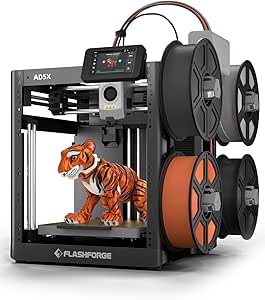
FlashForge AD5X Multi-Color 3D Printer with CoreXY High-Speed Printing
The FlashForge AD5X offers a compelling mix of high-speed CoreXY design and multi-color capabilities, making it suitable for creative small batch runs. Its 220x220x220mm build volume is smaller than the K2 Plus or Ender 5 Max but still ample for many prototypes and artistic models. The 1-click auto leveling simplifies setup, though its complexity can be daunting for absolute beginners. Its support for filament diameters from 0.25mm to 0.8mm and a max nozzle temperature of 300°C allows flexible material use, from PLA to ABS. The ultra-fast speed of up to 600mm/s accelerates production but might challenge detail fidelity at high speeds. Compared to the K2 Plus, it’s more compact and easier to handle, but lacks the same multi-color automation and AI camera features. This printer is well-suited for dynamic projects requiring rapid multi-color output.
Pros:- Supports multi-color printing with up to 4 colors simultaneously
- Fast CoreXY structure enables speeds up to 600mm/s
- 1-click auto leveling for quick setup
- Flexible nozzle options and high-temperature support
Cons:- Smaller build volume limits large batch production
- Heavy at over 24 pounds, requiring sturdy placement
- Complex high-speed prints may reduce fine detail
Best for: Creative professionals or educators wanting fast, colorful prototypes with minimal setup complexity.
Not ideal for: Users needing large-volume production or advanced multi-material automation, as it lacks multi-color filament switching automation and AI monitoring.
- Build Volume:220 x 220 x 220 mm
- Max Nozzle Temperature:300°C
- Printing Speed:up to 600mm/s
- Filament Support:0.25mm – 0.8mm
- Auto Leveling:Yes
- Number of Colors:Up to 4
- Connectivity:Wi-Fi, USB
Bottom line: This model is ideal for fast-paced, colorful projects where versatility and speed are prioritized over large volume capacity.
How We Picked
To determine the best 3D printers for small batch production, I focused on key factors that directly impact manufacturing efficiency and quality. Performance metrics like print speed, build volume, and material compatibility were top priorities, as they influence production capacity and versatility. Usability features such as auto-leveling, user interface, and connectivity options were also considered, since ease of operation reduces downtime. Build quality and reliability were assessed based on design robustness and component durability, ensuring the machines can handle continuous use. Finally, I weighed value for money, balancing features against price to identify options that offer the best bang for the buck without sacrificing essential capabilities.Factors to Consider When Choosing Best 3d Printer For Small Batch Production
Choosing the best 3D printer for small batch production requires careful consideration of several key factors. Beyond initial features, it’s important to evaluate how the machine will integrate into your workflow, the types of materials it can handle, and its long-term reliability. Making the wrong choice can lead to increased costs, downtime, and subpar output. This guide highlights the most critical aspects to keep in mind, helping you avoid common pitfalls and make a decision aligned with your production goals.Build Volume and Speed
For small batch production, a larger build volume allows you to produce more items per run, reducing the frequency of setup. Speed is equally important; machines like the Creality Ender 5 Max and ELEGOO Centauri excel here, enabling quicker turnaround times. However, larger and faster printers often require more maintenance and may have higher initial costs. It’s essential to balance size and speed with your workspace and budget constraints to avoid overinvesting in features you don’t need.
Material Compatibility and Quality
Depending on your product requirements, you might need support for different filaments or resins. Consider whether the printer can handle flexible, composite, or specialty materials if your projects demand it. Resin printers like the ELEGOO Saturn 4 Ultra offer high detail but require careful handling and post-processing, which adds complexity. Conversely, FDM printers provide broader material options and easier cleanup. Matching your material needs with the machine’s capabilities prevents frustration and ensures consistent quality.
Ease of Use and Setup
Auto-leveling features, touchscreen controls, and Wi-Fi connectivity streamline setup and daily operation. Machines like the FlashForge Adventurer 5M emphasize user-friendliness, making them suitable if you prioritize quick deployment and minimal training. Beware of models with complex calibration procedures or limited support, which can bottleneck production. Investing in a machine with clear documentation and reliable customer support can save time and reduce errors during small batch runs.
Reliability and Maintenance
Durability and consistent performance are vital for small batch production, where downtime directly impacts output. Look for robust frames, quality components, and reputable brand histories. Machines with modular parts or easy access for maintenance tend to stay operational longer, reducing costly repairs. Keep in mind that cheaper models may require more frequent repairs or replacements, which can offset initial savings. Prioritize machines with proven longevity and accessible support networks.
Price and Long-Term Value
While budget is always a concern, investing in a higher-quality machine often pays off through increased uptime, better print quality, and lower maintenance costs. Focus on features that improve production efficiency, such as faster print speeds and larger volumes, especially if you plan to scale. Conversely, entry-level models might be suitable for small projects or testing ideas but could limit your ability to grow. Carefully evaluate the total cost of ownership over time before making a final decision.
Frequently Asked Questions
Can I use a 3D printer for small batch production without sacrificing quality?
Yes, many 3D printers designed for small batch production can deliver high-quality results if properly maintained and calibrated. Machines with features like auto-leveling, high-resolution printing, and stable frameworks tend to produce more consistent outputs. It’s important to match the printer’s capabilities with your material choices and production demands. Regular maintenance and quality control checks are also essential to ensure each batch meets your standards.
What is the best type of 3D printer for small batch production: FDM or resin?
Choosing between FDM and resin printers depends on your product requirements. FDM printers are generally more versatile, easier to operate, and cost-effective for larger parts or functional prototypes. Resin printers excel at producing highly detailed, smooth surface finishes, making them better suited for small, intricate items. For larger batches requiring speed and durability, FDM models often provide better overall value, but resin printers are invaluable for producing fine details in smaller runs.
How important is print speed for small batch production?
Print speed directly influences how quickly you can complete batches, making it a key factor in production planning. High-speed printers like the Creality K2 Pro or ELEGOO Centauri can significantly reduce turnaround times, especially for larger batches. However, faster speeds sometimes compromise print quality or reliability, so balancing speed with quality is essential. For continuous small batch runs, investing in a machine with proven high-speed performance can boost overall efficiency.
Are multi-material or multi-color printers worth considering for small batches?
Multi-material and multi-color printers allow for more complex, multi-component parts or detailed color finishes, which can differentiate your products. However, they often come with increased complexity, higher costs, and more maintenance. For small batch production where color variation or multi-material parts are essential, these machines make sense. Otherwise, a reliable single-material printer may offer better value and ease of use for most small-scale operations.
What features should I prioritize if I want to scale up my small batch production?
To scale effectively, prioritize a machine with large build volume, high reliability, and fast print speeds. Features like auto-calibration, remote monitoring, and multi-material support also facilitate larger runs with minimal downtime. Investing in a robust, high-capacity machine reduces the need for frequent upgrades and ensures consistent quality as your production volume grows. Compatibility with automation or multi-printer setups can further streamline scaling efforts.
Conclusion
For those seeking the best overall balance of features and reliability, the Creality Ender 5 Max emerges as the top choice, especially for users who need a large build volume and fast production. If budget constraints are tighter, the Creality Ender 3 offers solid performance at a lower price point, ideal for testing small batch ideas. Professionals demanding high detail and precision will find the ELEGOO Saturn 4 Ultra or FlashForge AD5X better suited, despite their higher costs. Beginners should lean toward models with auto-leveling and straightforward interfaces, while those planning to scale up should prioritize speed, reliability, and expandability. Ultimately, matching your production needs with the right features will ensure a smooth and profitable small batch operation.”