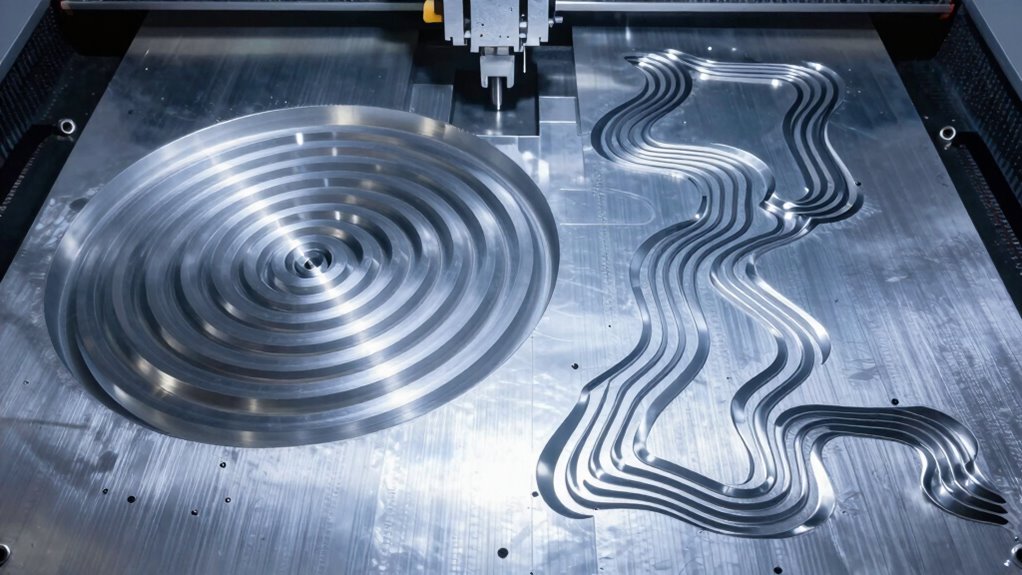

Understanding the differences between pocket, profile, and adaptive toolpaths will help you choose the best strategy for your project. Pocket toolpaths quickly remove large amounts of material, ideal for complex shapes and internal features. Profile paths cut along edges for precise, clean finishes. Adaptive toolpaths optimize cutting based on material and geometry, reducing tool wear and improving surface quality. Continue exploring to learn how to pick the perfect toolpath for your machining needs.
Key Takeaways
- Pocket toolpaths remove large areas of material efficiently, ideal for complex shapes and internal features.
- Profile toolpaths cut along edges and contours, providing precise, clean edges for detailed work.
- Adaptive toolpaths optimize material removal by adjusting cutting parameters dynamically, balancing speed and surface quality.
- Choosing the right toolpath depends on project goals, shape complexity, surface finish, and material properties.
- Combining toolpaths strategically enhances machining efficiency, accuracy, and tool longevity.

Genmitsu Drag Knife Cutter for CNC Router Machine + 20PCS Utility Knife Blades
- Compatible with CNC Machines: Fits standard 1/8'' shank
- Adjustable Cutting Depth: 5 to 11.75 mm control
- Pre-Set Blade Offset: 0 to 8 mm with etched scale
As an affiliate, we earn on qualifying purchases.
As an affiliate, we earn on qualifying purchases.
Understanding CNC Toolpaths: The Basics You Need to Know
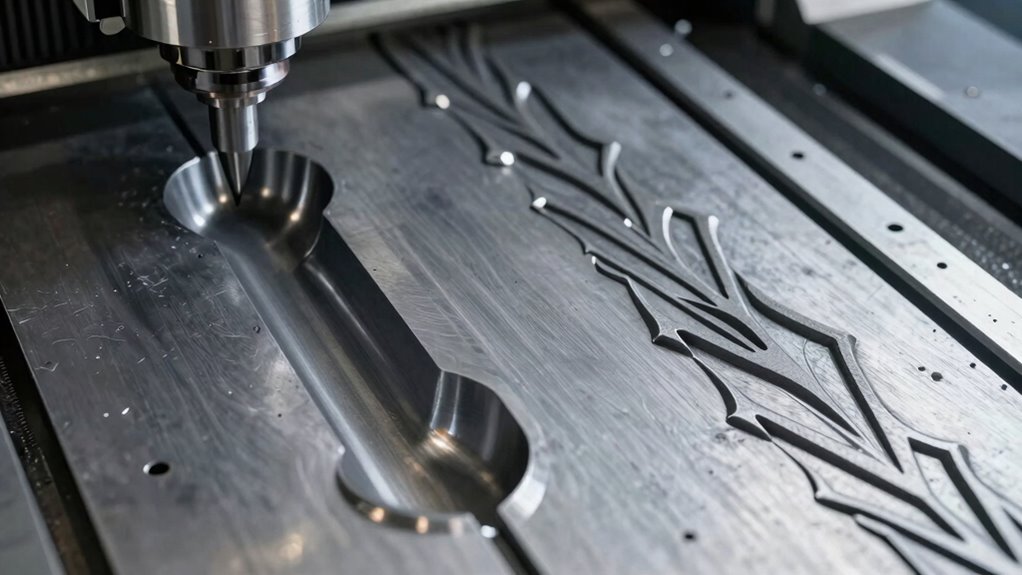
Understanding CNC toolpaths is essential for anyone involved in machining or manufacturing. These paths guide your machine’s cutter to shape materials accurately. Two critical factors that influence the efficiency and quality of your cuts are feed rate and spindle speed. The feed rate determines how fast the tool moves through the material, affecting surface finish and tool life. Spindle speed controls how quickly the cutting tool rotates, impacting the cut’s smoothness and precision. Properly managing these parameters guarantees ideal material removal without causing tool wear or damage. Different toolpaths, such as pocket, profile, or adaptive, rely on precise adjustments of feed rate and spindle speed to achieve desired results. Mastering these basics helps you produce consistent, high-quality parts while reducing machining time and tool costs. Incorporating European cloud innovation into your manufacturing process can enhance data management and process optimization, ensuring more sustainable and secure operations. Additionally, understanding how each toolpath type interacts with material properties can help you select the most efficient strategy for your project.
How to Decide Which CNC Toolpath Fits Your Project

Choosing the right CNC toolpath depends on your project’s specific goals and the material you’re working with. To select effectively, consider these factors:
- Material hardness: Harder materials may require adaptive toolpaths to reduce tool wear and extend tool life.
- Surface finish: Profile paths deliver cleaner edges for detailed or aesthetic work, while pocket paths are better for removing larger material areas.
- Tool wear: If minimizing tool wear is essential, opt for toolpaths that distribute cutting forces evenly, like adaptive strategies.
Pocket Toolpaths: When and Why to Use Them?

Pocket toolpaths are ideal when you need efficient material removal for larger areas. They also excel at cutting complex shapes that other paths might struggle with. Knowing when to utilize them ensures you save time and achieve precise results. Additionally, understanding auditory feedback techniques can enhance your overall machining process by providing real-time monitoring and adjustments. Recognizing the importance of material properties can help optimize toolpath strategies for different workpieces. Moreover, selecting the appropriate cutting parameters can significantly improve the quality and efficiency of your machining process. Being aware of dust collection considerations can also contribute to a cleaner and safer workspace during machining. Incorporating toolpath optimization methods can further improve efficiency and reduce tool wear, especially when working with diverse materials and complex geometries.
Material Removal Efficiency
When you want to maximize material removal while minimizing machining time, pocket toolpaths are an effective choice. They efficiently remove large amounts of material, reducing overall cycle time. To optimize material removal efficiency, consider these points:
- Use stepped or adaptive clearing strategies to reduce material waste and avoid unnecessary tool engagement. Incorporating proper toolpath strategies can further enhance efficiency and surface finish. Additionally, selecting the right cut parameters ensures smoother operations and reduces tool wear. Understanding heat distribution can help prevent overheating and prolong tool life.
- Choose appropriate cut depths and stepovers to balance removal rate with tool wear, preventing premature tool failure.
- Optimize feed rates and spindle speeds to maintain consistent cutting and reduce heat buildup, prolonging tool life.
- Incorporate Free Floating techniques when working on uneven or complex surfaces to improve contact and achieve more uniform material removal. Regular inspection and maintenance of tools and equipment also contribute to consistent results.
Complex Shape Capability
Complex shapes often require more versatile toolpaths to achieve accurate and efficient machining. Pocket toolpaths excel in handling design complexity by adapting to intricate geometries and varying contours. They offer material flexibility, allowing you to remove material from irregular or detailed areas without compromising precision. When working with complex shapes, pockets can efficiently machine internal features, deep cavities, and curved surfaces that other toolpaths might struggle with. Using pockets helps maintain consistent material removal, reducing the risk of errors or tool breakage. You should choose pocket toolpaths when your project involves complex designs that demand careful material management and detailed internal features. Their adaptability ensures you can produce precise, high-quality parts, even with challenging shapes.
Profile Toolpaths: Shaping Your Material Precisely

Profile toolpaths are essential for achieving precise cuts along the edges of your material. To get the best results, you need to take into account optimization strategies that enhance accuracy and efficiency. Additionally, understanding material compatibility ensures your chosen technique produces the desired finish without damage. Incorporating proper ventilation considerations can also improve safety and air quality during machining.
Precision Cutting Techniques
Precision cutting techniques are essential for achieving accurate and clean shapes in your projects. To improve your results, focus on three key aspects:
- Toolpath accuracy: Ensure your toolpaths are precisely aligned to your design, minimizing deviations and rough edges.
- Cutting speed: Adjust your cutting speed to balance efficiency and quality, preventing tool wear or material burn marks.
- Consistent feed rates: Maintain steady feed rates for smooth cuts and better control over the final shape.
- Incorporating understanding of personality assessment tools can help tailor your approach to different materials and project requirements.
Toolpath Optimization Strategies
To achieve clean and accurate shapes, optimizing your profile toolpaths is essential. The right toolpath types and cutting strategies directly impact precision and surface quality. Start by selecting the appropriate profile toolpath for your material and project, considering factors like tool diameter and feed rates. Use strategies such as climb or conventional milling to reduce tool marks and improve edge finish. Adjust cutting parameters to balance material removal and tool life, avoiding unnecessary passes or excessive force. Incorporate lead-in and lead-out moves to ensure smooth entry and exit points, preventing damage. Fine-tuning your toolpath settings minimizes vibrations and maximizes cutting efficiency. Additionally, integrating adaptive machining techniques can enhance efficiency by dynamically adjusting cutting parameters during the process. Overall, mastering these toolpath optimization strategies guarantees tighter tolerances, cleaner cuts, and a better final product.
Material Compatibility Considerations
Choosing the right material is crucial when using profile toolpaths, as different material types respond uniquely to cutting processes. Your choice influences precision, surface finish, and tool longevity. Consider these factors:
- Material types: Soft woods, plastics, and metals each require specific settings to prevent damage.
- Cutting speeds: Adjusting speeds according to material hardness ensures clean cuts without burning or tearing.
- Tool selection: Some materials need specialized tools to achieve ideal results and reduce wear.
Adaptive Toolpaths: Making Complex Cuts Easier
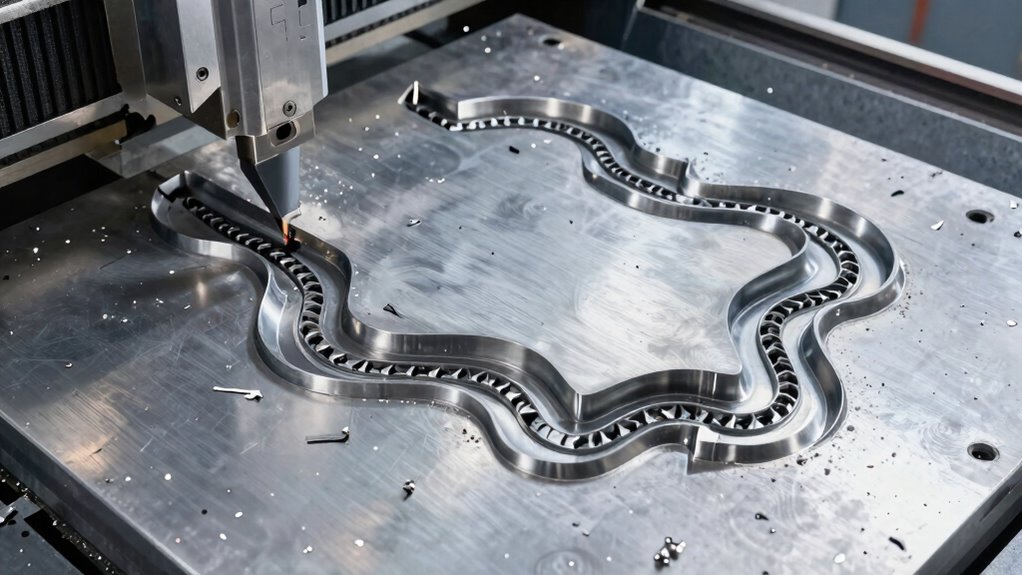
Adaptive toolpaths simplify complex cuts by automatically adjusting cutting parameters based on the material and geometry. This means the tool maintains a consistent chip load, enhancing cutting efficiency and tool life. As the cutter engages different areas, the system adjusts feed rates and spindle speeds, reducing the risk of overloading or undercutting. Using the right amount of cutting fluid becomes easier because the toolpath adapts to the material’s heat and chip evacuation needs. This dynamic approach minimizes tool wear and improves surface finish, especially on irregular or intricate shapes. Additionally, proper machine setup plays a crucial role in maximizing the benefits of adaptive strategies. Real-time adjustments enable the system to respond instantly to changing conditions, further optimizing performance and quality. With adaptive toolpaths, you don’t need to manually tweak settings for each segment, saving time and ensuring precision. It’s a smart way to handle complex cuts while maintaining ideal performance and reducing the need for rework.
Comparing Pocket, Profile, and Adaptive Toolpaths: Which Is Best?
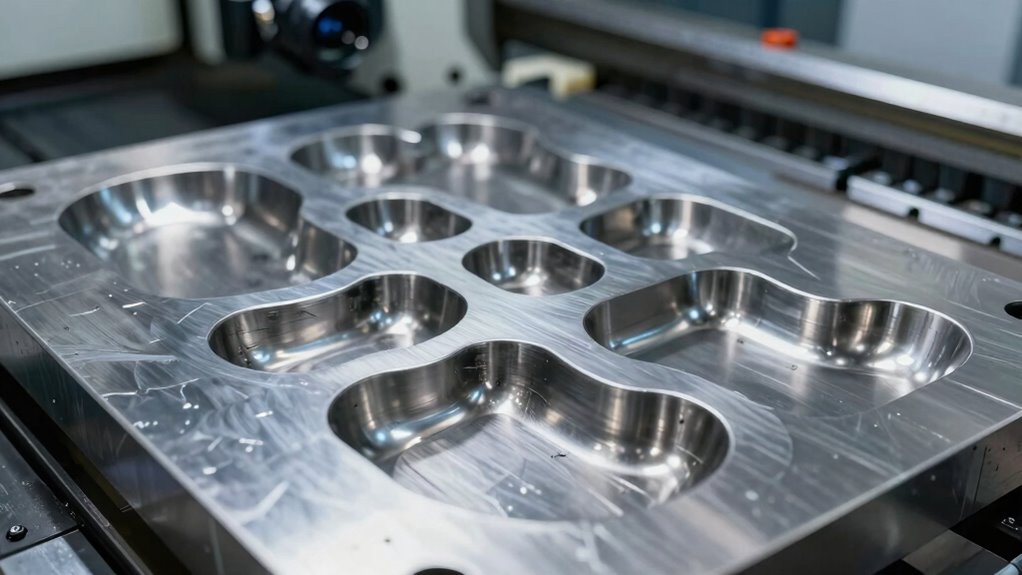
Understanding the differences between pocket, profile, and adaptive toolpaths helps you select the right strategy for your project. Each offers unique benefits:
- Pocket toolpaths excel at removing material in areas with complex shapes, providing high toolpath accuracy but may be slower due to multiple passes.
- Profile toolpaths are ideal for cutting along edges and contours, offering quick machining speed and precise edge detail.
- Adaptive toolpaths optimize material removal by adjusting feed rates, balancing toolpath accuracy with faster machining speeds, especially on large or uneven surfaces.
Choosing the best depends on your priorities: if precision is key, go for pocket or profile; for faster results with good accuracy, adaptive is often preferred.
Tips to Optimize Your Toolpath Settings for Better Results
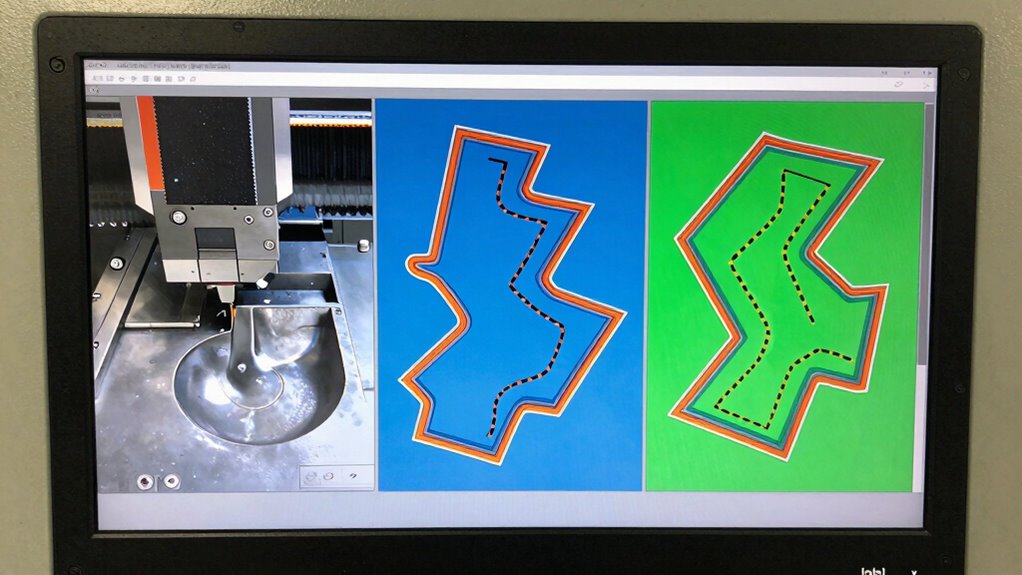
To achieve better results with your toolpaths, start by fine-tuning your machine’s feed rates and spindle speeds based on the material and tooling you’re using. Proper adjustments confirm efficient cutting and prolong tool life. Use the right feed rate to control chip removal and surface finish, while spindle speed affects cutting speed and accuracy. Here’s a quick reference:
| Material | Recommended Feed Rate | Spindle Speed Range |
|---|---|---|
| Soft Wood | Moderate | Low to Medium |
| Aluminum | Higher | Medium to High |
| Steel | Lower | Medium |
Adjust these parameters iteratively, testing small cuts to optimize performance. Paying attention to cutting parameters and their interaction can further enhance your machining efficiency and results. Properly calibrated settings also help prevent tool deflection, which can compromise precision. Understanding material properties allows for more precise adjustments, leading to better outcomes and longer tool life. Additionally, monitoring machine vibrations can help detect issues early and maintain optimal cutting conditions. Incorporating coolant application strategies can also improve tool performance and surface finish.
Common Mistakes to Watch Out for With CNC Toolpaths
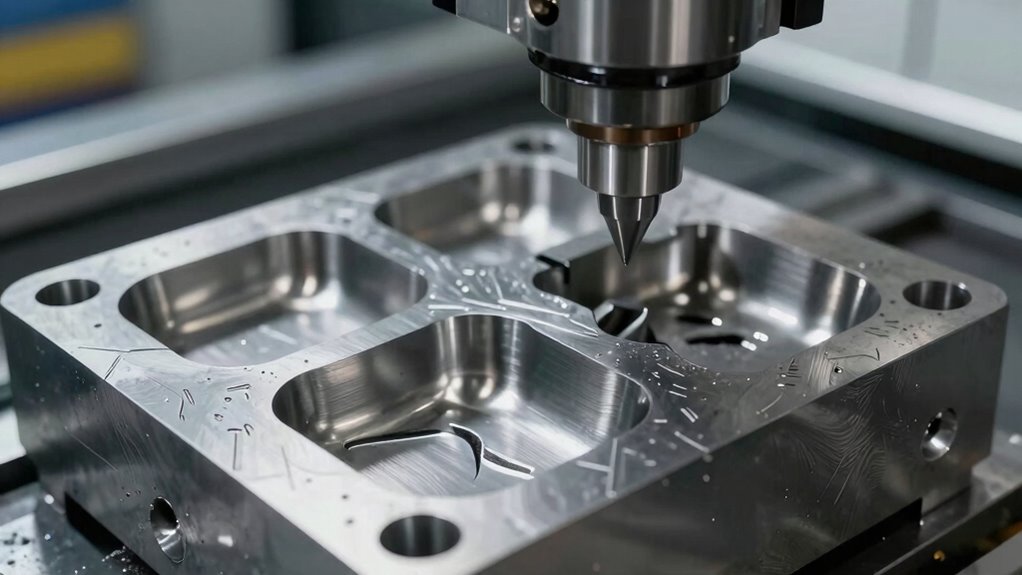
Even with well-optimized toolpaths, mistakes can still compromise your machining quality and efficiency. Common errors include:
Even optimized toolpaths can still lead to errors that affect quality and efficiency.
- Ignoring toolpath accuracy, which can lead to dimensional inaccuracies and poor surface finishes.
- Using incompatible tooling, risking tool breakage or poor cut quality due to tooling compatibility issues.
- Overlooking proper feed rates and speeds, causing excessive tool wear or material damage.
- Neglecting the importance of support breakfast options that can keep your team energized and focused during long machining sessions.
These mistakes often result from rushing setup or neglecting detailed checks. Ensuring your toolpath is accurate and compatible with your tooling is essential. Double-check your settings before machining, and always verify tool compatibility to prevent costly errors. Staying vigilant helps you maintain precision, extend tool life, and achieve optimal results.
Real-World Examples: Choosing the Right Toolpath for Your Machining Needs
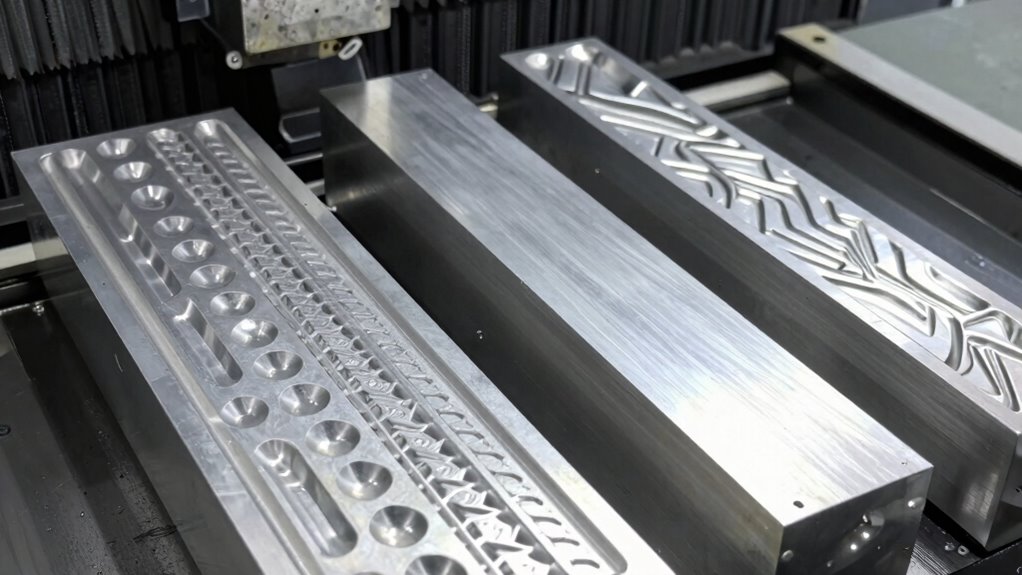
Choosing the right toolpath depends on your specific machining goals and the material you’re working with. For softer materials like plastics or aluminum, pocketing or adaptive toolpaths can reduce tool wear and increase efficiency by removing material quickly and smoothly. If you’re machining harder materials such as steel or titanium, profile cuts with slower feed rates may be necessary to minimize tool wear and maintain precision. Material selection directly influences your choice; softer materials tolerate more aggressive paths, while tougher materials require gentle, precise movements. Consider your desired surface finish and accuracy. Using the appropriate toolpath for your material helps extend tool life, improves cut quality, and optimizes overall production. Always tailor your approach to match material properties and machining objectives for best results.
Frequently Asked Questions
Can Toolpaths Be Combined for Complex Machining Projects?
Yes, you can combine toolpaths for complex machining projects. By leveraging multiaxis strategies and toolpath automation, you can seamlessly integrate different toolpaths like pocket, profile, and adaptive to optimize efficiency and precision. This approach allows you to tackle intricate designs, reduce machining time, and improve surface finish. Combining toolpaths is especially useful for complex geometries, ensuring a smooth workflow and consistent results throughout your project.
How Does Material Type Influence Toolpath Selection?
Material type greatly influences your toolpath choice because it affects material compatibility and machinability factors. For soft materials like wood or plastics, you can use faster, more aggressive toolpaths like adaptive strategies. Harder materials, such as metals, require precise, slower cuts to prevent damage. Understanding these factors helps you select the most efficient toolpath, ensuring ideal performance and tool life based on the material you’re working with.
What Are the Cost Implications of Different Toolpaths?
Choosing the right toolpath impacts your costs critically. While adaptive toolpaths often save time and improve cost efficiency, they may require advanced tooling and higher initial expenses. Pocket and profile paths might lower tooling expenses but could increase machining time. Balancing speed against tooling costs is essential; sometimes, investing in a more efficient toolpath reduces overall expenses, making your project more profitable in the long run.
Are There Specific Software Features for Optimizing Each Toolpath?
Yes, many CAM software offer features for optimizing each toolpath through automation and customization. You can automate parameter adjustments based on material or tool type, ensuring efficiency. Additionally, feature customization allows you to tailor toolpaths precisely to your project needs, improving quality and reducing machining time. Exploring these software features helps you optimize pocket, profile, and adaptive toolpaths effectively, saving you time and enhancing overall machine performance.
How Do Toolpath Choices Affect Machining Time and Finish Quality?
Choosing the right toolpath can dramatically cut your machining time and boost finish quality. If you optimize feed rate adjustments and manage tool wear effectively, you’ll see faster cuts and smoother surfaces. Pocket paths save time on deep cavities, while adaptive toolpaths reduce overall machining time and improve finish by maintaining consistent chip load. Your decision impacts efficiency, tool longevity, and the quality of your final product.
Conclusion
Choosing the right toolpath is like picking the perfect gear for a complex journey—you’ll get smoother cuts, save time, and reduce tool wear. Whether you need the precision of a profile, the efficiency of a pocket, or the versatility of adaptive paths, understanding their differences helps you make smarter choices. Mastering these toolpaths is your key to turning raw material into perfection, just like a skilled artist transforming a blank canvas into a masterpiece.