
To get crisp spines without warping pages, choose a sturdy, adjustable bookbinding press that distributes pressure evenly. Prepare your pages and cover carefully, ensuring everything is aligned and clean. Use protective pads to cushion sensitive areas and avoid over-tightening clamps to prevent distortion. Regular maintenance and proper setup help keep your results consistent. Continue exploring tips to perfect your pressing technique and achieve professional, warping-free results.

Get business pricing on tools and workshop supplies
- Business-only prices and quantity discounts
- Tax-exempt purchasing
- Multiple users, one account, clear invoices
Key Takeaways
- Use a appropriately sized, adjustable press to evenly distribute pressure and prevent warping.
- Prepare pages and covers carefully, ensuring proper alignment and complete drying of adhesives before pressing.
- Apply consistent, even pressure with suitable clamps and padding to achieve a crisp, flat spine.
- Incorporate protective pads like felt to cushion delicate materials and prevent impressions or damage.
- Regularly maintain the press by cleaning, checking components, and calibrating pressure for reliable, professional results.
As an affiliate, we earn on qualifying purchases.
Why a Bookbinding Press Gives Your Spines a Professional Look
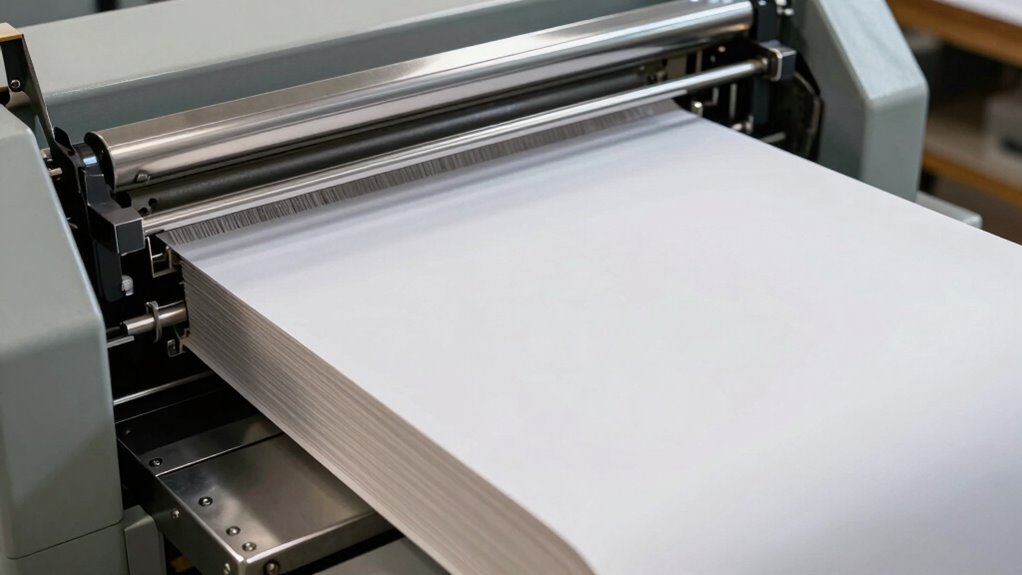
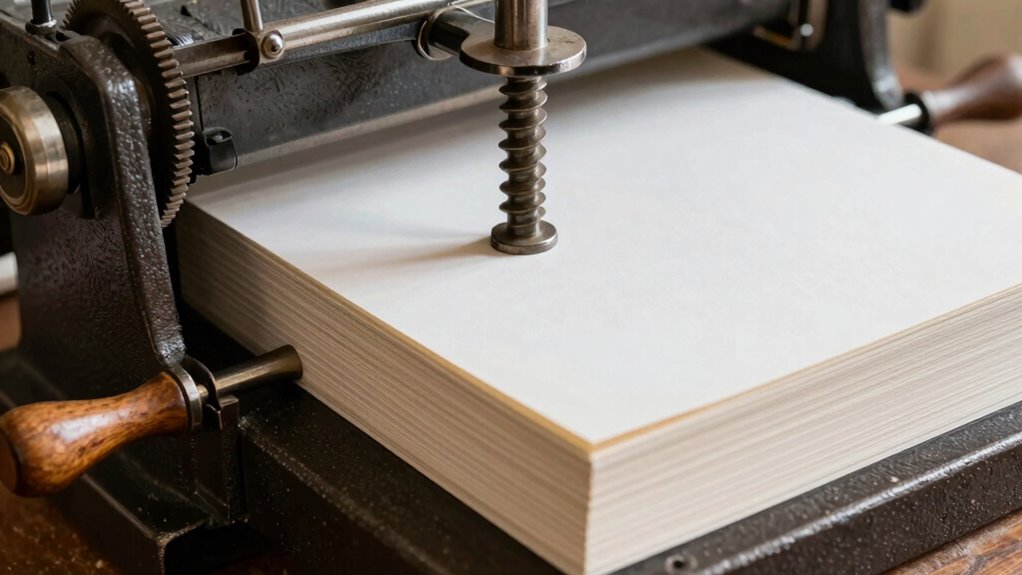
Have you ever noticed how professionally bound books have perfectly straight and smooth spines? That’s no accident. A bookbinding press ensures ideal pressure distribution across the spine, which plays a key role in achieving this polished look. When pressure is evenly applied, the materials bond better, and the spine forms a clean, seamless curve. This enhances binding aesthetics, making your finished book appear more professional and appealing. Without consistent pressure, the spine can warp or develop unevenness, ruining the overall look. Using a press helps you maintain control, ensuring each fold and adhesive application is uniform. Proper use of Free Floating techniques can also prevent sagging or misalignment during the binding process. Additionally, consistent pressure helps prevent spine warping, ensuring your book maintains a professional appearance throughout handling. Applying appropriate pressure distribution techniques guarantees a uniform and durable bond, which is essential for high-quality binding. Incorporating pressure control tools can further improve your results by allowing precise adjustments during binding. Furthermore, understanding how pressure regulation impacts material adhesion can help you achieve even better results. The result? A crisp, smooth spine that looks as polished as a commercial publication, elevating the quality of your handcrafted books.
How to Choose the Right Bookbinding Press for Your Projects

Choosing the right bookbinding press depends on your specific projects and workspace. First, consider the pressing materials you’ll use—whether you’re working with delicate papers or thick covers—to guarantee the press can handle them without damage. Next, evaluate the press size options; smaller presses suit limited spaces and small projects, while larger presses are ideal for bigger books or batch work. Think about the thickness and weight of your projects, and select a press that offers adjustable pressure settings for versatility. Portability might also matter if you move between locations. Additionally, understanding innovative European cloud servers can inspire environmentally friendly and secure practices in your workspace. Incorporating environmentally conscious workspace solutions can further optimize your setup. When selecting a press, it’s also helpful to consider advanced manufacturing techniques that can improve durability and performance. Moreover, assessing the availability of after-sales support ensures you have assistance for maintenance and troubleshooting. Finally, paying attention to energy-efficient equipment can help you reduce your overall environmental impact while maintaining high-quality results. Ultimately, balancing press size, pressing materials compatibility, and your workspace constraints will help you choose a press that produces crisp, professional results without warping your pages.
Getting Your Pages and Cover Ready for Pressing

Before pressing your pages and cover, it’s essential to prepare them properly to guarantee a smooth and professional finish. Start with page preparation by ensuring all pages are stacked neatly, aligned precisely, and free of wrinkles or debris. Use a bone folder or similar tool to crease edges if needed, creating a clean, even surface. For cover alignment, double-check that the cover fits perfectly with the pages, matching the dimensions and edges. Proper cover alignment prevents warping and ensures a consistent appearance after pressing. Make sure any glue or adhesive is fully dried before pressing, since moisture can cause pages to swell or stick unevenly. Additionally, understanding the importance of proper pressure application ensures your book maintains its shape and avoids warping during the process. Applying the correct amount of pressure evenly distributes force across the pages and cover, which is crucial for achieving a crisp spine without damaging the paper or causing warping. Recognizing the significance of consistent pressure helps prevent uneven results and ensures a professional-looking finish. Paying attention to pressure distribution also minimizes the risk of damaging delicate pages, leading to a more durable final product. Incorporating proper techniques for applying pressure can significantly improve the overall quality of your binding, making your finished book look more polished and resilient. Taking these steps helps you achieve crisp spines and a polished final book.
How to Set Up and Clamp Your Book Correctly
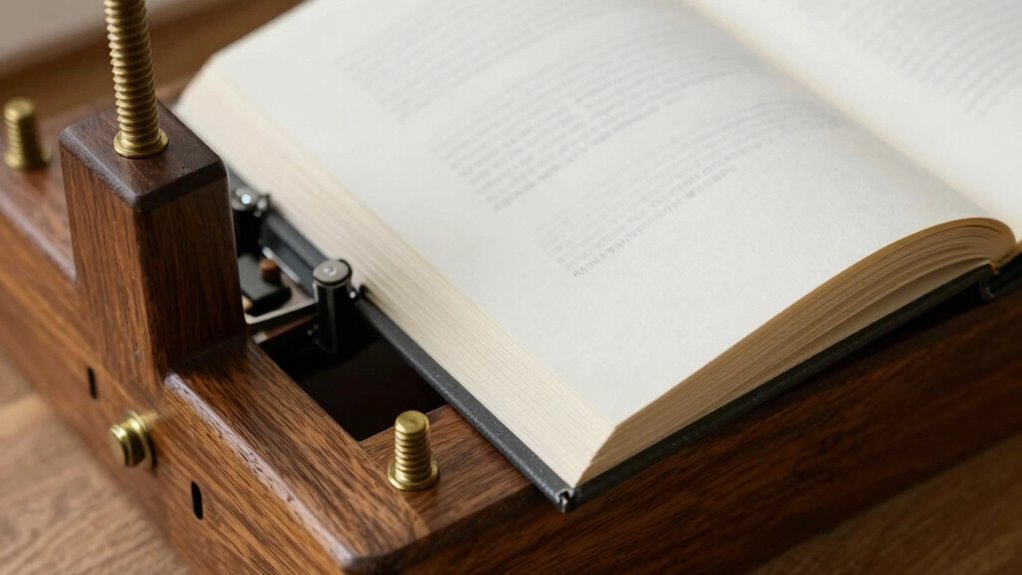
To set up and clamp your book properly, start by choosing the right clamping tools that fit your project. Make sure to align your pages carefully so everything stays straight during pressing. Then, apply even pressure across the entire surface to guarantee a secure, professional finish. For best results, maintain a calm and organized workspace so you can focus on each step without distraction. Additionally, understanding how clamping pressure affects the spine and pages can help prevent warping or damage during the process. Paying attention to pressure distribution can ensure that your spine remains crisp and properly shaped throughout the process. Proper tool maintenance also plays a key role in achieving consistent, high-quality results. Incorporating techniques that promote sustainable practices can also help prolong the life of your tools and ensure optimal performance over time.
Choose Proper Clamping Tools
Selecting the right clamping tools is essential to guarantee your book is held securely without damage. Proper tool selection ensures even pressure, preventing warping or crushing pages. Use clamps that distribute pressure uniformly, such as flat bar clamps or spring clamps designed for bookbinding. Consider the size and shape of your book to choose appropriate tools. Here’s a helpful guide:
| Clamping Techniques | Tool Selection | Best Use Cases |
|---|---|---|
| Distribute pressure evenly | Flat bar clamps | Large or thick books |
| Apply gentle, consistent force | Spring clamps | Small or delicate pages |
| Avoid over-tightening | Padding or felts | Sensitive covers or spines |
Choosing suitable clamping tools helps achieve crisp spines and prevents damage, making your binding process smoother. Incorporating proper pressure distribution can significantly improve your results. Additionally, always double-check that your clamps are not applying excessive force, as this can lead to warped pages or damaged spines.
Align Pages Carefully
Properly aligning your pages is key to achieving a neat, professional-looking binding. Start by carefully arranging all pages so their edges line up evenly. Use your fingers or a straightedge to check for misaligned pages and correct any shifts. Consistent page alignment ensures the spine will be straight and clean after pressing. When setting up, pay close attention to how you position the pages in the press, making sure they’re flush on all sides. Employ proper pressing techniques by gently but firmly holding the pages in place before tightening clamps. This prevents warping or uneven pressure that could distort the pages. Accurate page alignment combined with attentive pressing techniques results in a crisp, durable spine and an overall polished appearance. Additionally, understanding the importance of contrast ratio can help you achieve a clearer, more vibrant finished product.
Apply Even Pressure
Applying even pressure is essential to guarantee your pages bond securely without warping. Proper pressure distribution ensures all parts of the book are pressed equally, preventing distortions or uneven adhesion. Use pressing techniques that evenly distribute weight across the entire spine and cover, avoiding concentrated pressure points. When setting up your press, make sure the clamps are tightened uniformly, checking that the pressure is consistent from end to end. Adjust the pressure gradually, verifying that the pages remain aligned and flat. If your press has adjustable plates or pads, utilize them to achieve uniform contact. Maintaining consistent pressure throughout the process helps create a crisp spine and prevents warping, giving your finished book a professional look and durability.
Tips to Avoid Warping and Damage When Pressing

To prevent warping and damage when pressing your book, start by using protective pads to cushion your materials. Keep the pressing time short and make certain you apply even pressure across the entire surface. Following these tips helps preserve your work and achieves a professional finish. Additionally, understanding sound mechanics can help you better control the pressure and environment to avoid distortion. Being mindful of pressure distribution ensures the spine remains straight and the pages stay flat, reducing the risk of warping. Proper luggage & bags can also assist in evenly distributing pressure during storage or transport, further protecting your work. Incorporating pressure sensors into your setup can provide real-time feedback to optimize your pressing technique.
Use Protective Pads
Have you ever wondered how to prevent warping or damage when pressing your bookbinding projects? Using protective pads is key. Place a press cushion or soft protective pads between the book and the press to distribute pressure evenly. These pads act as a barrier, absorbing excess force and preventing direct contact that could distort pages or the spine. Opt for materials like felt, cotton, or specialized press pads designed for bookbinding. When you layer your project with protective pads, you reduce the risk of warping, dents, or unwanted impressions. Always ensure the pads are clean and free of debris to avoid staining or scratching your work. Incorporating protective pads into your pressing routine helps maintain the integrity and appearance of your finished book.
Limit Pressing Time
Leaving your book in the press too long can cause warping or damage. To avoid this, closely monitor your pressing duration and respect the pressure limits of your press. Over-pressing can lead to distorted pages and compromised spine integrity.
Here are some tips:
- Set a timer to limit pressing duration to recommended periods.
- Apply pressure gradually, then release promptly once the desired crispness is achieved.
- Never exceed the press’s pressure limits, which vary by model.
- Check your book periodically to prevent over-compression.
Maintain Even Pressure
Maintaining even pressure during bookbinding is essential to prevent warping and guarantee a professional finish. To achieve this, focus on consistent hand tension when applying pressure, ensuring you don’t squeeze too hard or too lightly. Proper press calibration is equally important; adjust the press so it distributes force uniformly across the spine and pages. Check that the pressure plates are aligned and that the press applies steady, even force throughout the process. Avoid sudden movements or uneven hand tension, as these can create indentations or distortions. Regularly monitor the pressure during pressing, making small adjustments as needed. By maintaining even pressure, you’ll reduce the risk of warped pages and ensure a crisp, durable spine.
Troubleshooting Common Pressing Problems and Solutions
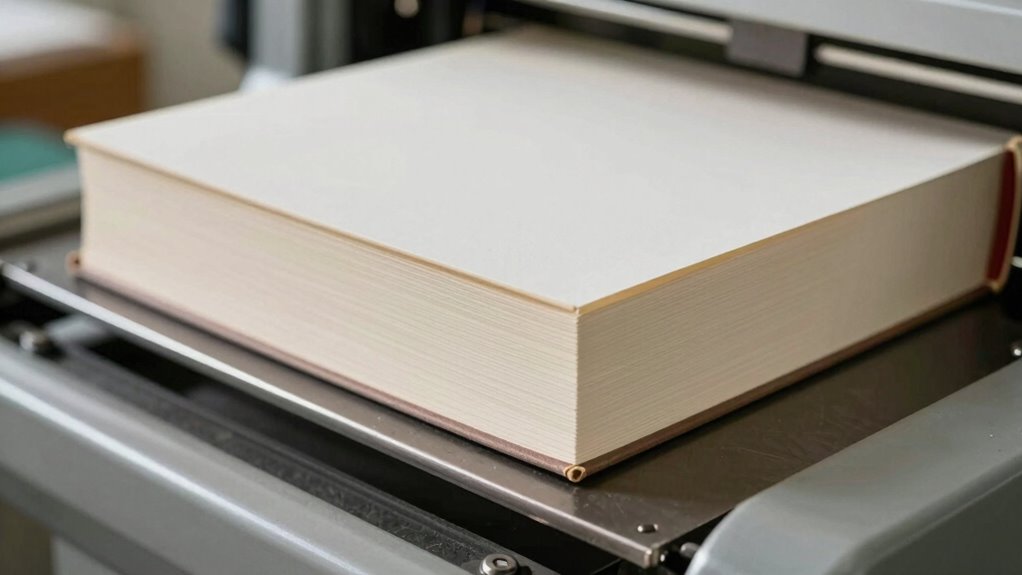
When pressing book covers and pages, problems like uneven pressure, wrinkling, or sticking can arise if the press isn’t set up correctly. Friction issues between the materials and the press can cause pages to stick or shift, while uneven pressure leads to warping or uneven spines. To fix these problems, consider the following:
- Check for smooth, clean surfaces to reduce friction issues.
- Adjust the press to ensure even pressure distribution across the entire surface.
- Use appropriate padding or blotters to prevent sticking and wrinkling.
- Regularly inspect and calibrate your press to avoid uneven pressure and ensure consistent results.
Addressing these issues helps you achieve crisp spines without warping pages or creating defects.
Maintaining Your Bookbinding Press for Consistent Results

To guarantee your bookbinding press produces consistent, high-quality results, regular press maintenance is essential. Proper press maintenance ensures your pressing techniques remain effective and prevents issues like warping or uneven pressure. Start by cleaning the press after each use to remove dust, glue residues, and debris that can affect pressure distribution. Check for loose bolts or worn parts and tighten or replace them as needed. Lubricate moving parts periodically to keep everything functioning smoothly. Regularly inspect the pressure settings to ensure they’re calibrated correctly for each project. Maintaining your press also involves storing it in a dry, stable environment to prevent rust and warping. By staying proactive with press maintenance, you’ll achieve reliable, crisp spines and consistent results every time.
Frequently Asked Questions
Can I Use a Bookbinding Press on Different Types of Paper?
Yes, you can use a bookbinding press on different types of paper. Just pay attention to paper compatibility, as some delicate or thick papers might need gentle press adjustments to avoid warping or damage. Always test on a small sample first, and make sure to adjust the pressure accordingly. This way, you’ll achieve crisp spines without risking any harm to your varied paper types.
How Long Should I Press a Book to Ensure Perfect Spine Alignment?
You should press your book for about 15 to 30 minutes to guarantee proper timing for perfect spine alignment. The press duration depends on the book’s size and thickness; thicker books may need a bit longer. Keep an eye on the process and check periodically to avoid over-pressing. Proper timing is key to achieving a crisp spine without warping pages, so don’t rush the process.
Is It Necessary to Use Protective Padding During Pressing?
Yes, using protective padding during pressing is essential. Padding protection helps distribute pressure evenly, preventing damage and warping to your pages. It acts as a cushion between the press and your book, ensuring a smooth, crisp spine without risking dents or uneven pressure. Always place a soft, protective layer to safeguard your pages and achieve professional results, especially when applying significant pressure.
What Are the Signs of Over-Pressing a Book?
You’ll notice over-pressing a book when the pressing pressure causes warped pages or a distorted spine. If pages look wavy or buckle, it’s a sign you’ve applied too much pressure or pressed too long. Additionally, you might see pages sticking together or a misshapen spine that doesn’t align properly. To avoid this, monitor the pressure carefully and remove the book promptly once the spine looks crisp, preventing warping and damage.
Can a Bookbinding Press Be Used for Other Craft Projects?
Yes, your bookbinding press can become your ultimate DIY craft project partner! Think of it as a versatile tool that can handle everything from artistic bookbinding to pressing flowers, jewelry, or even fabric for creative projects. With a little imagination, you’ll discover it’s not just for books—it’s a powerhouse for all your DIY crafts, making each project professionally pressed, perfectly flat, and ready to impress.
Conclusion
Think of your bookbinding press as a trusty forge, shaping your pages into perfect, professional spines. When used correctly, it’s like crafting a sculpture—careful pressure brings out the beauty without warping or damage. With patience and the right technique, you’ll turn rough pages into polished masterpieces. Just remember, like any craft, practice makes perfect. Keep your press well-maintained, and you’ll create beautiful, sturdy books that stand the test of time.
Halloween Picks
halloween
As an affiliate, we earn on qualifying purchases.