TL;DR

Get business pricing on tools and workshop supplies
- Business-only prices and quantity discounts
- Tax-exempt purchasing
- Multiple users, one account, clear invoices
Hunker has published a DIY guide for turning a Mason jar or other repurposed glass food jar into a hanging bird feeder with a wooden spoon perch. The project uses wire, jute and a handle, and the report advises regular cleaning and careful placement near or away from windows to reduce collision risk.
Hunker has published a do-it-yourself guide for turning an old Mason jar or other glass food jar into a hanging bird feeder, using a wooden spoon as a perch. The project offers a way to reuse household materials, while the report also stresses regular cleaning and placement that helps reduce the risk of birds hitting windows.
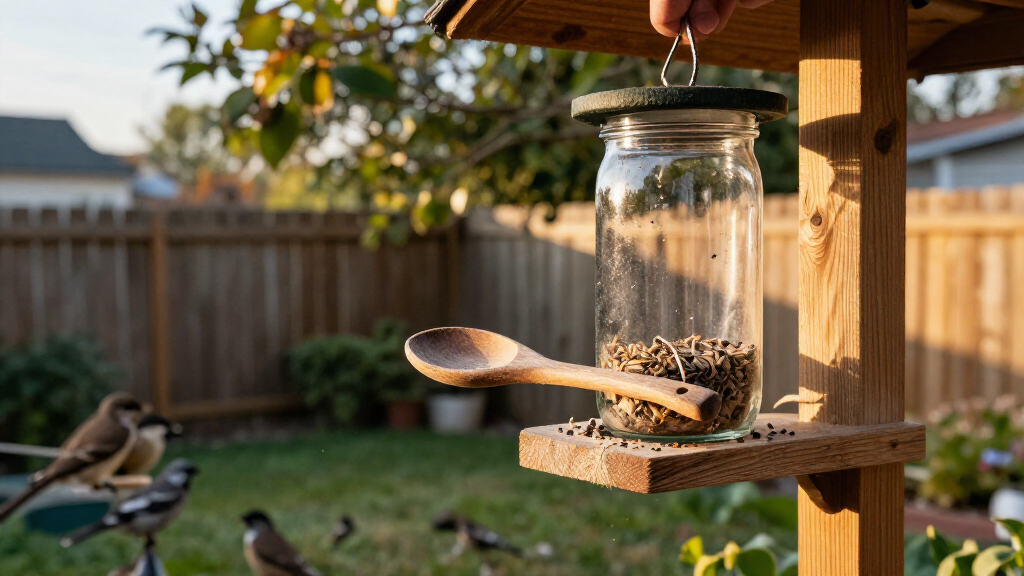
The design attaches the spoon lengthwise to the jar, with the spoon bowl extending beyond the jar’s open end. That exposed bowl serves as a resting and feeding perch. Garden wire wrapped around the jar helps hold the spoon in place, while decorative jute covers parts of the wire. Bendable aluminum wire and wooden beads form a hanging handle, according to the Hunker instructions.
The materials listed include a glass jar, wooden spoon, garden wire, jute, aluminum wire and bird seed. Tools include a glue gun, scissors and paint brushes; the guide also suggests paint suitable for glass. Its sequence is to attach the spoon, secure it with wire, cover sections with jute, paint the jar, let the paint dry, then add the handle and beads before filling the feeder.
Hunker’s report describes the finished feeder as a compact option that can be accessed and cleaned. It recommends cleaning it regularly, particularly during colder periods when more birds may use it. The source does not provide test results for the design’s durability, capacity or performance with different seed types.
Reuse Materials While Feeding Birds
The project is a small-scale reuse idea for people who want to provide seed without buying a purpose-built feeder. It may also suit a compact outdoor space, since the jar hangs from a hook and combines the seed container and perch in one assembly. Those practical benefits are presented in Hunker’s report, not established through comparative testing.
Feeder placement and upkeep matter beyond appearance. The guide advises setting it either within about three feet of a window or at least 30 feet away, a placement recommendation intended to reduce collisions. It also advises keeping native plants and, where possible, nearby trees around the feeding area so birds have cover. Regular cleaning is needed to keep the feeder in usable condition, with more frequent attention suggested when use increases.
Popular right now

Shark Rotator Lift-Away Upright Vacuum with HEPA Filter (NV501)

Breville Bambino Espresso Machine, Brushed Stainless Steel (BES450BSS)

TCL T7 Series 85-Inch 4K 144Hz QLED Smart Google TV
As an affiliate, we earn on qualifying purchases.
The Jar-and-Spoon Design
The report credits the example design to Anna King of makinghomematters. In that version, the jar hangs sideways and the spoon is fixed along its length, allowing birds to reach seed at the open end while resting on the spoon bowl. Hunker presents the project as a decorative, farmhouse-style feeder that can be made with materials people may already have.
The article notes that bird food can be harder to find in winter, but does not cite data about local bird populations or establish that this particular feeder provides a measurable benefit. It suggests choosing seed and paint according to preference; its practical instructions focus on assembling and hanging the jar feeder.
““the spoon acts as a perch for birds””
— Hunker
Durability and Local Guidance
The supplied report does not state how long the feeder lasts outdoors, whether its glue and paint withstand rain and freezing conditions, or how much seed the jar holds. It also does not give a specific cleaning schedule or explain which seed types are suitable for different local birds. Those choices may depend on the materials used and the conditions where the feeder is installed.
The window distances are recommendations reported by Hunker; the source does not identify a study or local wildlife authority behind them. Readers should check local guidance if they need advice tailored to the birds and hazards in their area. The report also does not establish that a painted jar will attract more birds than an unpainted one.
Assembly, Placement and Upkeep
The next steps for anyone following the guide are to assemble the jar and spoon, allow any paint to dry, add the hanging wire, and choose a stable outdoor hook. Before filling it, the feeder should be positioned according to the report’s window-spacing advice, with nearby native plants or trees where available. The guide does not specify a load rating for the handle or hanging point, so the finished assembly should be checked for stability before use.
After installation, owners will need to monitor the feeder and clean it regularly, rather than treating it as a set-and-forget decoration. Hunker provides no follow-up results on how many birds use the design or how it performs across seasons; those outcomes remain dependent on placement, local bird activity and maintenance.
Key Questions
What materials does the bird feeder require?
The listed materials are a glass jar, wooden spoon, garden wire, jute, bendable aluminum wire, wooden beads and bird seed. The instructions also call for a glue gun, scissors, paint brushes and paint suitable for glass.
How does the wooden spoon work?
The spoon is attached lengthwise to the jar, with its bowl extending beyond the open end. The bowl serves as a perch where birds can rest while reaching the seed.
Where should the feeder hang?
Hunker recommends placing it either within about three feet of a window or 30 feet away to help reduce collision risk. The report also suggests nearby native plants and, where possible, trees for cover.
How often should the feeder be cleaned?
The report says to clean it regularly, especially when more birds are using it in colder weather. It does not specify a fixed cleaning interval.
Source: hunker.com