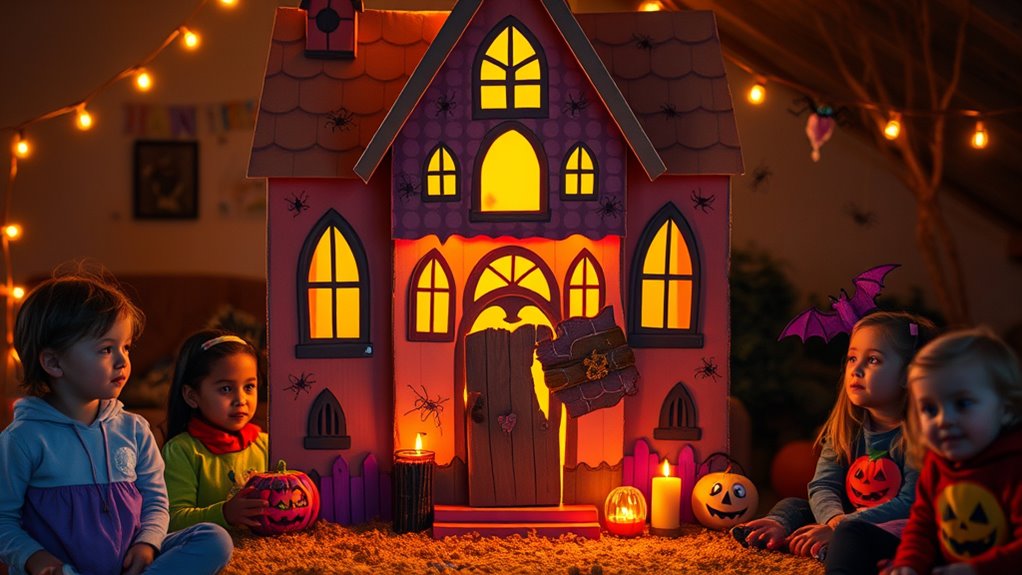
To build a cardboard haunted house for kids, start by gathering large boxes, scissors, tape, and markers, then plan your design with sketches including doors, windows, and spooky features. Reinforce structures with extra tape or glue, and make certain all openings are safe and stable. Decorate with creepy props, color schemes, and hidden surprises to boost the eerie atmosphere. If you keep going, you’ll discover how to make it sturdy, fun, and sure to delight the kids.
Key Takeaways
- Plan your design with sketches, including doorways, windows, and spooky features, ensuring safety and child-friendly features.
- Use sturdy, reinforced cardboard with extra tape and supports for structural stability and durability.
- Carefully cut openings, smooth edges, and reinforce with additional cardboard or tape to ensure safe, secure passageways.
- Decorate with spooky props, themed colors, and lighting effects like flickering LEDs to create an immersive haunted atmosphere.
- Engage kids in decorating, storytelling, and personalizing the house to foster creativity and excitement.
large cardboard boxes for crafts
As an affiliate, we earn on qualifying purchases.
As an affiliate, we earn on qualifying purchases.
Gathering Supplies and Planning Your Design

Before you begin building your cardboard haunted house, it’s important to gather all the supplies you’ll need and plan your design carefully. Start by collecting large cardboard boxes, scissors, tape, and markers. Think about costume ideas for kids that match your haunted theme, incorporating spooky accessories or face paint. Safety precautions are essential—use child-safe scissors and supervise all cutting and assembly. Sketch out your design to visualize doorways, windows, and spooky features. Consider adding lights or eerie decorations to enhance the atmosphere. Make sure your plan includes accessible entrances and exits, keeping safety in mind. Proper planning guarantees the haunted house is fun, creative, and safe, setting the foundation for a successful build that kids will love to explore. Additionally, researching Halloween product reviews can inspire themed decorations and accessories to elevate your haunted house experience. Incorporating energy efficiency principles in your lighting choices, such as LED lights, can also help conserve energy and extend the enjoyment of your haunted house. Taking into account indoor air quality considerations can help ensure the space remains comfortable and free of stale air during extended play. Using smart security technologies like security cameras or smart lighting can add an extra layer of safety and interactivity to your haunted setup.
Constructing the Base and Structural Elements

To guarantee your haunted house is sturdy and safe, start by constructing the base and main structural elements first. Use sturdy cardboard boxes and reinforce them with extra layers of tape to create a strong foundation. Follow your design plans carefully, ensuring each piece fits securely. When building walls and supports, consider using cross-bracing techniques from DIY crafts to add stability. Keep safety tips in mind—avoid sharp edges and ensure no loose parts can cause injury. Double-check that all joints are well-taped and secure before moving on. Building a solid frame now will prevent collapses later. Additionally, understanding the importance of contrast ratio can help in choosing proper lighting to enhance spooky effects and visibility inside your haunted house. Incorporating water park features such as splash zones or themed decor can also add fun elements for kids and make your haunted house more engaging. Remember, a stable structure is key to a fun and safe haunted house experience for the kids. Keep your workspace organized and work carefully through each step. Using safety precautions during construction can further reduce the risk of accidents and ensure a secure environment for all participants. Employing structural integrity principles is essential for maintaining the durability of your haunted house over time. Moreover, paying attention to marriage infidelity warning signs can help identify potential issues early if adults are involved in the planning or supervision process.
Adding Doors, Windows, and Passageways

Now, consider adding vintage decor elements like old-fashioned door handles or window shutters to enhance the haunted house’s rustic charm and make it more immersive for kids. Incorporating such decorative features can also give your cardboard creation a more authentic and spooky atmosphere. Additionally, integrating fraud detection techniques in the design process can help ensure that your building plans are secure and free from errors before construction begins. Using data analysis can help you identify potential design flaws early, improving overall safety and accuracy. Furthermore, selecting dog names that match the theme of your haunted house can add a fun and personalized touch to the experience.
Crafting Entry Points
Creating entry points for your cardboard haunted house is essential for guiding kids inside and enhancing the spooky atmosphere. When crafting doors, windows, and passageways, consider adding lighting effects to make them more inviting or eerie. Battery-operated LED lights work well and are safe if used with safety precautions. Ensure all wiring is hidden and secure to prevent accidents. Cut openings carefully to avoid sharp edges—use sandpaper to smooth rough areas. For doors and windows, reinforce the edges with extra cardboard strips to prevent tearing. Passageways should be wide enough for kids to move comfortably, and lighting within them can create mysterious shadows. Always double-check that all entry points are stable and safe, keeping safety precautions top of mind as you design your haunted house.
Designing Hidden Passages
Designing hidden passages adds an element of surprise and mystery to your cardboard haunted house. You can create secret doors that blend into the walls or hidden compartments behind removable panels, encouraging kids to explore like maze puzzles. Incorporate windows or small doors that appear ordinary but lead to secret rooms or passageways. Use flaps or slides to open concealed entrances, making navigation intriguing and fun. For added complexity, design hidden compartments where kids can “discover” surprises or treasures. These secret pathways keep kids engaged, sparking their curiosity and sense of adventure. Remember to make the hidden passages safe and easy to access, so kids can enjoy the thrill without frustration. With a little creativity, your haunted house will be full of exciting surprises!
Decorating With Spooky Details and Themes

To really bring your haunted house to life, start with spooky color choices like dark purples, blacks, and eerie greens. Add creepy props such as spiders, skeletons, or fog machines to create a chilling atmosphere. Finish with themed wall decor that ties everything together and keeps kids immersed in the spooky mood. Incorporating visual storytelling techniques can enhance the spooky ambiance and make the experience more immersive for children. Using color psychology to select hues can also evoke specific spooky feelings and set the tone for your haunted house. Additionally, selecting appropriate sound effects can significantly heighten the emotional impact and overall eeriness of your haunted setup.
Spooky Color Choices
Choosing the right spooky colors can make your cardboard haunted house instantly feel eerie and inviting. Color psychology plays a big role here—dark hues like black and deep purple evoke mystery and fear, while ghostly whites add a chilling touch. Incorporate spooky symbolism by using colors associated with themes like blood-red for horror or sickly green for decay. These choices help set the mood and guide visitors’ emotions. Use contrasting colors to highlight certain areas, like bright orange for pumpkins or red for creepy eyes. Keep in mind that subtle color variations can amplify the haunted feel without overwhelming the senses. By thoughtfully selecting your haunting palette, you’ll create an atmosphere that’s both captivating and spine-tingling for kids.
Adding Creepy Props
Adding creepy props brings your cardboard haunted house to life and instantly boosts its spooky atmosphere. Incorporate eerie elements like fake spider webs, plastic skeletons, or tattered cloth to create a haunted house theme that feels immersive. Use old Halloween costumes, such as ghostly cloaks or spooky masks, to add haunting characters or decorations. Place flickering LED candles or dim lights inside to cast shadows and enhance the creepy vibe. Think about adding fake gravestones or hanging bats to reinforce the haunted house theme. These props make your setup more engaging for kids, transforming simple cardboard into a terrifying, fun experience. Focus on details that evoke mystery and spookiness, and your haunted house will be a memorable Halloween highlight.
Themed Wall Decor
Transforming your cardboard haunted house with themed wall decor instantly amplifies its spooky atmosphere. Use DIY lighting, like flickering LED candles or string lights, to cast eerie shadows and highlight creepy details. Hang tattered fabric, fake spider webs, or painted silhouettes to create a haunted feel. To guarantee safety, secure all decorations firmly and avoid sharp edges or loose items. Keep electrical components away from flammable materials and never overload outlets. Incorporate themed elements like ghostly faces or haunted forest scenes painted directly onto the walls. These details make your haunted house immersive and chilling. Remember, safety always comes first—use non-toxic paints and lightweight decorations that won’t pose hazards for kids exploring the space. With the right themed wall decor, your haunted house becomes truly haunting.
Reinforcing and Final Touches for Stability

To make certain your cardboard haunted house stands firmly and safely, it’s essential to reinforce key structural points and add final touches that boost stability. Start by checking all joints and corners, adding extra strips of cardboard or tape where needed to reinforce the structure. Use heavy-duty glue or duct tape to secure weak spots, especially at doorways and windows. For added stability, consider inserting vertical supports inside walls or attaching the house to a sturdy base. Don’t forget to smooth out sharp edges and secure loose flaps for safety. Additionally, understanding structural stability principles can help you build a safer and more durable haunted house. Incorporating weight distribution techniques can further enhance the overall sturdiness of your build. Ensuring proper material strength can also prevent early wear and tear, keeping your haunted house resilient throughout the spooky season. Finally, add finishing touches like extra tape or decorative elements to hide reinforcement areas. These final touches not only improve appearance but also ensure your haunted house remains durable throughout the spooky season.
Tips for Engaging Kids in the Creative Process

Getting kids involved in the creative process makes building the haunted house more fun and meaningful. To keep them engaged, try these tips:
Getting kids involved in the haunted house project adds fun and meaning to the experience.
- Use storytelling techniques to craft spooky stories that inspire their decorations and scenes.
- Let kids choose themes or characters, making their ideas the centerpiece of the design.
- Encourage costume integration by planning outfits that match the haunted house’s theme, boosting their excitement.
- Assign simple tasks like painting, cutting, or adding details, so they feel a sense of ownership and accomplishment.
Frequently Asked Questions
What Safety Precautions Should I Take During Construction?
When considering safety precautions during construction, you should prioritize wearing safety gear like gloves and goggles to protect yourself. Guarantee supervision protocols are in place, especially if kids are involved, to prevent accidents. Keep the workspace tidy and away from hazards, and use sturdy materials. Always stay alert, follow safety guidelines, and have a first aid kit nearby. These steps help create a safe environment for everyone involved.
How Can I Make the Haunted House Weatherproof?
Think of weatherproofing your haunted house like giving it a superhero shield. To keep it dry and durable, use weatherproofing tips like sealing all seams with waterproof tape and applying a clear outdoor sealant. Opt for durable materials like thick corrugated cardboard or plastic sheets. These steps make certain your haunted house withstands rain and wind, keeping the spooky fun safe and intact for kids even in unpredictable weather.
What Age Group Is Suitable for This Project?
You should consider the age appropriateness and skill level when deciding if this project suits your kids. Typically, children aged 5 and up can handle simple tasks like taping and decorating, but younger kids might need adult assistance. For older children, they can take on more complex parts like cutting and designing. Always match the project to their skill level to guarantee safety and fun, making it an enjoyable experience for everyone.
Are There Eco-Friendly Materials I Can Use?
You can definitely use eco-friendly materials for your project. Consider recycled resources like old boxes, newspapers, or cardboard to reduce waste. Biodegradable options such as plant-based glues and natural paints are also great choices. These materials not only help protect the environment but also make your project more sustainable. By choosing eco-friendly options, you’re creating a fun, safe space while caring for the planet.
How Can I Store the Haunted House After Halloween?
To store your haunted house after Halloween, explore smart storage solutions like large cardboard boxes or plastic bins. Use folding techniques to collapse the structure easily, saving space and preventing damage. Make sure to disassemble carefully, keeping track of all pieces. Label everything clearly, and store it in a cool, dry place. This way, you’ll keep your haunted house in good shape for next year’s spooky fun.
Conclusion
Now that you’ve built your cardboard haunted house, you’ve created a magical space where imagination and spooky fun collide. Remember, it’s not just about the structure but the memories you craft and the laughter you ignite. Like a ghost lingering in the night, your creativity leaves a lasting impression—proof that with a little effort, even cardboard can transform into a haunted masterpiece. So, let your imagination run wild and watch the magic unfold.