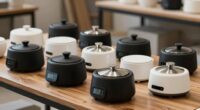
To prevent sinkholes and get a smooth candle finish, keep your wax within the ideal pouring temperature range for your container type—typically 135-145°F for glass, 140-150°F for metal, and 130-140°F for ceramic. Using a reliable thermometer helps make certain of accurate measurements, and maintaining consistent temperature control during melting and pouring is key. If you want to learn specific techniques and tips for perfect candles, you’re in the right place.

Get business pricing on tools and workshop supplies
- Business-only prices and quantity discounts
- Tax-exempt purchasing
- Multiple users, one account, clear invoices
Key Takeaways
- Maintain wax temperature within specific ranges (e.g., 135-145°F for glass containers) during pouring to prevent sinkholes.
- Use reliable thermometers to monitor and keep wax at optimal pouring temperatures consistently.
- Properly dry containers and wax before pouring to avoid surface moisture that causes imperfections.
- Pour wax slowly and evenly, and allow gradual cooling to promote smooth, sinkhole-free surfaces.
- Regularly calibrate tools and adjust heat sources based on ambient conditions for precise temperature control.
As an affiliate, we earn on qualifying purchases.
Why Wax Temperature Matters for Candle Quality
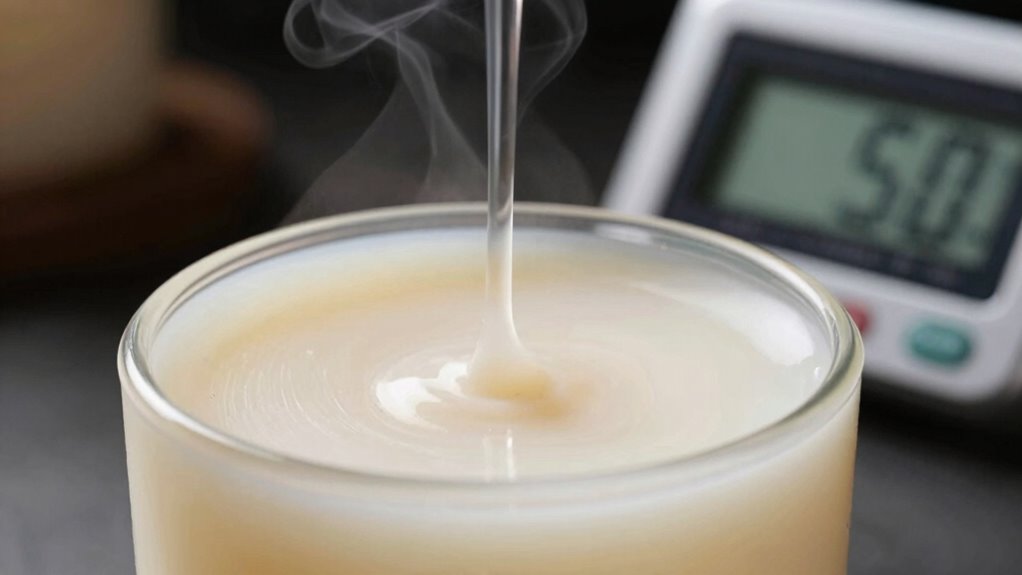
Understanding why wax temperature matters is essential because it directly affects how your candle turns out. If you don’t pay attention to the right temperature, you risk uneven wax cooling, which can lead to wax crystal formation that ruins the smooth surface. Proper temperature control helps ensure a consistent, glossy finish and prevents sinkholes. Additionally, temperature influences fragrance evaporation; too hot, and scent compounds may evaporate before you pour, resulting in weak fragrance throw. If you pour at the wrong temperature, you might lose some of the intended aroma, diminishing your candle’s appeal. Carefully monitoring and maintaining the correct wax temperature ensures your candle has a beautiful appearance and strong scent, giving you a high-quality finished product that’s both visually appealing and fragrant. Understanding the importance of wax temperature can also help you achieve a more professional-looking candle with fewer defects. Paying attention to temperature control is especially crucial when aiming for a smooth, glossy surface and consistent quality in your candles. Mastering temperature management is a key step in producing high-quality candles with consistent results. Proper temperature management also reduces the risk of odor issues, such as unpleasant smells caused by improper curing or contamination. Additionally, maintaining the correct temperature can improve candle burn quality, ensuring a clean and even burn throughout the life of the candle.
What Are the Ideal Wax Temperatures for Different Candle Types?
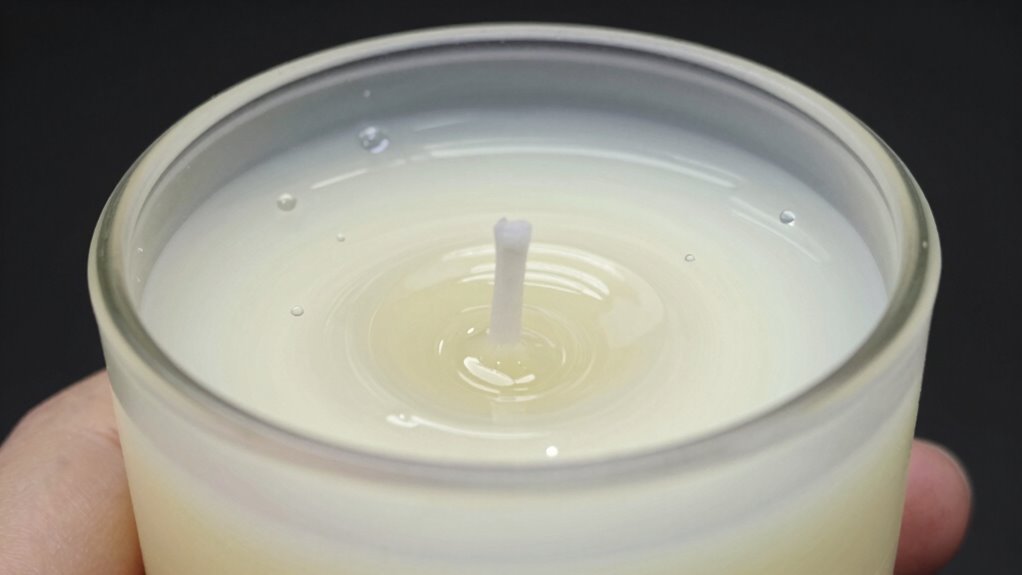
Different types of candles require specific wax temperatures to achieve the best results. Knowing these ideal ranges guarantees proper wax melting, scent throw, and fragrance compatibility. For container candles, you should heat wax to around 170–180°F to prevent sinkholes and achieve a smooth finish. Pillar candles often need slightly higher temperatures, around 180–185°F, to ensure a solid, even burn. Votive candles typically melt at 160–170°F, providing a uniform appearance. Tealights work well at 150–160°F for quick melting and good fragrance dispersal. Proper temperature control is essential to prevent issues like cracking or uneven burning. Maintaining consistent wax temperature helps achieve better results and reduces waste. When working with different waxes, such as soy wax, understanding their melting points ensures optimal candle performance. Here’s a quick reference:
| Candle Type | Ideal Wax Temperature |
|---|---|
| Container | 170–180°F |
| Pillar | 180–185°F |
| Votive | 160–170°F |
| Tealight | 150–160°F |
| Soy Blends | 170–185°F |
Matching these temperatures optimizes wax melting and fragrance compatibility. Additionally, understanding color accuracy in candle dyeing can help achieve consistent and vibrant colors across batches.
How to Measure Candle Wax Temperature Accurately?
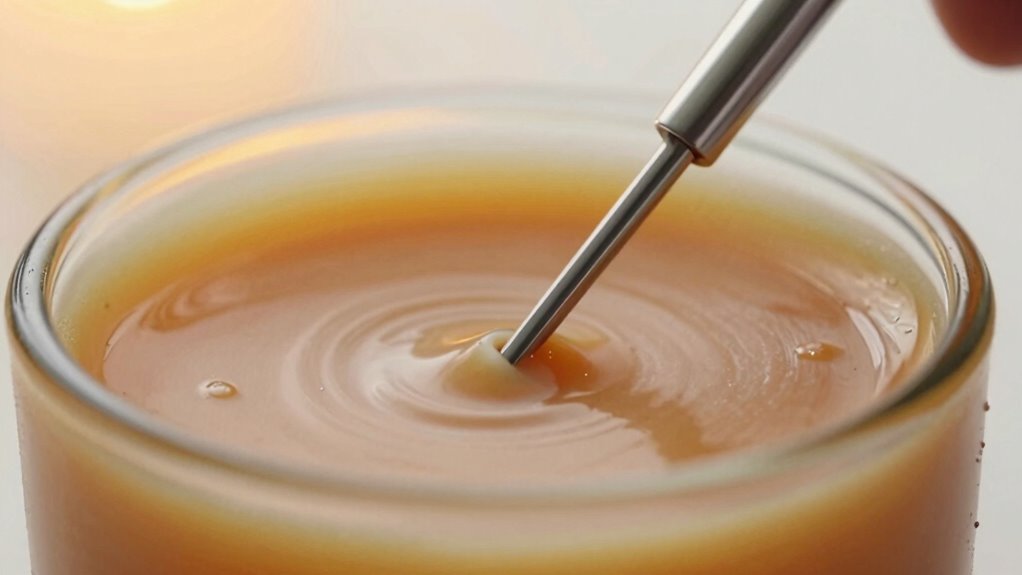
To measure candle wax temperature accurately, you need a reliable thermometer designed for high heat. Measuring devices like digital or infrared thermometers provide precise readings, ensuring your wax is at the correct temperature. Before checking, make sure your thermometer is calibrated properly for temperature accuracy. Insert the thermometer probe into the center of the melting wax, avoiding contact with the container sides or bottom, which can give false readings. Hold the thermometer steady until the display stabilizes. Record the temperature, and compare it to your target range to determine if the wax is ready. Using accurate measuring devices helps prevent issues like sinkholes, ensuring your candle burns evenly and safely. Regularly verifying your thermometer’s accuracy guarantees consistent results every time. Additionally, monitoring piercing care and hygiene can help prevent infection risks that might compromise overall safety during candle-making or other activities. Proper temperature measurement practices are essential for achieving optimal candle quality and safety. Being aware of candle wax properties can also assist in selecting the right temperature for different wax types, further reducing the risk of imperfections. To further improve consistency, consider keeping a temperature log of your candle batches to track optimal heating points.
Common Causes of Sinkholes and How Temperature Prevents Them
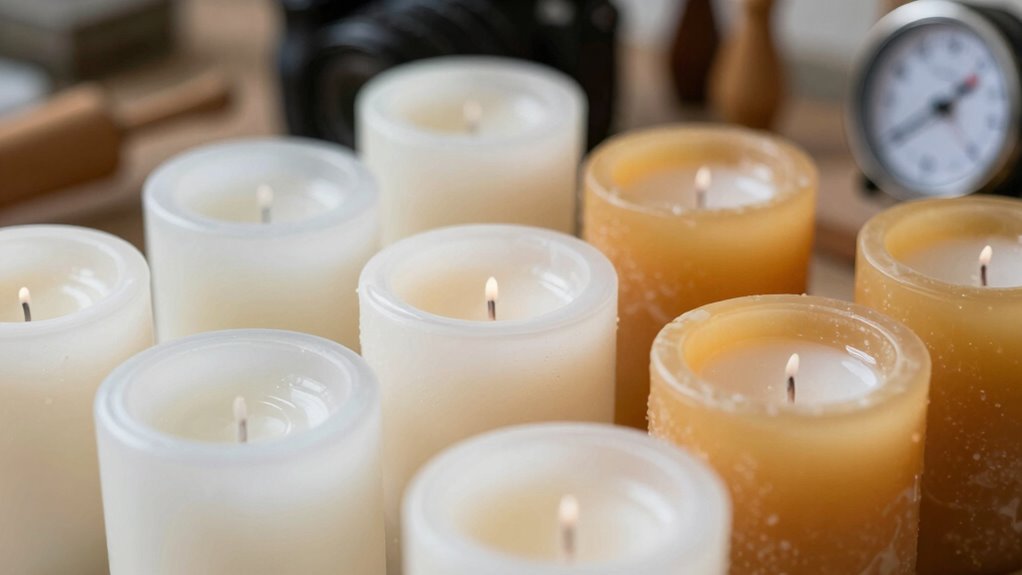
Sinkholes in candle wax often happen when temperature isn’t controlled properly or pouring techniques aren’t consistent. If the wax isn’t at the right temperature, it can cause surface moisture to create voids. Maintaining proper temperature and surface conditions helps prevent these sinkholes from forming. Proper temperature control is essential for achieving a smooth, even surface and avoiding imperfections. Additionally, understanding the temperature ranges suitable for different types of wax can help you fine-tune your process and prevent common issues. Being aware of best practices in candle making can also significantly reduce the likelihood of sinkholes occurring. Using the appropriate temperature measurement tools ensures accuracy and consistency throughout the process. Regularly monitoring the tool calibration ensures your measurements stay accurate for optimal results.
Proper Temperature Control
Maintaining the correct temperature during candle pouring and curing is vital to prevent sinkholes. When you keep the wax at the proper heat, you guarantee consistent wax flow and avoid uneven cooling that can cause voids. Proper temperature control helps achieve the right wax consistency, which is essential for a smooth, even surface. Using effective cooling techniques, like insulating the candle or controlling the environment, slows down the cooling process and prevents rapid solidification that leads to sinkholes. If the wax cools too quickly or unevenly, air bubbles and voids can form, weakening the candle’s structure. By monitoring temperature closely and employing proper cooling methods, you’ll create a stable, high-quality candle free of sinkholes. Additionally, understanding the heat transfer process allows for better control over cooling rates and wax integrity. Being aware of the thermal properties of wax can further enhance your ability to prevent defects during solidification. Incorporating temperature regulation tools, such as thermometers and controlled heating elements, can significantly improve results. Moreover, conducting repeatable tests on your wax and cooling setup can help identify optimal conditions for different wax types and environmental factors. Recognizing the cooling rate is crucial for adapting your process to different project needs and avoiding common pitfalls.
Consistent Pouring Techniques
Consistent pouring techniques are essential to prevent sinkholes, as uneven or rushed pours can trap air and cause voids in your candle. Maintaining pouring consistency ensures your wax flows smoothly and evenly fills the container. Proper temperature control plays a crucial role, helping you pour at the right moment for ideal results. To improve your technique, follow these tips:
| Pouring Speed | Wax Temperature | Container Type |
|---|---|---|
| Steady, slow | 135-145°F | Glass |
| Consistent | 140-150°F | Metal |
| Controlled | 130-140°F | Ceramic |
| Gentle | 125-135°F | Any |
Adhering to these guidelines reduces the risk of air pockets and voids, ensuring a smooth, solid finish. Proper temperature control is a key factor in achieving high-quality candle pours and preventing imperfections. Proper temperature regulation also helps prevent wax cracking and surface imperfections, ensuring a professional appearance.
Surface Moisture Impact
Surface moisture on your candle container or wax can lead to sinkholes if not properly managed. When moisture remains on the surface, it interferes with wax adhesion, causing uneven cooling and trapped air pockets. These pockets can develop into sinkholes as the wax contracts. To prevent this, ensure your container and wax are thoroughly dry before pouring. Using a heat gun or a cloth to remove surface moisture helps maintain ideal wax adhesion. Proper temperature control also promotes a smooth surface, reducing the chance of moisture-related imperfections. Additionally, understanding material compatibility and how different waxes respond to temperature variations can further reduce sinkhole formation. Ensuring proper airflow during cooling can also help minimize surface moisture buildup. Managing cleaning appliances and maintaining optimal conditions can further improve wax adhesion and surface quality. By managing surface moisture, you improve wax adhesion and create a more stable, even candle surface. This minimizes the risk of sinkholes and ensures a clean, professional finish for your candles.
How to Pour Candle Wax at the Right Temperature
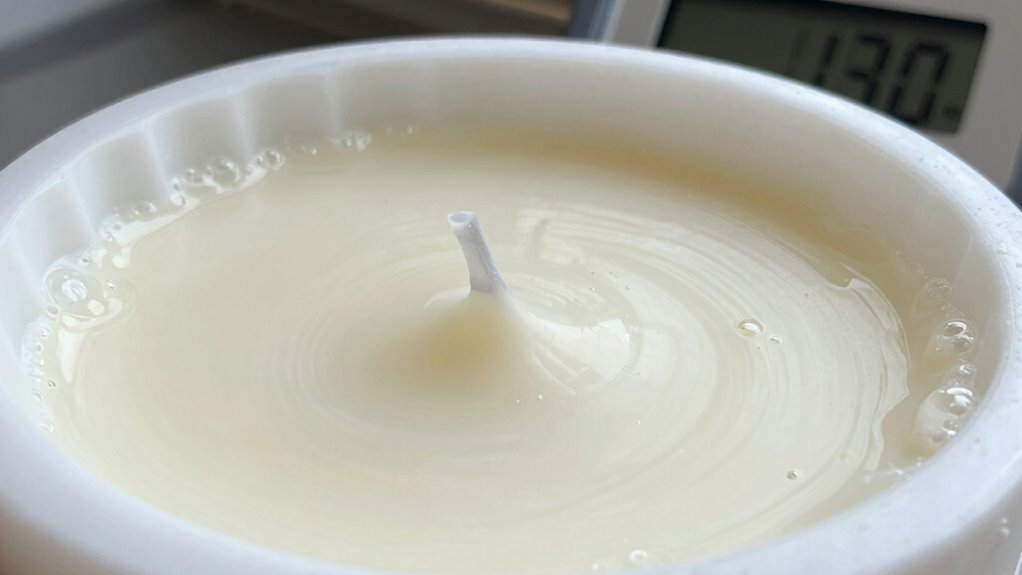
Pouring candle wax at the right temperature is essential for achieving a smooth, even finish. Before pouring, confirm your wick selection matches your candle size for maximum burning efficiency. Proper wick choice helps prevent sinkholes and uneven surfaces. When integrating colorant, do so at the correct temperature—usually when the wax is just melted and ready to pour—so the colorant blends seamlessly without clumping. Maintaining the right pouring temperature allows the wax to flow smoothly into the container, reducing air bubbles and surface imperfections. Use a thermometer to monitor the wax, aiming for the ideal range based on your wax type. By carefully timing your pour and paying attention to wick and colorant integration, you’ll create a professional-looking candle with a flawless finish.
Tips for Keeping Wax at the Correct Temperature During Making
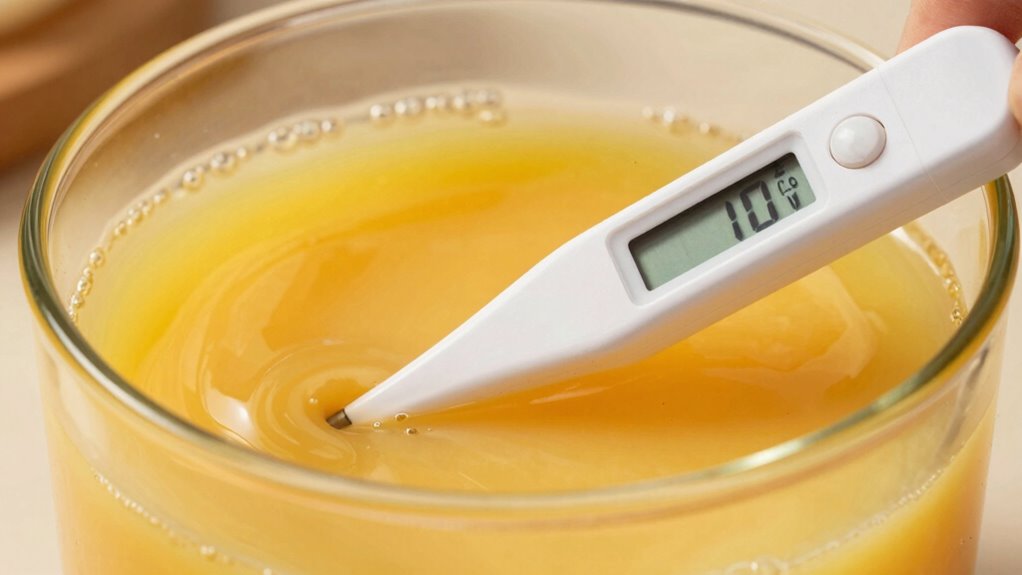
To keep your wax at the right temperature, start by using a reliable thermometer to monitor its heat consistently. Maintaining a steady temperature helps prevent issues like cracking or improper curing. By staying attentive and keeping the heat steady, you’ll guarantee your candles turn out perfect.
Use a Thermometer
Using a thermometer is vital for maintaining the right wax temperature during candle making. Accurate thermometer readings ensure you stay within the ideal heat range, preventing issues like sinkholes or uneven burning. Look for a thermometer with good accuracy to avoid guesswork that could lead to temperature fluctuations. Consistent temperature stability is key, so check your thermometer regularly to verify it reflects true wax temperature. Digital thermometers often provide more precise readings, making it easier to monitor and adjust heat as needed. Avoid relying solely on visual cues, as wax can appear uniform while still being too hot or too cold. By using a reliable thermometer, you gain better control, resulting in smoother pours and better-quality candles.
Maintain Consistent Heat
Maintaining a steady temperature throughout the candle-making process is vital for achieving smooth, even wax and a high-quality finish. To do this, keep your wax at the ideal heat range, adjusting your heat source as needed. Proper wick selection is essential; a wick that’s too large or small can cause uneven burning and temperature fluctuations. When adding color, ensure it’s fully integrated while the wax stays at a consistent temperature—this prevents streaks or clumping. Use a thermometer to monitor your wax regularly, and avoid rapid temperature changes that can cause sinkholes or cracking. Stir gently and frequently to keep heat even, and work steadily to maintain the perfect temperature, resulting in a flawless candle with an even surface and vibrant color.
Troubleshooting Burn Issues Caused by Wrong Wax Temperatures
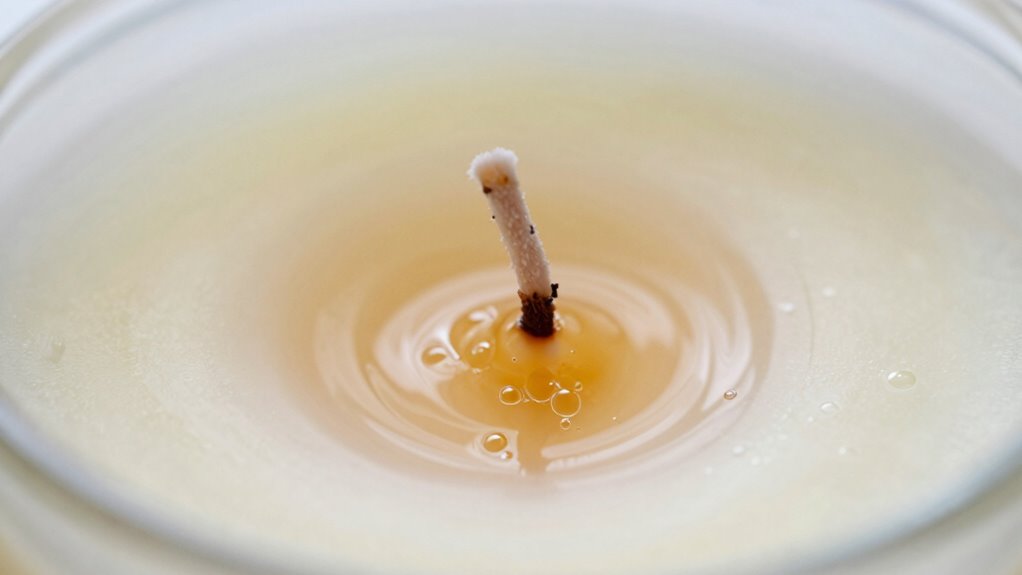
Burn issues often stem from incorrect wax temperatures, which can cause candles to burn unevenly, tunnel, or extinguish prematurely. If your candle isn’t burning properly, check your wick selection—using a wick too small or large for your wax can worsen temperature problems. Proper wick size helps maintain an even burn and prevents excessive soot. Additionally, improper wax temperatures can interfere with scent infusion, leading to weak fragrance throw or soot buildup. Ensure your wax is heated within the recommended range; too hot or too cold can cause burn inconsistencies. Adjusting your wax temperature and selecting the right wick can resolve these issues, promoting a steady, clean burn. Remember, consistent wax temperature is key to avoiding burn problems and achieving ideal scent release.
Best Tools and Thermometers to Monitor Wax Heat
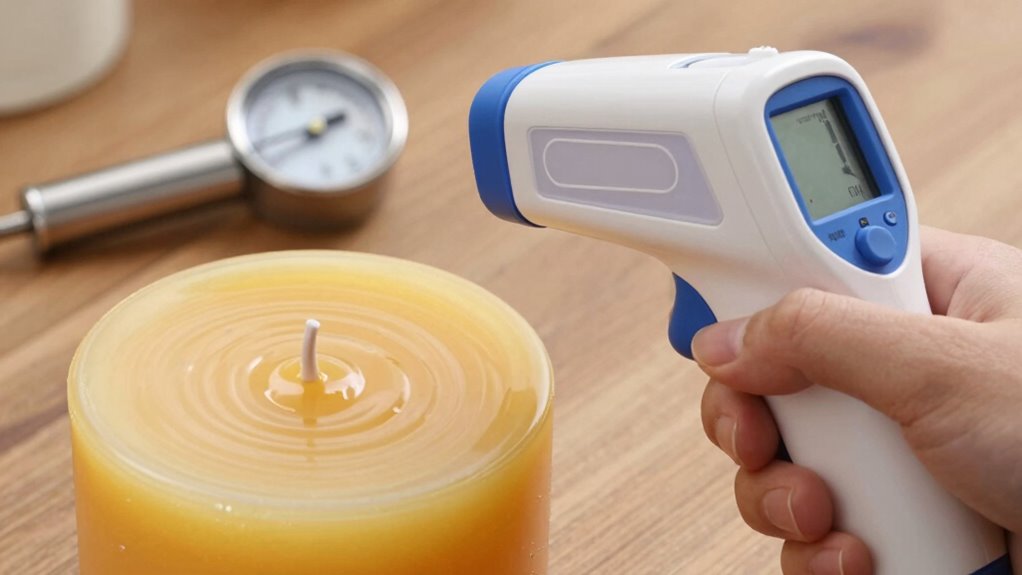
Monitoring wax temperature accurately is essential for crafting high-quality candles, and the right tools make all the difference. When choosing a thermometer, consider options like digital infrared thermometers for quick readings and traditional probe thermometers for precision. Thermometer selection should match your specific needs, guaranteeing you can monitor the wax at different stages effectively. Proper temperature calibration is vital; regularly check your thermometer against a known temperature source to maintain accuracy. A well-calibrated thermometer helps prevent overheating or underheating, reducing issues like sinkholes or uneven burns. Investing in reliable tools ensures consistent results and enhances your candle-making process. Keep your thermometers clean and calibrated to achieve the perfect wax temperature every time.
How Do Additives and Fragrance Oils Affect Wax Temperature?
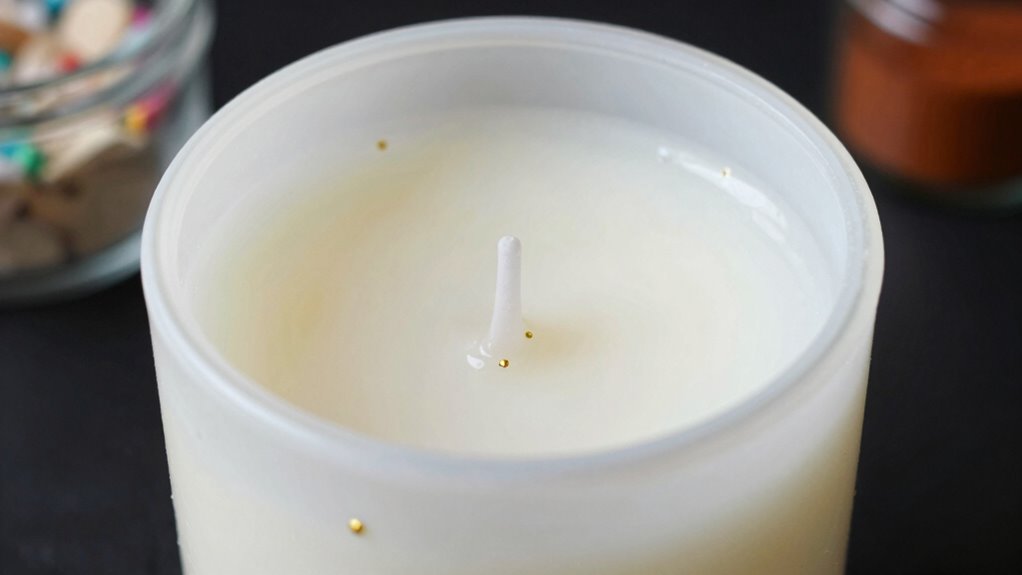
Adding additives and fragrance oils to your wax can considerably influence its temperature, affecting both the melting point and how it behaves during pouring. Additive interactions can alter the wax’s consistency, making it more viscous or fluid at certain temperatures. For example, stearic acid can raise the melting point, requiring slightly higher temperatures to achieve ideal pouring consistency. Fragrance impact varies depending on oil type and concentration; some fragrances may cause the wax to thicken or cool faster, affecting your pouring window. It’s essential to adjust your temperature accordingly when adding these components to prevent issues like sinkholes or uneven surfaces. Monitoring the wax carefully ensures that the additives and fragrances integrate smoothly without compromising the candle’s quality or appearance.
Expert Tips for Achieving a Smooth, Even Candle Surface
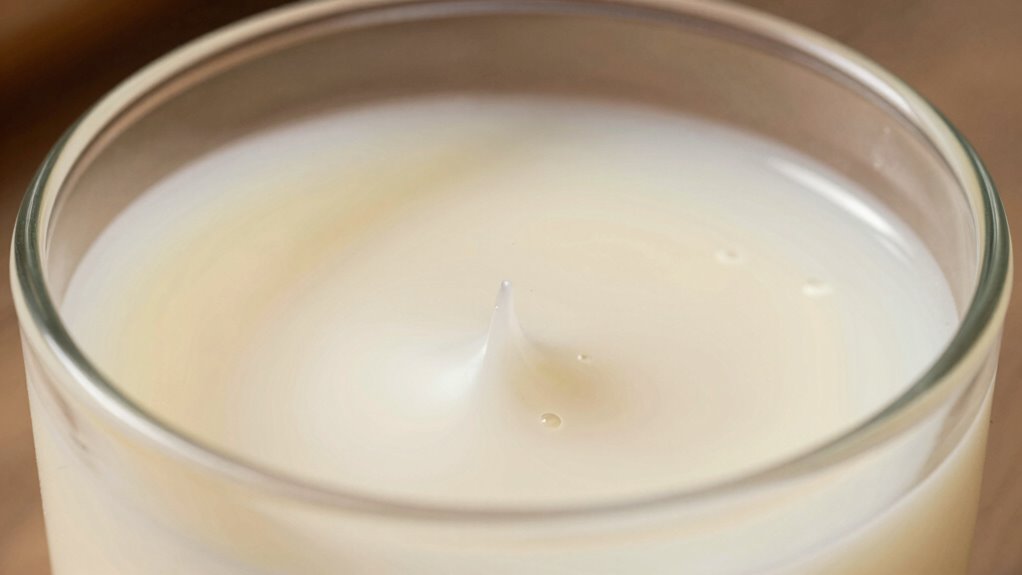
To get a smooth, even candle surface, you need to master proper melting techniques and keep a close eye on your wax temperature. Consistent temperature monitoring helps prevent uneven surfaces and surface imperfections. With these expert tips, you’ll create candles that look as good as they burn.
Proper Melting Techniques
Achieving a smooth, even candle surface starts with proper melting techniques. Use a double boiler to gently melt your wax, maintaining the ideal temperature to avoid overheating. Keep your wick selection in mind—choose a wick size that matches your wax and container for consistent burning. Verify colorants are compatible with your wax type to prevent uneven pigmentation or sinkholes. Stir gently but thoroughly to distribute heat evenly and prevent lumps. Avoid rushing the process; patience ensures a flawless finish.
| Step | Tip | Reason |
|---|---|---|
| Melting Method | Use double boiler | Gentle, even heat |
| Wick Selection | Match wick size to wax/container | Even burn, prevents sinkholes |
| Colorants | Check compatibility with wax | Prevents uneven surface |
Consistent Temperature Monitoring
Monitoring your wax temperature throughout the melting process is key to creating a smooth, even candle surface. Use a reliable thermometer to track the temperature regularly, especially considering thermal insulation from your container or double boiler. These factors can cause fluctuations that lead to uneven surfaces or sinkholes. Keep an eye on ambient temperature, as it influences how quickly your wax heats and cools. If the room is warm, your wax may reach higher temperatures faster, so adjust your heat source accordingly. Consistent monitoring allows you to maintain your desired heat range, preventing overheating or underheating. This vigilance ensures your wax stays within the ideal temperature window, resulting in a perfectly smooth, even candle surface every time.
Frequently Asked Questions
Can Temperature Fluctuations Affect Candle Shelf Life?
Yes, temperature fluctuations can impact your candle’s shelf life. When you store candles, maintaining temperature stability is essential to prevent wax from cracking or developing sinkholes. Sudden changes in temperature can cause the wax to expand and contract, leading to potential damage. To guarantee your candles last longer, keep them in a cool, consistent environment, avoiding direct sunlight and extreme temperature variations during candle storage.
How Does Ambient Room Temperature Influence Wax Melting?
You might notice that ambient room temperature directly influences wax melting. If your room is warm, the wax melts faster and may create uneven surfaces or sinkholes. Conversely, cooler temperatures slow down melting, making the candle last longer and burn more evenly. To prevent issues, maintain a consistent room temperature around 68-72°F, ensuring smooth wax melting and a safer, more enjoyable candle-burning experience.
Is It Necessary to Remelt Candles if They Sink or Crack?
If your candles sink or crack, you should remelt and fix them to guarantee candle safety. Studies show that proper wick maintenance reduces the risk of uneven burning and cracking. Remelting helps smooth the surface and prevents further damage, making your candles safer and more beautiful. Always monitor the heat when melting, and avoid overheating, which can compromise the wax’s integrity. Regular upkeep keeps your candles safe and enjoyable.
Do Different Wax Brands Require Different Pouring Temperatures?
Yes, different wax brands often require different pouring temperatures because of variations in wax composition. You should always follow the manufacturer’s recommended temperatures for each brand to guarantee proper setting and avoid issues like sinkholes. Brand consistency matters because each wax type has unique melting points and cooling behaviors, so adjusting your pouring temperature accordingly helps achieve the best results and a smooth, even candle surface.
How Long Should You Wait After Pouring Before Trimming the Wick?
Think of your candle like a delicate sculpture; you should wait at least one hour after pouring before trimming the wick. This allows the wax to cool and set, preventing imperfections. Remember, wick trimming is key for candle safety, reducing soot and preventing tunneling. By giving it time, you guarantee a cleaner burn, better scent throw, and a safer, longer-lasting candle experience.
Conclusion
Mastering wax temperature is your secret weapon against sinkholes and uneven candles. When you control the heat, you’re not just making candles—you’re shaping art and ambiance with precision. Remember, temperature is the silent conductor of your craft, guiding each pour to harmony. Keep your tools sharp, your thermometer steady, and your techniques refined. With this knowledge, you’ll turn simple wax into masterpieces, proving that in candle making, as in life, the right temperature sets the tone for brilliance.
Fall yard work Picks
leaf blowers
As an affiliate, we earn on qualifying purchases.