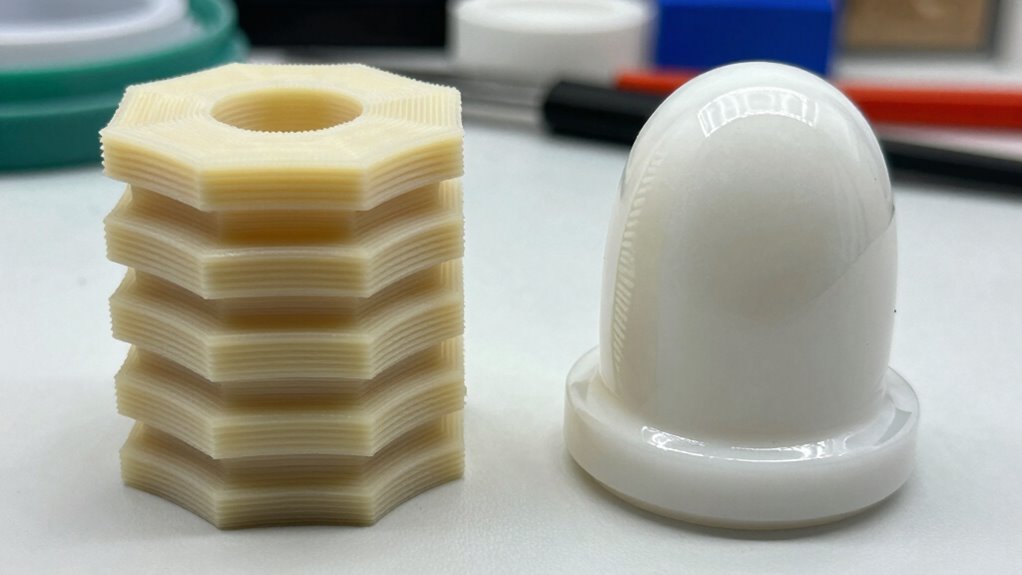

If you’re choosing between FDM and resin 3D printing for your products, consider your focus on detail, durability, and surface finish. FDM is ideal for larger, functional prototypes with tougher materials, while resin offers highly detailed, smooth surfaces perfect for intricate designs. Resin prints are more labor-intensive and costly but deliver superior surface quality. To decide which suits your needs best, explore how each method aligns with your project’s specific requirements and expectations.
Key Takeaways
- FDM is ideal for larger, functional prototypes with durable, cost-effective materials, while resin provides high-detail, smooth surface finishes for intricate designs.
- Choose FDM for broad material options and easier post-processing; select resin for finer detail and superior surface quality.
- Resin printing offers higher precision but involves more complex post-processing like washing and UV curing.
- FDM is more suitable for rapid, cost-efficient production of prototypes and basic models.
- Material properties and project requirements (strength, detail, finish) determine the best choice between FDM and resin.
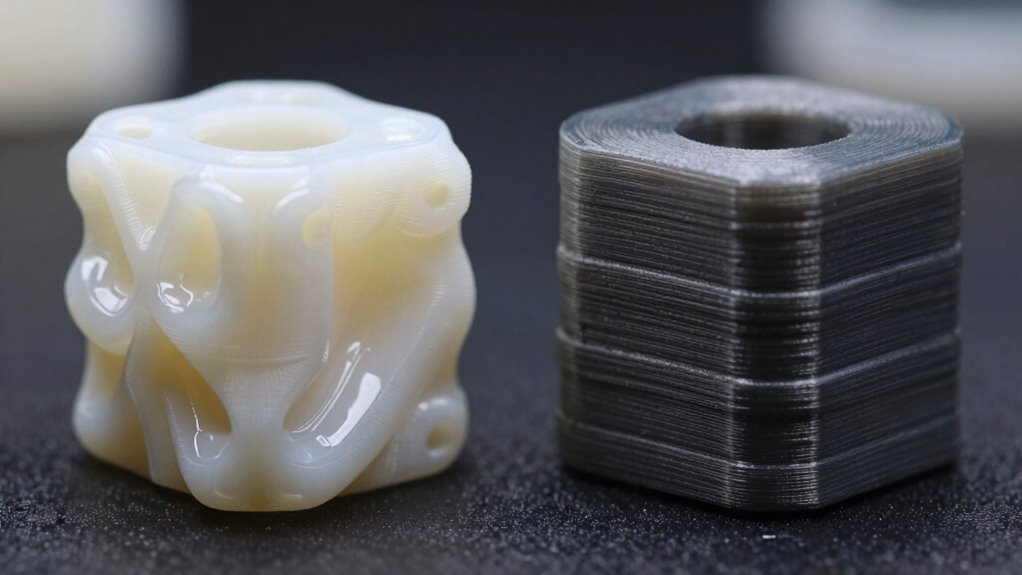
When choosing between FDM and resin 3D printing for product development, understanding their differences can help you make the right decision for your needs. FDM, or fused deposition modeling, works by extruding thermoplastic filament layer by layer, making it suitable for larger, functional prototypes. Resin printing, on the other hand, uses photopolymer resins cured by UV light, producing highly detailed and smooth surface finishes. Your choice depends on the specific requirements of your project, especially concerning material compatibility and post-processing techniques.
Choosing between FDM and resin 3D printing depends on project needs, material compatibility, and surface finish preferences.
Material compatibility is a key factor to contemplate. FDM offers a wide range of thermoplastics like ABS, PLA, PETG, and specialty filaments such as flexible or composite materials. These are generally more affordable and easier to handle, making FDM ideal for producing robust prototypes or functional parts. Resin printing’s material options are more limited but include high-precision photopolymers designed for fine detail and smooth surfaces. Some resins are flexible, while others are rigid or heat-resistant, but they often come at a higher cost. If your project demands specific material properties, you’ll need to evaluate whether FDM’s broader material choices or resin’s specialized resins suit your needs better. Material properties can significantly influence your final product’s performance and durability. Additionally, advancements in resin formulations continue to expand the potential applications of resin printing. These innovations can also impact post-processing requirements, making the process more efficient or accessible.
Post-processing techniques differ markedly between the two methods. FDM parts usually require support removal, sanding, or surface finishing, but the process is relatively straightforward. You might use acetone vapor smoothing for ABS or simple sanding for more refined finishes. Resin prints, however, demand more meticulous post-processing. After printing, you’ll need to wash the object in isopropyl alcohol to remove uncured resin and then cure it under UV light to solidify the material fully. The surface of resin prints tends to be smoother straight off the printer, but additional steps like sanding or applying coatings can enhance their appearance. Resin’s delicate details make post-processing more labor-intensive but often more rewarding in terms of surface quality. Additionally, the material curing process is essential to achieve optimal strength and detail in resin prints. Proper post-processing can greatly influence the overall quality and usability of your final parts, regardless of the chosen technology.

FLASHFORGE Adventurer 5M 3D Printer with Fully Auto Leveling, Max 600mm/s High Speed Printing, 280°C Direct Extruder with 3S Detachable Nozzle, CoreXY All Metal Structure, Print Size 220x220x220mm
- Automatic Bed Leveling: One-click hassle-free printing
- High-Speed Printing: Max 600mm/s travel speed
- Fast Nozzle Changes: 3-second quick nozzle swaps
As an affiliate, we earn on qualifying purchases.
As an affiliate, we earn on qualifying purchases.
Frequently Asked Questions
How Do Cost Differences Impact Long-Term Production?
Cost differences considerably impact your long-term production, especially when considering cost analysis and investment considerations. Resin printers often have higher upfront costs but lower material expenses, while FDM printers typically cost less initially but may incur higher filament costs over time. You need to evaluate your production volume and budget to determine which technology offers the best balance between initial investment and ongoing expenses for sustained output.
What Post-Processing Is Required for Each Method?
You might wonder what post-processing each method demands. For FDM, you’ll need to remove support structures and possibly sand for smoothness, while resin prints require careful cleaning with alcohol and post-curing under UV light. Material compatibility plays a role here—resins need specific post-curing procedures to reach their full strength, whereas FDM parts often need minimal finishing. The process you choose depends on the level of detail and durability you desire.
Which Material Options Are Available for FDM and Resin?
You have a wide range of material options with FDM and resin printing. FDM offers diverse filament choices like PLA, ABS, PETG, and specialty composites, providing great material versatility. Resin printing primarily uses photopolymer resins, which deliver high detail but limit material variety. FDM typically features faster printing speeds for larger objects, while resin excels in high-detail, smaller parts. Your choice depends on your needs for material flexibility and speed.
How Do Layer Resolution and Detail Compare?
You’ll notice that resin prints excel in layer precision and surface finish, revealing intricate details with sharp clarity. FDM, on the other hand, often offers a rougher surface with less fine detail. The suspense lies in how much detail you need—if your project demands high resolution and smooth surfaces, resin’s your best bet. But if durability and larger builds matter more, FDM’s your go-to choice.
What Safety Precautions Are Necessary During Printing?
You should always wear safety gear like gloves, goggles, and a mask to protect yourself from fumes and debris during printing. Make sure proper ventilation requirements are met by working in a well-ventilated area or using an exhaust system, especially with resin printers that emit hazardous vapors. Regularly clean your workspace and follow manufacturer guidelines to stay safe and prevent inhaling harmful particles or skin contact.
Conclusion
Choosing between FDM and resin depends on your project’s needs, like selecting the right tool for your craft. Think of FDM as a trusty hammer—great for sturdy, larger parts—while resin is your fine-tipped brush for detailed work. Either way, you’re the artist shaping your vision. So weigh your priorities, and remember: the right technology can turn your ideas from rough sketches into polished masterpieces, like a sculptor revealing beauty from raw stone.