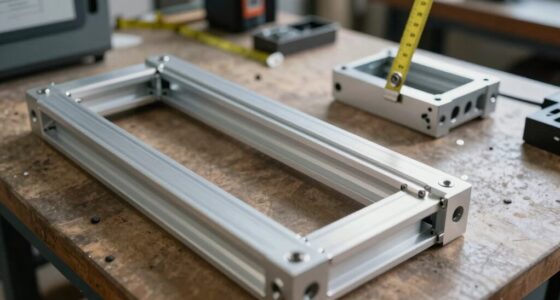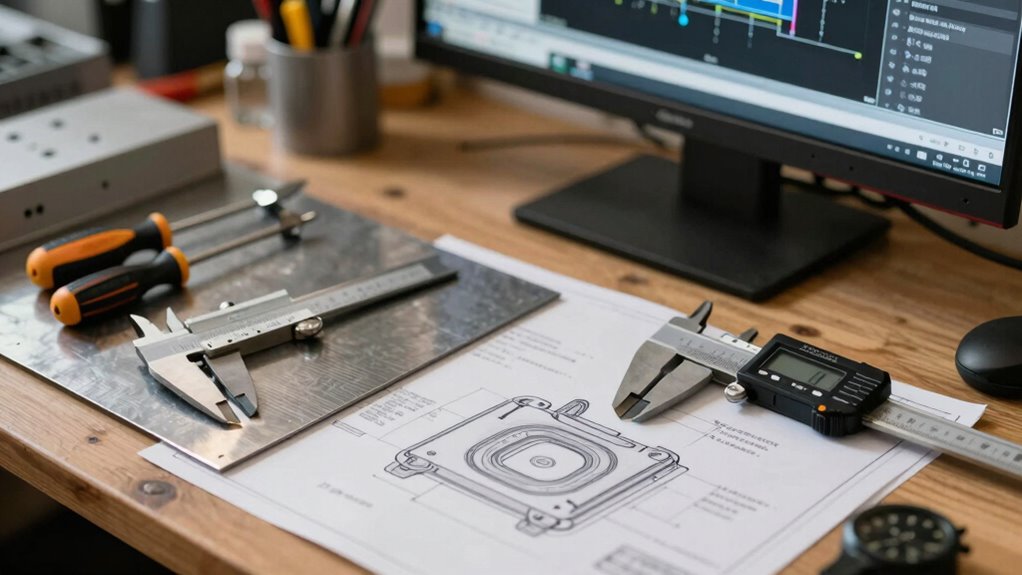
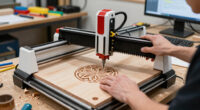
Before adding CNC to your workflow, you need solid file skills like organizing and naming files correctly, ensuring they are compatible with CNC software, and troubleshooting errors efficiently. You should also convert designs into clean, error-free formats and understand how to modify files for precision. Mastering these skills helps prevent miscommunications, tool collisions, and errors, leading to smoother operations. Keep exploring how developing your file skills will set you up for success.
Key Takeaways
- Ensure files are error-free, properly scaled, and compatible with CNC software to prevent machining issues.
- Master file formats and conversions to maintain design integrity across different CNC platforms.
- Organize files with clear naming conventions for efficient project management and quick retrieval.
- Troubleshoot and correct file errors early to minimize delays and tool collisions during machining.
- Develop proficiency in reading and editing design files to enhance overall CNC workflow accuracy.
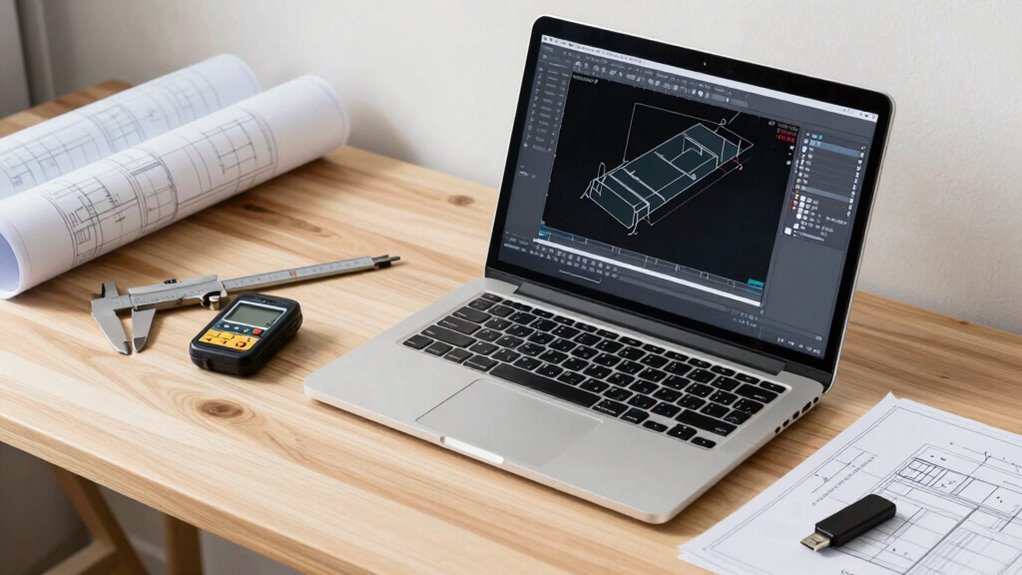
Mastering file skills is essential for a smooth CNC workflow, as it directly impacts the accuracy and efficiency of your machining projects. Before integrating CNC into your process, you need to understand the importance of proper preparation. Tool calibration is one of the first steps. You must confirm your tools are accurately calibrated to maintain precision throughout your machining. This involves checking and adjusting the tool length offset and ensuring the cutting tools are sharp and correctly installed. When your tools are properly calibrated, you minimize errors caused by tool wear or misalignment, leading to cleaner cuts and tighter tolerances.
Alongside tool calibration, material selection plays a critical role. You should choose the right material for your project, considering its machinability, strength, and finish quality. Knowing the properties of different materials helps you avoid common pitfalls like excessive tool wear or unexpected deformation. For instance, softer materials like aluminum are easier to work with and require less aggressive tool settings, whereas harder materials like stainless steel demand more precise calibration and suitable tooling. Selecting the correct material from the start not only improves your chances of success but also reduces waste and saves time.
You also need to develop a good understanding of how to prepare your files for CNC machining. This involves converting your designs into compatible formats and ensuring that the geometry is error-free. Proper file preparation prevents issues during machining, such as tool collisions or incomplete cuts. When your files are clean and correctly scaled, your CNC machine can interpret and execute the operations more accurately. This is where your file skills become evident—you must be able to troubleshoot and enhance your files to ensure they align with the capabilities of your CNC machine and tooling. Additionally, understanding how to manage file formats effectively can save you time and prevent costly mistakes during setup. Developing proficiency in file error detection can further streamline your workflow and improve overall project quality. Moreover, familiarizing yourself with proper file naming conventions can help organize your projects and avoid confusion during complex machining tasks. Being aware of file compatibility ensures that your files work seamlessly with your CNC software, reducing setup time and errors. Remember, mastering these file skills lays the foundation for a successful CNC operation.
![Free Fling File Transfer Software for Windows [PC Download]](https://m.media-amazon.com/images/I/41Vq6ZqHfjL._SL500_.jpg)
Free Fling File Transfer Software for Windows [PC Download]
- User-Friendly FTP Interface: Intuitive FTP client interface
- Reliable Site Maintenance: Easy and dependable FTP site management
- FTP Automation & Sync: Automate and synchronize FTP transfers
As an affiliate, we earn on qualifying purchases.
As an affiliate, we earn on qualifying purchases.
Frequently Asked Questions
What Basic Hand Filing Techniques Are Essential for CNC Preparation?
You should focus on precision sharpening and ergonomic handling. Start by carefully sharpening edges to guarantee accuracy, maintaining a steady hand and consistent pressure. Use ergonomic grips to reduce fatigue and improve control during filing. Keep your file clean and properly aligned with the workpiece to achieve smooth, precise results. These basic hand filing techniques help prepare your materials effectively for CNC processes, ensuring quality and consistency in your final product.
How Do I Select the Right Files for Different Materials?
Think of selecting files like choosing the right brush for a masterpiece. For material-specific filing, you need to match the file’s material compatibility to your workpiece. For softer metals like aluminum, use a gentler, fine-toothed file. Harder materials like stainless steel require more robust, coarse files. Always check the file’s specifications and verify it’s suited for your material, preventing damage and ensuring precision in your CNC prep.
Are There Safety Precautions When Filing for CNC Work?
Yes, there are safety precautions you should follow when filing for CNC work. Always wear safety gear like goggles and gloves to protect your eyes and hands from sharp edges and debris. Keep your workspace organized, ensuring tools and files are stored properly to prevent accidents. Maintain a clean, well-lit area, and stay focused on your work to avoid slips or injuries. These steps help keep you safe during filing tasks.
How Can Filing Improve CNC Machining Accuracy?
Filing can considerably improve CNC machining accuracy by ensuring your tools and components maintain proper dimensions. Regular file maintenance with the right filing tools smooths rough edges and removes burrs, leading to tighter tolerances. Using appropriate filing techniques, you can fine-tune parts for better fit and function, reducing errors during CNC operation. Proper filing skills help you prepare your workpieces effectively, ensuring precision and enhancing overall machining quality.
What Tools Complement Filing in CNC Workflow?
You should use precision calipers and deburring tools alongside filing to guarantee peak accuracy in your CNC workflow. Maintaining proper file maintenance and tool organization helps you quickly access the right tools, reducing errors and improving efficiency. By keeping your files sharp and organized, you’ll enhance your workflow, achieve cleaner finishes, and assure consistent quality in your CNC-produced parts. Proper tool management is essential for seamless, high-precision machining.
Conclusion
Mastering meticulous file skills transforms your CNC workflow from chaotic to cohesive. By honing these habits, you harness higher precision and productivity, pushing past basic boundaries. With a keen eye for cleanup and a commitment to consistency, you create a craft that’s both mesmerizing and competent. Cultivate these core competencies, and you’ll conquer challenges, craft with confidence, and continuously carve your path toward craftsmanship perfection.