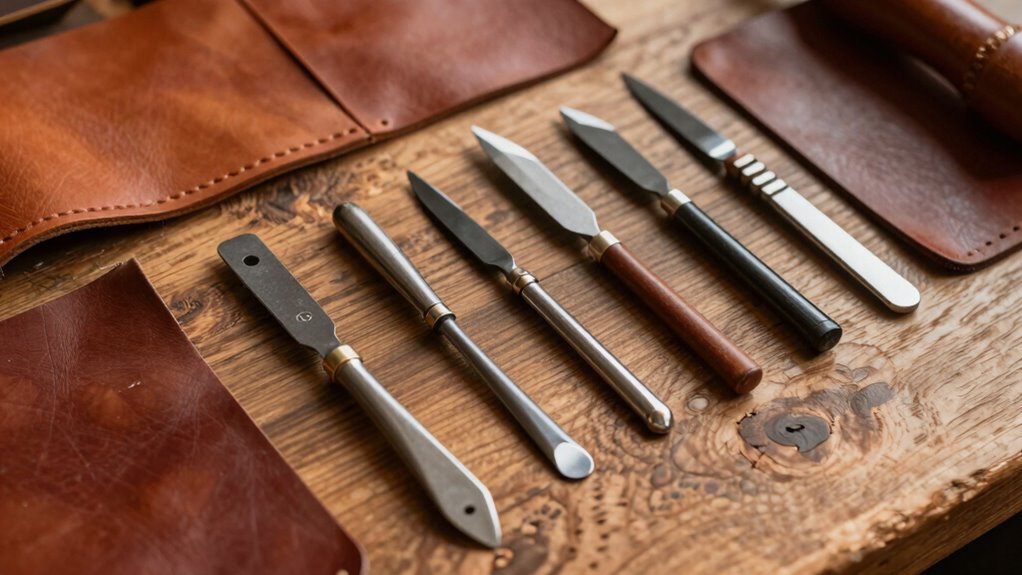
To match leather tools to your products, consider your item’s purpose, leather type, and desired finish. For rugged belts, use heavy-duty stamping and edge tools, while delicate jewelry pouches need finer stamps and gentle edges. Always select tools that suit the leather’s thickness and texture to guarantee quality results. Proper tool choices improve craftsmanship, aesthetic, and market appeal. Keep exploring as more tips can help you perfect your technique and boost your success.

Get business pricing on tools and workshop supplies
- Business-only prices and quantity discounts
- Tax-exempt purchasing
- Multiple users, one account, clear invoices
Key Takeaways
- Assess your product type and design details to determine whether heavy-duty or delicate tools are required.
- Consider leather type, thickness, and texture to select compatible stamping, cutting, and finishing tools.
- Match tools to the desired aesthetic—rougher tools for rugged items, finer tools for delicate jewelry pouches.
- Prioritize safety measures and proper handling techniques to ensure efficient and safe craftsmanship.
- Experiment and refine your technique to develop a cohesive style that enhances product quality and market appeal.

Matching leather tools to your specific product involves understanding your end goal. For instance, if you’re crafting a rugged leather belt, you might prioritize heavy-duty stamping and robust edge finishing tools that withstand wear. Conversely, if you’re making delicate jewelry pouches, finer stamps and gentle edge treatments will better suit the soft, detailed finish you want. It’s essential to consider the leather type, thickness, and the level of detail you wish to achieve. Experimenting with different tools helps you learn how they interact with your materials and refine your technique. This knowledge ensures your products look cohesive and professional, boosting your confidence as a maker. Incorporating safety precautions is also crucial when working with sharp tools and chemicals, ensuring a safe crafting environment. Additionally, understanding leather characteristics can help you select tools that complement the specific properties of your leather, leading to better results. Recognizing the tools’ compatibility with leather types can further optimize your workflow and product quality. Being aware of appropriate finishing techniques can also significantly enhance the overall appearance of your finished items. Gaining insight into material behavior can help you anticipate how leather responds to different tools and treatments, improving your outcomes. Ultimately, selecting the right leather tools requires a clear understanding of your product’s purpose and aesthetic. Combining effective leather stamping with meticulous edge finishing creates items that aren’t just functional but also visually appealing. When you match your tools thoughtfully, you’ll find the process more enjoyable and your finished products more impressive. Your attention to detail and the right tools will help set your work apart in a competitive market, turning your craftsmanship into a signature style.
As an affiliate, we earn on qualifying purchases.
Frequently Asked Questions
How Do I Choose the Right Leather Tools for Beginners?
To choose the right leather tools for beginners, start with versatile tools that handle multiple tasks, like a good leather stamping set. Focus on tool versatility so you can experiment and learn without investing in specialized equipment. Look for beginner-friendly options that are easy to use and maintain. As you progress, you can expand your collection, but beginning with versatile, basic tools guarantees you build your skills confidently.
Can I Use the Same Tools for Different Leather Products?
Yes, you can use some tools for different leather products, thanks to tool versatility. However, keep in mind product specificity; certain tools work best for specific items. For example, a stitching awl is versatile but essential for various projects. To get the best results, choose multifunctional tools when possible, but invest in specialized tools for intricate or unique designs. This balance helps you efficiently create diverse leather products.
What Maintenance Is Required for Leather Tools?
Did you know that properly maintained tools last up to 50% longer? To keep your leather tools in top shape, regularly clean them with a damp cloth after use, focusing on removing debris. Store them in a dry, organized space following storage best practices, like keeping blades covered and tools separated. This routine prevents rust and damage, ensuring your tools stay sharp and ready for your next project.
Are There Eco-Friendly Leather Tools Available?
Yes, eco-friendly leather tools are available. You can find them made from sustainable materials like recycled metals or eco-conscious brands that prioritize environmentally friendly manufacturing. These tools help reduce your carbon footprint and promote sustainable practices in your leather projects. Look for brands committed to eco-consciousness, and you’ll find options that support both your craft and the planet. Choosing eco-friendly tools makes a positive impact while maintaining quality in your work.
How Do I Prevent Damaging Leather With Tools?
You don’t want to turn your beautiful leather into a shredded mess, right? To prevent damage, prioritize tool safety and always use the right tools for the job. Keep blades sharp, avoid excessive force, and use proper surfaces to protect leather preservation. A little care goes a long way—think of it as a spa day for your leather, not a demolition derby. Your leather will thank you with lasting beauty!
Conclusion
Choosing the right leather tools is like finding the perfect key to open your creative potential. When you match tools to your products, your craftsmanship shines brighter than a polished saddle. Trust your instincts, experiment, and don’t rush the process. With each stitch and carve, you’re building a toolkit that’s as sturdy as the products you create. Keep learning and refining—your leather journey is a canvas waiting for your unique touch.
Fall yard work Picks
leaf blowers
As an affiliate, we earn on qualifying purchases.