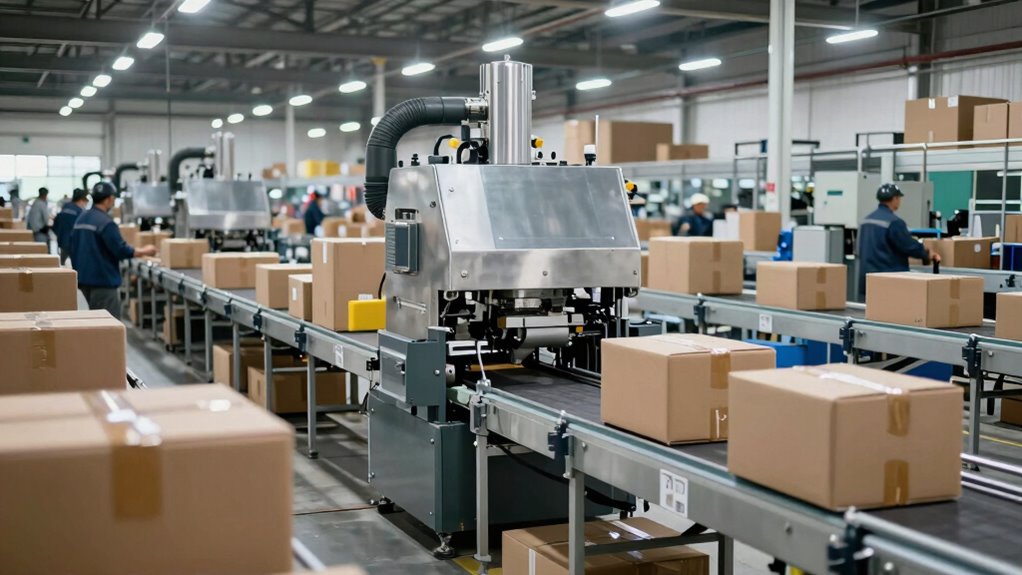

When shopping for packaging equipment, focus on your actual volume needs instead of aesthetics or features. Assess your daily, weekly, or monthly packaging demands to choose machinery that matches your production scale. Prioritize automation and reliability to boost efficiency and reduce costs, ensuring the equipment can grow with your business. Thinking about long-term scalability will save you time and money in the future. Keep exploring how to make smart, volume-driven choices for your packaging setup.

Get business pricing on tools and workshop supplies
- Business-only prices and quantity discounts
- Tax-exempt purchasing
- Multiple users, one account, clear invoices
Key Takeaways
- Assess your actual packaging volume needs to select machinery that matches production demands effectively.
- Prioritize automation efficiency and throughput capabilities over equipment appearance to ensure operational relevance.
- Conduct a comprehensive cost analysis, including maintenance and operational expenses, to find a cost-effective solution.
- Choose scalable equipment that can grow with your business and adapt to future volume increases.
- Focus on functionality and long-term productivity rather than aesthetic features for smarter purchasing decisions.
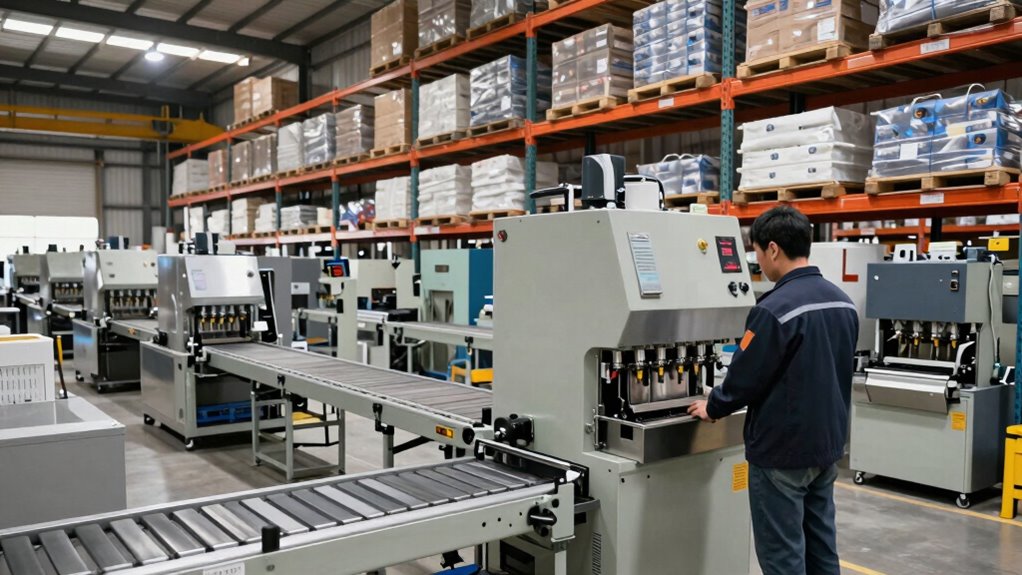
When you’re prepared to upgrade or expand your packaging operations, shopping for the right equipment becomes a essential step. Your focus should be on matching the machinery to your actual volume needs rather than just its appearance or the latest features. Starting with volume ensures you’re investing in equipment that can handle your current and future throughput efficiently. Consider your daily, weekly, or monthly packaging demands—this helps determine whether you need high-speed, fully automated systems or more manual, flexible options. Prioritizing volume over aesthetics keeps your investment grounded in practicality, preventing overspending on features you don’t need. Additionally, understanding your packaging volume helps you select machinery that aligns with your production goals and avoids under- or over-investment. Automation efficiency plays a pivotal role in selecting packaging equipment. Automated systems streamline your operations, reduce manual labor, and minimize errors, which ultimately boosts overall productivity. When shopping, look for equipment that integrates well with your existing processes and can scale as your volume increases. Advanced automation can considerably cut down cycle times and improve throughput, making it easier to meet tight deadlines and handle fluctuating demand. But don’t just chase the newest technology; evaluate how well a machine’s automation features align with your specific volume requirements. A highly automated, efficient system that exceeds your current needs might be a poor investment if it’s underutilized. Conversely, underpowered equipment could bottleneck your workflow, causing delays and increased labor costs. Conducting a cost analysis is essential during your shopping process. While it’s tempting to focus on upfront costs, you must assess the total cost of ownership, including maintenance, energy consumption, and potential downtime. Performing a thorough cost analysis helps you understand the long-term financial impact of different options. For example, investing in a slightly more expensive but highly reliable machine might save money over time by reducing repair costs and increasing uptime. Remember, the goal isn’t just to find the cheapest equipment but to identify the most cost-effective solution that balances initial investment with ongoing operational expenses. This consideration is especially important when factoring in the importance of Automation efficiency, which can significantly influence your overall operational costs and productivity. Additionally, considering the long-term scalability of your packaging equipment ensures your investment remains relevant as your business grows. Ultimately, your approach to shopping for packaging equipment should be rooted in volume needs, automation efficiency, and detailed cost analysis. Don’t get distracted by aesthetics or unnecessary bells and whistles—focus on how well the equipment can handle your current and projected workload. Recognizing the importance of efficient automation can help you select equipment that maximizes throughput while minimizing operational costs, ensuring your packaging process remains competitive and scalable over time. By doing so, you’ll make smarter, more strategic investments that improve your packaging operation’s productivity and profitability over the long term.
automated packaging machinery for high volume
As an affiliate, we earn on qualifying purchases.
As an affiliate, we earn on qualifying purchases.
Frequently Asked Questions
How Do I Determine the Right Equipment Capacity for My Business?
You determine the right equipment capacity by analyzing your expected production volume and growth plans. Consider your packaging materials and how quickly your supply chain management needs to adapt. Calculate your peak output demands and choose equipment that comfortably handles those volumes without bottlenecks. Regularly review your data to adjust capacity as your business scales, ensuring efficiency and avoiding unnecessary costs. This proactive approach keeps your packaging operations aligned with demand.
What Are the Best Brands for Durability and Reliability?
Did you know that over 75% of businesses prioritize brand reputation when choosing packaging equipment? For durability and reliability, top brands like Bosch, Hayssen, and Tetra Pak stand out. You should check customer reviews, as they reveal real-world performance and longevity. Focusing on well-established brands guarantees you get equipment that withstands daily use, minimizes downtime, and provides long-term value, making your investment more secure.
How Does Maintenance Impact Equipment Longevity and Performance?
Maintenance routines play a vital role in extending your equipment lifespan and maintaining ideal performance. Regular inspections, timely repairs, and proper cleaning prevent breakdowns and wear, ensuring your machinery runs smoothly for years. Skipping routine maintenance accelerates deterioration, reducing longevity and increasing costly repairs. By prioritizing consistent maintenance, you preserve your equipment’s reliability, maximize productivity, and get the most value from your investment over time.
Are There Specific Safety Features I Should Prioritize?
Prioritize protective features that promote safety standards to protect yourself and your team. Look for safeguards like emergency stops, safety guards, and alert systems that actively prevent accidents. Ensuring these safety features are embedded in your equipment reduces risks and reassures your workforce. Focusing on safety standards not only fosters a secure workspace but also enhances overall efficiency, empowering you to operate confidently and maintain peace of mind amidst your packaging processes.
What Is the Typical Lead Time for Equipment Delivery?
The typical lead time for equipment delivery usually ranges from four to twelve weeks, depending on the complexity and supplier. You should factor in shipping logistics and packaging materials, as these can influence delivery speed. To avoid delays, verify lead times upfront with your supplier, especially if you’re working with custom or large-volume equipment. Planning ahead ensures your packaging line stays on schedule and meets your production demands.
Conclusion
When shopping for packaging equipment, prioritize volume needs over aesthetics—it’s about functionality first. Remember, choosing the right equipment can boost your efficiency markedly. Did you know that businesses that align their packaging capacity with actual demand see up to a 30% increase in productivity? Focusing on volume ensures you’re investing wisely, avoiding costly upgrades later. So, analyze your current and future needs carefully, and let practicality guide your decisions for ideal results.
Fall Picks
fall essentials
As an affiliate, we earn on qualifying purchases.