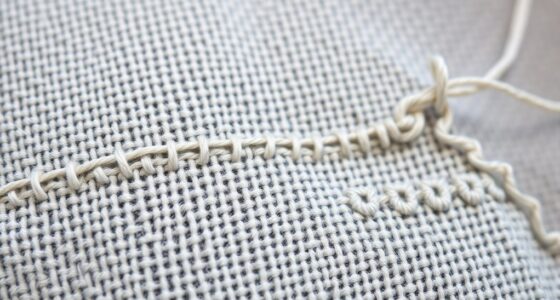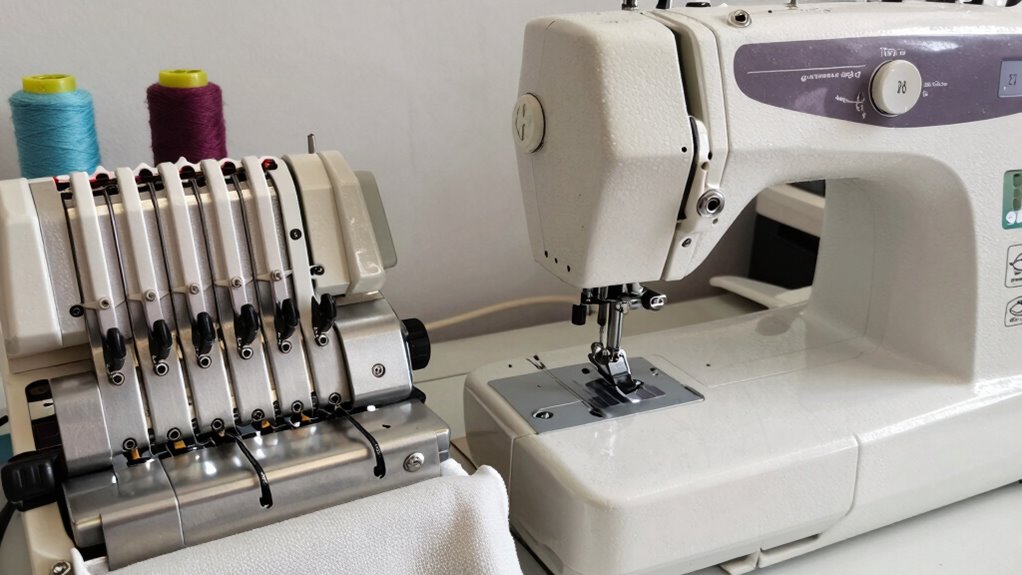
If you’re choosing between upgrading to a serger or a coverstitch machine, consider your sewing projects and fabric types. A serger is best if you want to finish raw edges and prevent fraying across various fabrics. A coverstitch gives your hems and topstitching a polished, professional look, especially on stretch fabrics. Think about your main sewing needs—your choice depends on whether durability or a refined finish is more important. Keep exploring to discover which upgrade fits your goals best.

Get business pricing on tools and workshop supplies
- Business-only prices and quantity discounts
- Tax-exempt purchasing
- Multiple users, one account, clear invoices
Key Takeaways
- Prioritize a serger first for raw edge finishing and seam durability on diverse fabrics.
- Choose a coverstitch machine initially for polished hems and professional topstitching.
- Consider the fabrics you work with—stretch or knit fabrics benefit from a coverstitch upgrade.
- Upgrading depends on your project needs—garment assembly or finishing touches.
- Maintenance routines influence the timing of your upgrade decision, ensuring optimal machine performance.
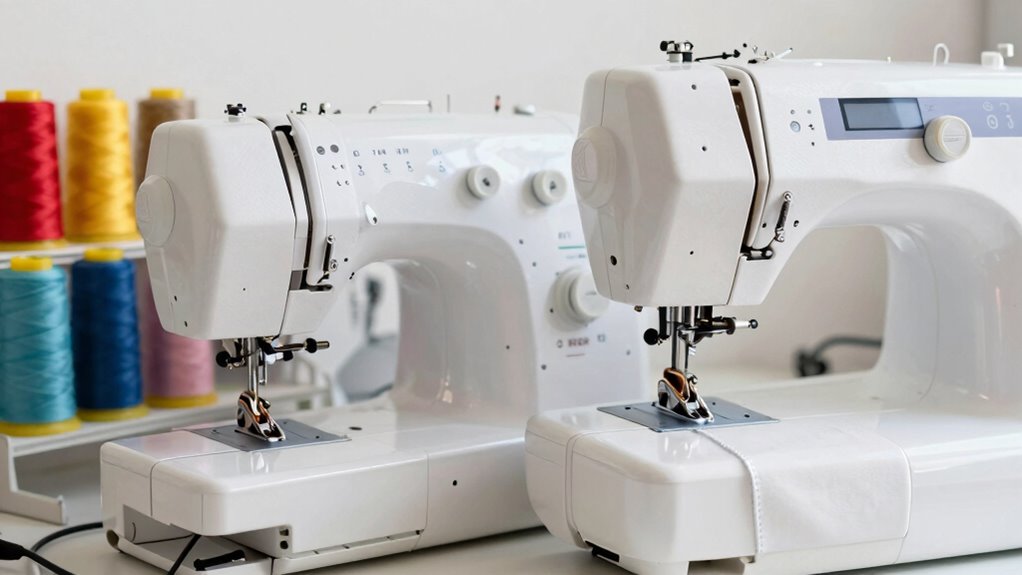
When choosing between a serger and a coverstitch machine, it’s important to understand their distinct functions and how they can enhance your sewing projects. Both machines serve different purposes, and knowing which one to add first depends on the types of fabrics you work with and how much time you’re willing to spend on machine maintenance. A serger is primarily designed to finish raw edges, providing clean, professional-looking seams and preventing fabric fraying. It’s ideal for handling various fabric types, especially knits, woven fabrics, and stretchy materials that need secure, flexible seams. If your projects frequently involve assembling garments or home décor items, a serger can streamline your workflow and improve the durability of your finished pieces. Additionally, understanding machine maintenance can help prolong the lifespan of your investment and ensure consistent stitch quality. Proper maintenance, including regular cleaning and adjustments, is crucial for keeping both machines performing at their best.
Understanding the unique roles of sergers and coverstitch machines helps you choose the right tool for durable seams or polished finishes.
A coverstitch machine, on the other hand, specializes in creating professional-looking topstitching and hems. It mimics the look of store-bought apparel by sewing parallel rows of stitching on the fabric’s right side. This makes it perfect for finishing hems on stretch fabrics like T-shirts, activewear, or swimwear, where a flat, stretchy seam is essential. If you often work with knits or want to achieve a polished finish on your garments, investing in a coverstitch machine might be your best move first. It’s particularly useful when you want to add decorative or functional topstitching without the bulk of multiple layers of thread. Since fabric types greatly influence your choice, understanding their properties can help you decide which machine will best serve your sewing needs.
As an affiliate, we earn on qualifying purchases.
Frequently Asked Questions
Can a Serger Do the Same Stitches as a Coverstitch Machine?
A serger can’t do the same stitches as a coverstitch machine. While a serger offers various stitch options like overlock and rolled hems, it doesn’t provide the specialized stretch stitches or multiple-thread coverstitch functions. You’ll find that coverstitch machines excel in creating professional-looking hems with consistent stitch tension and variety, especially for knits. So, if you need those stretch stitches and decorative options, a coverstitch machine’s the way to go first.
Which Machine Is Better for Hemming Stretchy Fabrics?
Think of your sewing machine as a trusty compass guiding your creative journey. For hemming stretchy fabrics, a coverstitch machine acts like a flexible bridge, providing professional-looking, stretchable hems with smooth, flat seams. Its specialized stitches excel at maintaining fabric elasticity, making it your best choice. While a serger offers durability, the coverstitch is the true compass for achieving flawless, stretchy hemming techniques that keep your garments both stylish and comfortable.
How Much Space Does Each Machine Typically Require?
A serger typically requires about 2 to 3 feet of space, including workspace and clearance, due to its larger size and multiple threads. A coverstitch machine is more compact, needing roughly 1.5 to 2 feet of space. When considering space requirements, think about your machine size and available room. Both machines need enough clearance for threading and operation, so measure your area carefully before making a purchase.
Are Both Machines Suitable for Beginner Sewists?
Both machines can be suitable for beginner sewists, but it depends on your goals. A serger helps with advanced techniques like edge finishing and working with various fabric types, making it versatile early on. A coverstitch machine specializes in professional hemlines and topstitching, which might be better after you’ve gained some experience. Start with the one that matches your current projects and fabric compatibility needs.
What Is the Maintenance Difference Between a Serger and Coverstitch?
You might worry maintenance is complicated, but it’s manageable. For both machines, you’ll check thread tension regularly and oil moving parts to keep everything running smoothly. A serger may need more frequent oiling due to its multiple threads, while a coverstitch requires less upkeep. Keep your machines clean and follow the manual’s lubrication instructions, and they’ll serve you well, making sewing easier and more enjoyable.
Conclusion
Ultimately, choosing between a serger and a coverstitch machine depends on your sewing needs. Think of it like this: if you want to finish seams and add durability, a serger is your go-to. But if you’re aiming for professional hemlines and topstitching, a coverstitch shines. The truth? Both tools complement each other, so upgrading in this order depends on your sewing projects. Sometimes, having both is the best upgrade of all.
Halloween Picks
halloween
As an affiliate, we earn on qualifying purchases.