
One of the biggest measuring mistakes in paper crafts is not using the right tools or failing to calibrate them regularly, leading to inaccurate cuts and uneven results. Rushing through measurements or skipping double-checks can cause mismatched pieces and waste material. Aligning tools improperly or measuring at an angle also creates errors. To improve your projects, avoid these common pitfalls and discover more tips for precise crafting with careful measurement techniques.

Get business pricing on tools and workshop supplies
- Business-only prices and quantity discounts
- Tax-exempt purchasing
- Multiple users, one account, clear invoices
Key Takeaways
- Relying on guesswork instead of precise measurements leads to inaccuracies.
- Using damaged or uncalibrated tools causes inconsistent results.
- Measuring from an angle or parallax can distort readings.
- Failing to secure paper properly results in shifting and inaccurate marks.
- Rushing measurements increases errors and reduces cut precision.
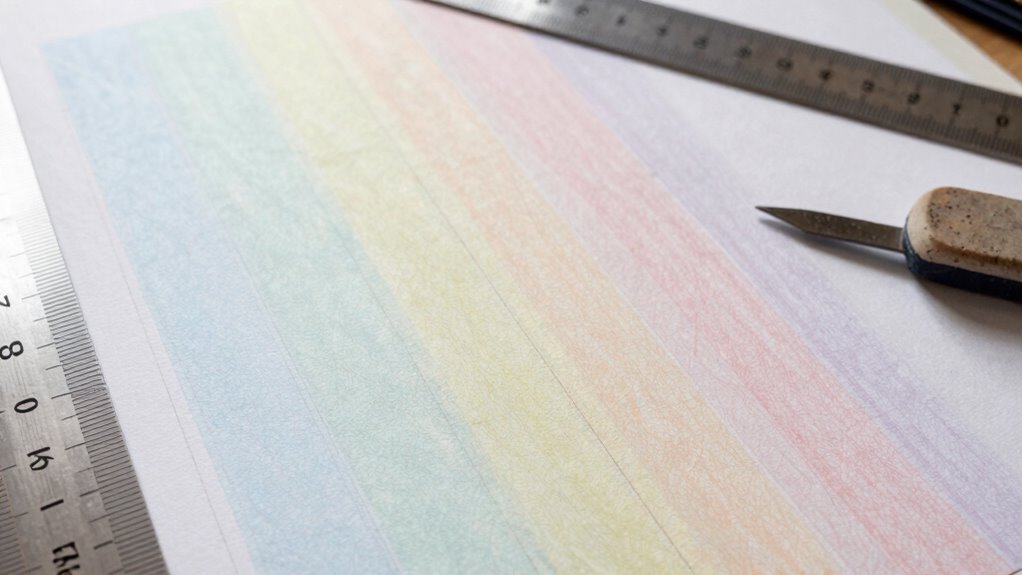
Have you ever struggled with paper crafts because your measurements didn’t quite line up? If so, you’re not alone. Many crafters find that small inaccuracies in measuring can throw off an entire project. The key to avoiding these issues lies in understanding the importance of proper measuring tools and accurate techniques. When you use the right tools and follow precise methods, you’ll find that your projects come together more smoothly and look more polished.
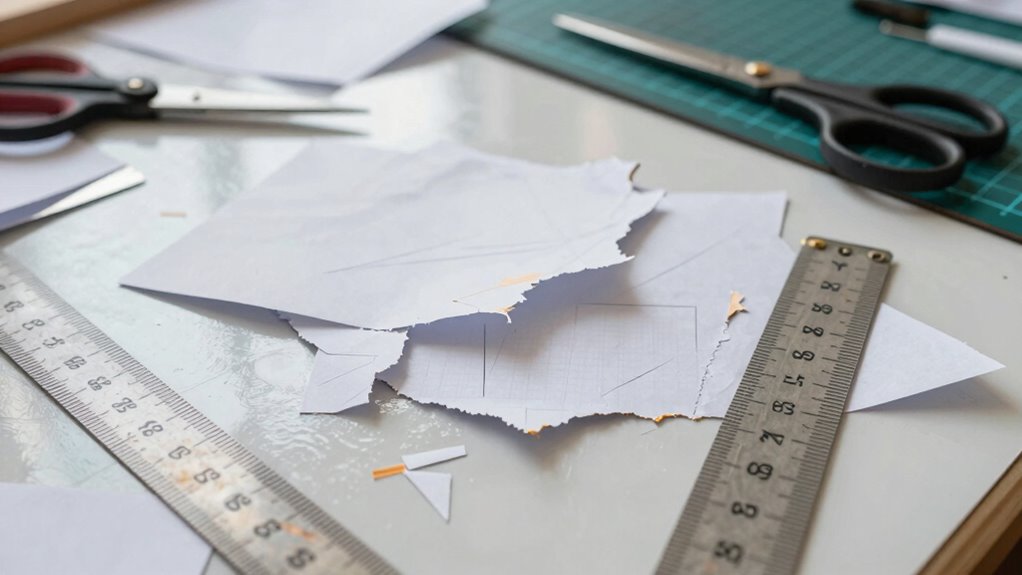
First, using the correct measuring tools is essential. Rulers, measuring tapes, and square rulers are your best friends in paper crafting. Make sure your tools are clean, straight, and free of damage, as a bent or worn ruler can give you false readings. Avoid guesswork—measure twice, cut once. This old adage holds true because it’s better to double-check your measurements than to waste materials and time fixing mistakes later. When you’re measuring, use tools that are appropriate for the task: a ruler for straight lines, a protractor for angles, and a cutting mat with grid lines for accuracy. These tools help you maintain consistency and precision, which are indispensable for professional-looking results. Additionally, understanding the importance of calibration of your tools can significantly improve your precision and overall results. Regularly inspecting and calibrating your measuring instruments ensures they remain accurate over time. Incorporating proper storage practices for your tools can also prevent damage and maintain their accuracy.
Second, mastering accurate techniques is essential. Always start by laying your paper flat and securing it if necessary. When measuring, align your measuring tool carefully with the edge of the paper, ensuring there’s no slack or misalignment. Be mindful of your eye level; viewing measurements from directly above prevents parallax errors. When marking measurements, use a sharp pencil or fine-tipped pen for clean, precise lines. For straight cuts, use a metal ruler and a craft knife, applying steady pressure to avoid jagged edges. Remember to measure multiple times before cutting, especially for complex designs or repeated pieces. Taking your time with each step helps prevent errors that can cascade into larger problems later. Practicing these techniques regularly can help you develop better measurement habits over time. Additionally, understanding the importance of calibration can help you maintain accuracy. Check your measuring tools regularly to confirm they haven’t been knocked out of alignment. If your ruler or tape measure is inaccurate, you risk building your project on faulty data. By developing a habit of verifying your tools, you minimize mistakes and improve your craftsmanship. Patience is key—rushing through measurements often leads to slips and inaccuracies. When you combine the right tools with careful, deliberate techniques, you’ll notice a significant improvement in your paper crafts. Your projects will come together more precisely, and you’ll save time and materials by avoiding costly errors. Ultimately, focusing on proper measuring practices makes your crafting experience more enjoyable and results more satisfying.
precision metal ruler for paper crafts
As an affiliate, we earn on qualifying purchases.
As an affiliate, we earn on qualifying purchases.
Frequently Asked Questions
How Can I Prevent Measuring Errors in Intricate Paper Projects?
To prevent measuring errors in intricate paper projects, focus on improving your measuring accuracy and craft precision. Use sharp, reliable tools like a metal ruler and a clear cutting mat. Measure twice before cutting, and double-check your measurements against your plan. Keep your workspace tidy to avoid mistakes, and take your time. These habits help guarantee your project stays precise and mistakes are minimized, resulting in professional-looking results.
What Tools Are Best for Precise Measurements in Paper Crafts?
Think of yourself as a master craftsman, honing your precision with the right tools. For measuring accuracy, a clear, metal ruler and a steel craft square are your best allies, offering straight, reliable lines. A precision cutting mat with grid lines can also help, but tool selection is crucial—opt for sharp, quality instruments to avoid slips. Using these tools guarantees your measurements stay true, elevating your paper craft projects.
How Do I Correct a Measuring Mistake After Cutting?
If you notice measuring mishaps after cutting, don’t panic. Use correction techniques like trimming small uneven edges carefully with a craft knife or sanding paper. For larger errors, consider layering or gluing additional paper over the mistake to conceal it. Always double-check your measurements before making final cuts, and remember, patience is key. Practicing precise measurements reduces errors and makes correction easier in future projects.
Are There Specific Techniques for Measuring Curved or Irregular Shapes?
When measuring curves or irregular shapes, you should use flexible measuring tools like a flexible ruler or a piece of string. Carefully mold the string along the shape, then mark and straighten it to measure. For curves, draw the shape onto tracing paper and use it as a template. These techniques help you accurately measure and cut irregular shapes, ensuring your craft project fits perfectly.
How Does Paper Type Affect Measurement Accuracy?
The type of paper you choose impacts measurement accuracy because paper texture influences how precisely you can mark and cut. Smooth, firm paper offers better measurement precision, while textured or flimsy paper can shift or stretch, leading to inaccuracies. When working with delicate or textured paper, double-check measurements before cutting, and use a ruler with a fine edge to maintain accuracy. Being mindful of paper texture helps guarantee your craft projects come out perfect.
Conclusion
By avoiding these common measuring mistakes, you’ll boost your paper craft precision and confidence. Did you know that nearly 60% of crafters admit to making at least one measurement error in their projects? Staying accurate not only saves time but also results in cleaner, more professional-looking creations. So, double-check your measurements and use the right tools. With these tips, you’ll create flawless paper crafts every time and avoid costly errors!
Fall yard work Picks
leaf blowers
As an affiliate, we earn on qualifying purchases.