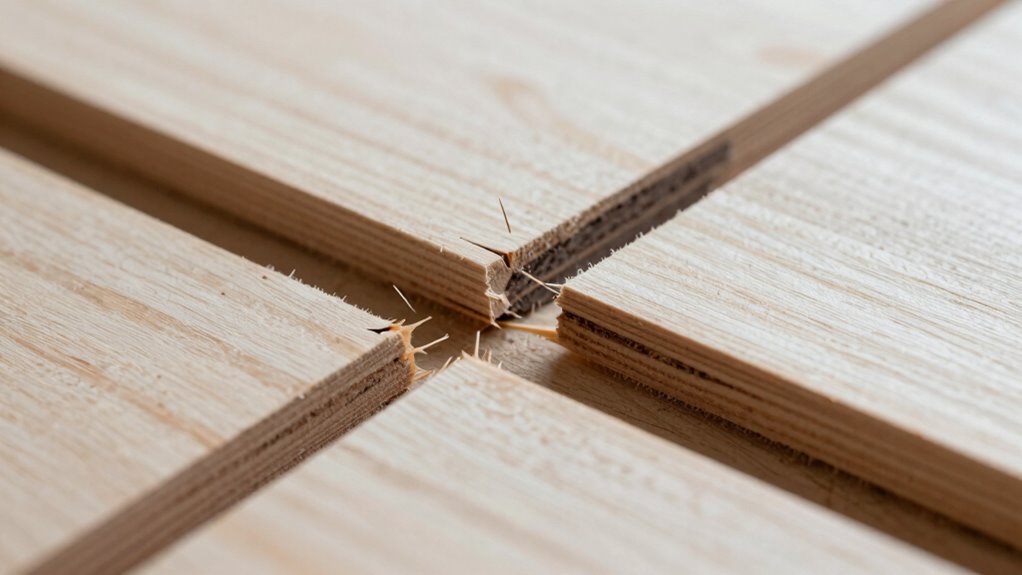

Thin wood splits during assembly mainly because you might be applying force against the grain, which weakens its structure and causes cracks. If you don’t check the moisture content or handle the wood improperly, it can become brittle or crack more easily. Fastening techniques also matter—driving fasteners parallel to the grain and using pilot holes help prevent splits. Understanding how grain, moisture, and handling influence wood integrity can save your project from damage. Keep going to discover more tips to avoid this issue.
Key Takeaways
- Applying force perpendicular to the grain increases stress and the risk of splitting in thin wood.
- Driving fasteners against the grain weakens the wood, causing it to crack.
- Cutting against the grain creates weak edges more prone to splitting during assembly.
- High moisture content makes wood flexible but increases internal stresses upon drying, leading to cracks.
- Lack of pilot holes can cause splitting when fasteners are driven into thin or delicate wood sections.
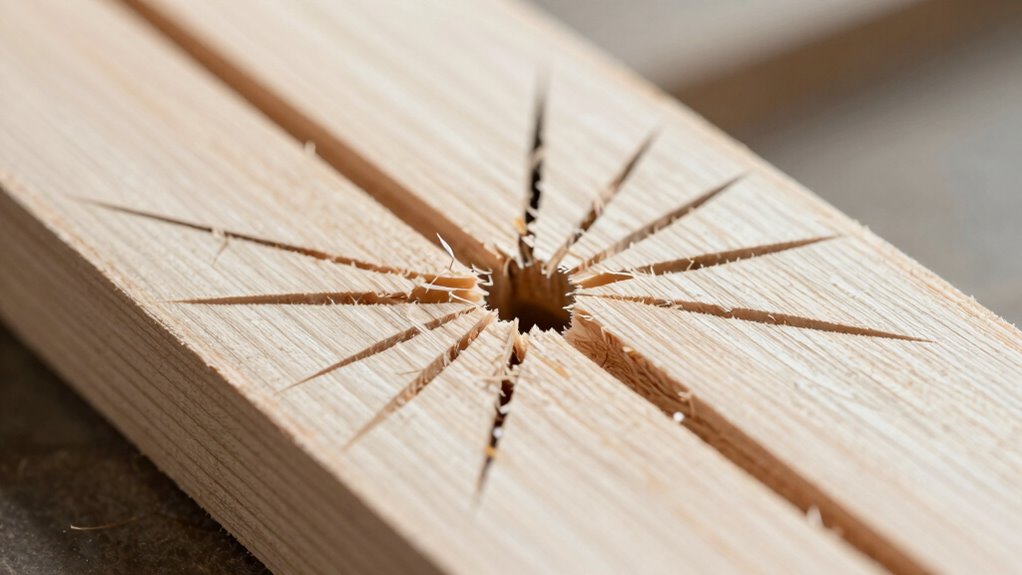
Have you ever wondered why thin wood pieces tend to split when you’re assembling furniture or crafting projects? The answer often lies in understanding the wood’s grain direction and moisture content. When you handle thin wood, you need to pay close attention to how the grain runs because it dictates how the wood responds to stress. If you apply force perpendicular to the grain, especially during screwing or nailing, you risk causing cracks or splits. Wood is strongest along its grain, so inserting nails or screws against this natural alignment weakens its structure and makes splitting more likely. Conversely, working with the grain—driving fasteners parallel to it—reduces the chance of damage. Recognizing the grain’s direction helps you plan your cuts and fastener placements to minimize splitting, guaranteeing your project maintains its integrity.
Moisture content plays a vital role too. When wood has high moisture levels, it’s more flexible and less prone to splitting initially. However, as it dries, it shrinks and becomes more brittle. If you assemble or manipulate wood that is too wet or too dry without proper adjustments, you risk causing splits. Wood with uneven moisture distribution can also lead to internal stresses, making it prone to cracking when you apply pressure. It’s best to work with wood at an ideal moisture content—usually around 6-8%—which provides enough stability and reduces the risk of splitting. Using a moisture meter can help you gauge this, especially if you’re working with reclaimed or stored wood. Proper acclimation of the wood before working on it guarantees that it’s at the right moisture level, reducing surprises during assembly.
Additionally, the way you handle the wood—such as drilling pilot holes—can influence splitting. Pilot holes relieve stress along the grain and make it easier to insert fasteners without cracking the thin pieces. This step is especially important when working with delicate or thin wood sections. Also, consider the direction of your cuts; cutting along the grain produces smoother, less split-prone edges, whereas cross-cutting can create weak points. If you’re not mindful of these details, even the best-designed pieces can crack under pressure.

General Tools MMD4E Moisture Meter for Wood, Walls & Water Leak Detection
- Humidity Sensor: Detects moisture levels for mold prevention
- Water Leak Detection: Identifies moisture in wood and drywall
- Backlit LCD Display: Large, easy-to-read moisture readings
As an affiliate, we earn on qualifying purchases.
As an affiliate, we earn on qualifying purchases.
Frequently Asked Questions
How Can I Prevent Thin Wood From Splitting During Assembly?
To prevent thin wood from splitting during assembly, pay close attention to the wood grain direction and nail placement. Drive nails perpendicular to the grain to minimize stress and splitting. Also, pre-drill holes to ease nail insertion and reduce pressure on the wood. By aligning nails properly and respecting the wood grain, you’ll keep your thin wood intact and guarantee a sturdy, professional-looking project.
Are Certain Wood Types More Prone to Splitting?
Certain wood types, like oak or hickory, are more prone to splitting, making you feel like you’re wrestling a stubborn beast. You’ll want to pay close attention to wood treatment and grain orientation—aligning the grain with your cuts and applying proper treatments can turn these fierce woods into tame allies. Ignoring these details is like inviting chaos to your project, turning a simple task into a splinter-filled battle.
Does Humidity Affect Wood Splitting During Assembly?
Humidity definitely affects wood splitting during assembly. When humidity levels rise, wood absorbs moisture, leading to wood expansion. This moisture absorption weakens the fibers, making the wood more prone to splitting when you apply force. Conversely, low humidity causes contraction, but sudden changes can still cause stress and splits. To prevent this, acclimate your wood in stable humidity conditions before working, and avoid forcing parts together in fluctuating environments.
Is It Better to Drill or Cut Thin Wood First?
It’s better to drill thin wood first, especially near the wood grain and nail placement spots. Drilling creates a clean hole that prevents splitting when you nail or cut afterward. By aligning your drill with the grain, you reduce stress on the wood fibers, minimizing splits. This approach also helps in accurate nail placement, ensuring your project stays sturdy. Always drill slowly and steadily for the best results.
Can Using Lubricants Reduce Splitting Risks?
Using lubricants can reduce the risk of splitting thin wood during assembly. Lubricants help the drill or saw move smoothly along the wood grain, minimizing stress and preventing cracks. They also improve the surface finish by reducing friction and heat. Applying a suitable lubricant before drilling or cutting guarantees cleaner cuts and less damage, especially when working with delicate, thin wood pieces.
Conclusion
So, next time you’re assembling thin wood and it decides to split, don’t lose your mind—it’s just a tiny piece of the puzzle in your woodworking adventure. Remember, even the most skilled craftsmen face this challenge more often than you’d think, and it’s hardly the end of the world. With a little patience and the right technique, you’ll be turning that fragile wood into a masterpiece faster than you can say “splinter!” Keep going—you’ve got this!