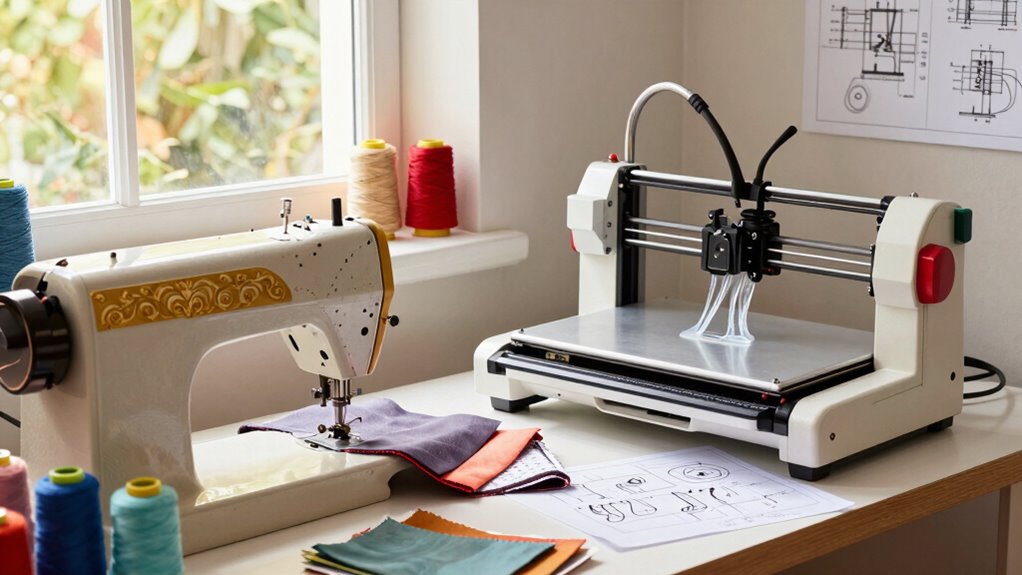

Investing in quality sewing, cutting, and 3D printing equipment can greatly boost your creative side-hustle by expanding your product range and improving output quality. Choosing the right tools for your fabric types and maintaining them properly ensures consistent, professional results. This not only enhances craftsmanship but also helps overcome creative slumps and scales your operations. Keep exploring to discover how proper equipment and techniques can turn your ideas into successful products.
Key Takeaways
- Invest in versatile, high-quality equipment to enhance product quality and fuel creative growth in your side hustle.
- Choose tools compatible with your materials to ensure efficient workflows and prevent machine damage.
- Regularly maintain and clean your machines to extend lifespan and maintain consistent, professional results.
- Select fabrics and materials suited to your equipment’s capabilities for smoother production and better product outcomes.
- Upgrading and properly caring for your tools can help overcome creative slumps and scale your side hustle effectively.
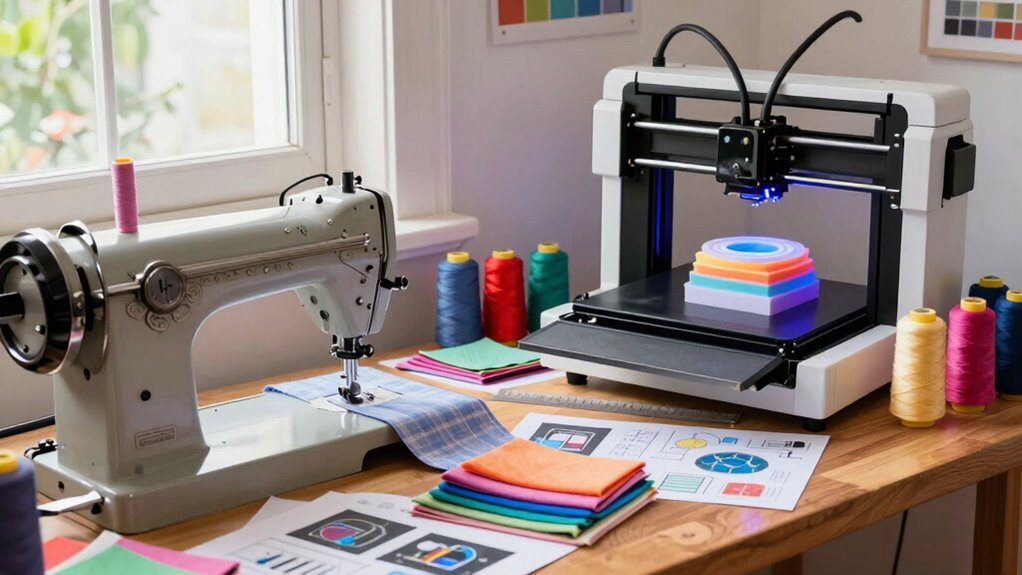
If you’re looking to bounce back from a creative slump or expand your side hustle, investing in sewing machines, cutting machines, and 3D printers can be a game-changer. These tools open new avenues for innovation, allowing you to create a variety of products that appeal to different markets. But to make the most of your equipment, you need to understand the importance of fabric selection and machine maintenance. Choosing the right fabric is essential because it impacts the quality of your finished products and the ease of your workflow. For example, if you’re working on apparel, selecting fabrics with the right weight, stretch, and durability can make a noticeable difference. Thicker fabrics like denim or canvas require sturdy sewing machines with strong needles, while delicate fabrics like silk need gentle handling and fine stitching settings. Don’t forget that fabric choice also influences how often you’ll need to clean or replace machine parts—some materials shed fibers that can clog your machine if not properly maintained. Regular machine maintenance is indispensable to keep your equipment running smoothly and to prevent costly repairs or downtime. Make it a habit to clean your sewing machine after each project, removing lint and dust that can accumulate in the bobbin area and feed dogs. For cutting machines, keep blades sharp and clean, inspecting them regularly for signs of dullness or damage. Proper maintenance extends the life of your tools and ensures consistent results. When working with your 3D printer, perform routine calibrations and clean print heads to avoid printing errors and material wastage. Consistent maintenance also helps you identify potential issues early, so you can address them before they affect your output. Additionally, understanding machine compatibility with different materials can help you optimize your workflow and avoid damage. Being aware of material properties can further inform your choices and improve your overall results. Investing in high-quality tools is only part of the equation—your understanding of fabric selection and diligent machine maintenance will determine your success. When choosing fabrics, consider how they interact with your machines and your end product’s purpose. Proper maintenance keeps your machines efficient, reducing frustrations and increasing productivity. Being attentive to these details will help you recover from creative setbacks and elevate your craftsmanship, making your side hustle more professional and profitable. Staying attentive to these details ensures that your creative projects are not just successful but also enjoyable to produce.

Brother Sewing Machine, XM2701, Lightweight Machine with 27 Stitches, 6 Included Sewing Feet
- Number of Stitches: 27 built-in stitches including decorative and stretch
- Automatic Needle Threader: Easy threading with automatic needle threader
- Drop-in Top Bobbin: Jam-resistant drop-in bobbin system
As an affiliate, we earn on qualifying purchases.
As an affiliate, we earn on qualifying purchases.
Frequently Asked Questions
What Are the Initial Costs for Starting a Creative Side-Hustle?
Your initial costs depend on your material selection and pricing strategies. You might spend more upfront on quality fabrics or 3D printing materials, but choosing affordable options helps keep expenses low. Investing in essential equipment like sewing, cutting, or 3D printing tools is necessary, but balancing these costs with your target market’s pricing expectations guarantees profitability. Start small, test your ideas, and gradually scale as you refine your product offerings and revenue.
How Much Space Is Needed for Each Type of Machine?
Think of each machine as a essential ingredient in your creative recipe; they need enough space to thrive. You’ll want about 3-4 square feet for a sewing machine, 2-3 for a cutting machine, and roughly 4-6 for a 3D printer. Proper workspace organization and smart storage solutions guarantee each device has room to operate smoothly, preventing clutter and making your creative flow seamless and efficient.
Are There Specific Maintenance Tips for Prolonged Machine Use?
To keep your machine running smoothly during prolonged use, regularly perform cleaning routines and guarantee proper machine lubrication. Wipe down surfaces to remove dust and debris, and use appropriate lubricants on moving parts as recommended by the manufacturer. This prevents overheating, reduces wear, and maintains ideal performance. Consistent maintenance not only extends your machine’s lifespan but also guarantees high-quality results every time you work.
What Safety Precautions Should I Consider When Operating These Machines?
Think of safety gear as your armor in a creative battle. Always wear protective glasses and gloves to shield against sharp edges or flying debris. Keep emergency procedures handy, knowing how to shut machines off swiftly if needed. Stay alert and focused, avoiding distractions. By respecting these precautions, you safeguard your hands, eyes, and overall well-being, turning your crafting space into a safe haven for your creative pursuits.
How Can I Market Products Made With These Machines Effectively?
To market your products effectively, focus on strong product branding that highlights what makes your items unique. Use social media marketing to showcase your work through engaging photos, videos, and stories that connect with your audience. Consistently post, interact with followers, and leverage hashtags relevant to your niche. Collaborate with influencers or craft communities to boost visibility and drive sales, turning your creative side-hustle into a thriving business.
Conclusion
Embracing sewing machines, cutting tools, and 3D printers can gently guide your side-hustle back on track, turning small setbacks into stepping stones. With a little patience and creativity, these tools help you rediscover your passion and craft new opportunities. Remember, every challenge is just a quiet nudge towards growth. Keep weaving, cutting, and printing — your next success might be just a stitch or a click away.