To knit a dishcloth with seed stitch, cast on an even number of stitches using cotton or cotton blend yarn for durability. Alternate knitting and purling across each row—purl the first stitch, then knit the next—repeating these steps until your piece reaches the desired size. This simple, reversible pattern is perfect for beginners and results in a textured, attractive dishcloth. Keep going, and you’ll discover how easy and satisfying this project can be.
Key Takeaways
- Cast an even number of stitches onto your knitting needles to start the seed stitch pattern.
- Alternate purl and knit stitches across each row, reversing the order on every row for the seed stitch texture.
- Continue repeating the pattern until the dishcloth reaches your desired size, maintaining even tension.
- Use cotton or cotton-blend worsted weight yarn for durability and absorbency.
- Bind off loosely to ensure a flexible, functional dishcloth with a uniform, textured surface.
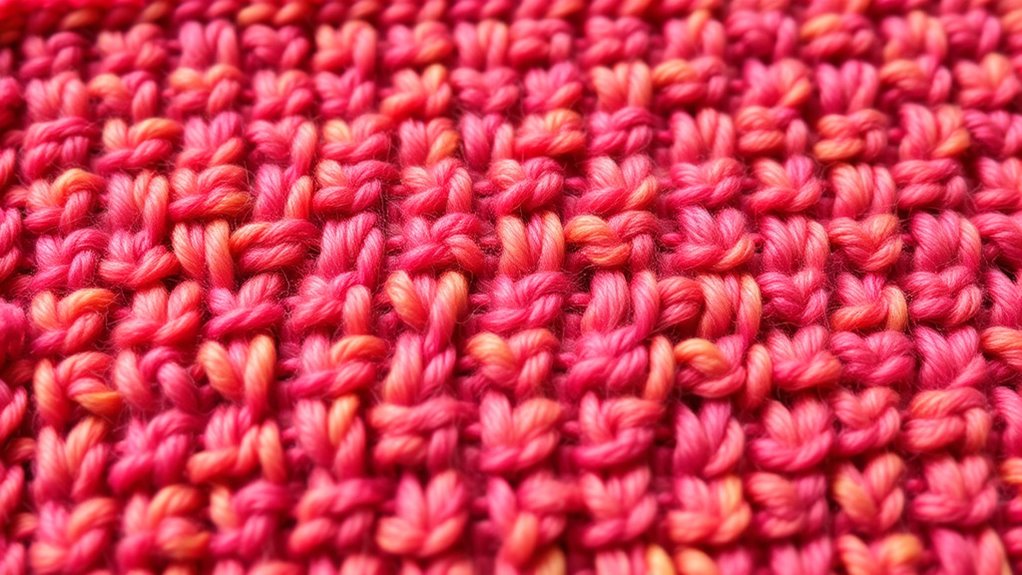
Have you ever wanted to create a simple, practical project that’s both satisfying and quick to complete? Knitting a dishcloth with seed stitch is just that. It’s a perfect beginner project because it’s straightforward, doesn’t require complicated techniques, and produces a useful item you’ll actually use. The key to a successful dishcloth lies in choosing the right yarn and mastering the stitch patterns.
A simple, satisfying beginner project: knit a practical dishcloth with seed stitch.
When it comes to yarn selection, opt for cotton or a cotton blend. Cotton yarn is highly absorbent, durable, and easy to wash, making it ideal for dishcloths. Stick to medium weight yarn—typically classified as worsted weight—so your project progresses quickly without sacrificing texture or durability. Avoid novelty or fuzzy yarns, as they can be difficult to work with and may not hold up well during repeated washes. For colors, choose shades that hide stains and wear, like blues, greens, or neutral tones. Bright or variegated yarns can add visual interest but may complicate the stitch pattern’s visibility, so consider your preferences.
Once you’ve selected your yarn, focus on the stitch patterns. Seed stitch, also called moss stitch, is one of the simplest and most attractive patterns to learn. It involves alternating knit and purl stitches across every row, creating a textured fabric with a bumpy, pebble-like surface. To do seed stitch, cast on an even number of stitches, then knit the first stitch, purl the next, and continue alternating across the row. On the next row, you’ll purl the first stitch, knit the next, and so on, reversing the pattern. Repeat these two rows until your dishcloth reaches your desired size. This stitch pattern doesn’t require complex counting or pattern repeats, making it perfect for quick learning and satisfying results. Additionally, the high contrast in texture of seed stitch makes it easier to see your stitches, especially for beginners still developing their tension.
Throughout the project, maintaining even tension ensures your dishcloth turns out uniform and professional-looking. Because seed stitch is a reversible pattern, your dishcloth will look attractive on both sides, which is perfect for a functional item. As you get more comfortable, you can experiment with different stitch patterns, but seed stitch remains a reliable choice for beginners due to its simplicity and aesthetic appeal.
In just a short amount of time, your dishcloth will come together beautifully, thanks to careful yarn selection and the straightforward seed stitch pattern. Not only will you end up with a practical, handmade item, but you’ll also gain confidence in your knitting skills. With a little practice, you’ll be surprised at how quickly you can create these useful projects, and they make wonderful gifts or additions to your own kitchen.
Frequently Asked Questions
Can Seed Stitch Be Used for Other Kitchen Items?
Yes, seed stitch can be used for other kitchen items because it creates a textured, durable fabric perfect for kitchen decor. Its fabric durability makes it ideal for items like potholders, coasters, or placemats that need to withstand heat and frequent use. Plus, the interesting texture adds a charming touch to your kitchen decor. So, don’t hesitate to incorporate seed stitch into various kitchen projects for both function and style.
How Do I Fix Mistakes in Seed Stitch?
Fixing mistakes in seed stitch is like untangling a knot in your shoelaces. To correct pattern errors, gently unravel the stitches to the point of the mistake. Use a crochet hook to lift dropped stitches back onto the needle, then re-knit or purl them correctly. For larger errors, you might need to rip back a few rows. Patience guarantees your dishcloth looks perfect again!
What Yarn Types Are Best for Dishcloths?
You should choose cotton yarns for dishcloths because they offer excellent material durability and are easy to clean. Look for tightly spun cotton or linen for added strength. When selecting colors, opt for bright or dark shades that hide stains well and match your kitchen decor. Avoid delicate fibers like silk or wool, which don’t hold up well to frequent washing and can lose their shape over time.
How Do I Make a Textured Seed Stitch Pattern?
Did you know that seed stitch creates a fabric with excellent texture and durability? To make a textured seed stitch pattern, alternate knit and purl stitches across your row, then switch them on the next row, maintaining stitch symmetry. For pattern variations, try experimenting with different yarn colors or adding cables. This approach keeps your dishcloth interesting and functional, giving it a charming, textured look that’s both attractive and practical.
Is Seed Stitch Suitable for Beginner Knitters?
Seed stitch is great for beginners because it has a gentle learning curve, making it easier to master than more complex patterns. The repetitive nature helps you develop your tension and stitch consistency, providing beginner benefits like confidence and steady progress. Plus, it creates a textured fabric that’s forgiving and visually appealing. So, if you’re just starting out, seed stitch is a perfect choice to build your knitting skills.
Conclusion
Now that you’ve mastered the seed stitch, your dishcloth will be more durable than a fortress and twice as charming. Keep practicing, and you’ll find it’s easier than you ever imagined—almost like magic! With your new skills, you can create beautiful, functional pieces that turn everyday chores into moments of craft joy. So grab your needles and yarn, and watch your confidence grow faster than a wildfire! Happy knitting!