To sew a minimalist apron with simple ties, start by choosing durable fabrics like cotton or linen, and measure your waist and neck for accurate tie lengths. Cut two main apron pieces and tie strips, then sew the sides and hem the bottom. Fold the top edge to create a casing for the neck tie, and sew the ties along the edges. For a polished look, finish with neat hems. Keep exploring to discover more tips for customizing your apron.
Key Takeaways
- Select durable, solid-colored or subtly patterned fabrics like cotton or linen for a minimalist look.
- Measure and cut two rectangular pieces for the apron body and narrow strips for the ties.
- Sew the side seams, then fold and stitch the top edge to create a casing for the neck tie.
- Fold tie strips lengthwise, sew along the long edge, then turn right side out.
- Attach the ties securely to the apron, hem the bottom, and customize for a clean, simple finish.
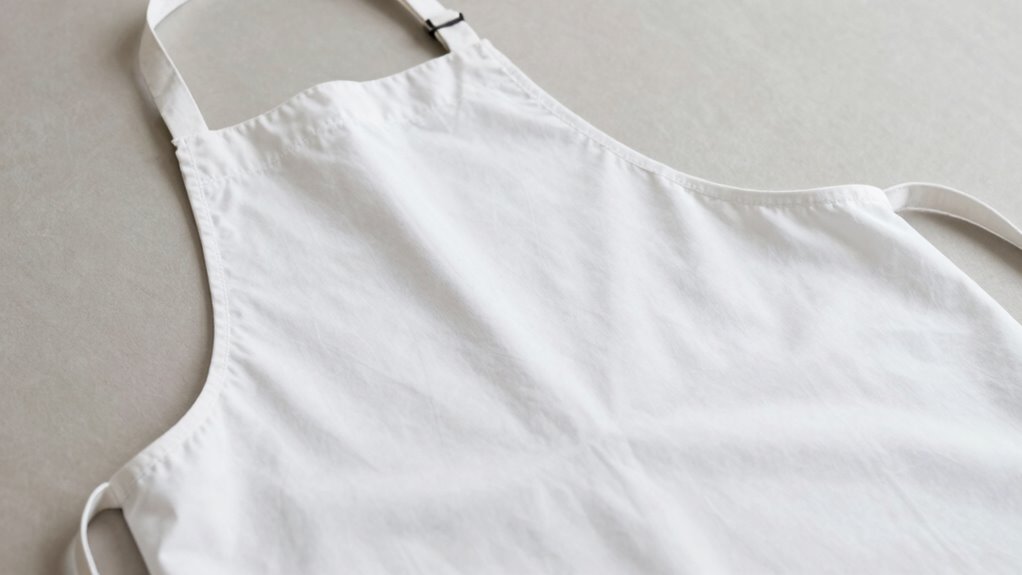
Have you ever wanted a simple, stylish apron that’s easy to make and perfect for everyday use? If so, sewing your own minimalist apron with simple ties is a great project that combines practicality and style. To start, you’ll need to focus on fabric selection—opting for durable, easy-to-wash materials like cotton or linen that can withstand frequent use. Choose a fabric in a solid color or subtle pattern that suits your personal aesthetic and matches your kitchen decor. The right fabric makes a significant difference, so don’t skimp on quality; it will ensure your apron looks good and lasts longer.
Next, gather your sewing tools. You’ll need basic items like a sewing machine, scissors, pins, measuring tape, and a fabric marker or chalk for marking. Having sharp scissors and good-quality pins makes the process smoother, preventing fraying or shifting of fabric as you sew. A consistent seam allowance, such as ½ inch, will give your apron a clean, professional finish. If you don’t have a sewing machine, you can sew by hand, but a machine speeds up the process and creates more even stitches.
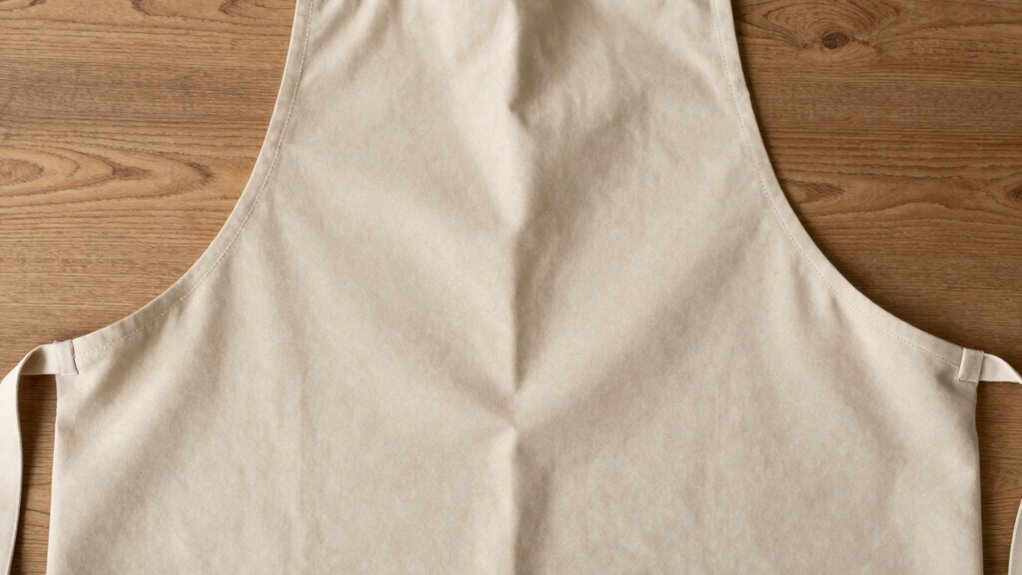
Once you’ve selected your fabric and tools, measure yourself to determine the apron’s dimensions. For a minimalist style, keep the design simple—cut two rectangular pieces for the body, and two narrower strips for the ties. The apron body should be long enough to cover your torso comfortably but not so long that it drags. For the ties, measure around your waist and neck, adding a few extra inches for seam allowances and tying comfort. Use your fabric marker or chalk to mark your cut lines carefully, then cut out your pieces with sharp scissors. Considering fabric durability can help ensure your apron withstands regular washing and wear. Incorporating fabric care tips can also extend the life of your apron.
Pin the edges of the apron body and sew along the sides, leaving the top open for the neck hole. Fold the top edge inward to create a clean casing for the neck tie, then sew along the fold. For the ties, fold each strip in half lengthwise with right sides together, sew along the long edge, then turn right side out. Attach the ends of the ties to the top and sides of the apron body, ensuring they’re securely sewn and can withstand pulling. Finish by hemming the bottom edge of the apron for a polished look. Incorporating sustainable materials such as organic fabrics can further enhance the environmentally conscious aspect of your project.
Your minimalist apron with simple ties is now ready to wear. It’s straightforward to make, stylish, and highly functional. Plus, customizing the fabric allows you to create an apron that perfectly matches your kitchen style, all while enjoying the satisfaction of sewing it yourself.
As an affiliate, we earn on qualifying purchases.
Frequently Asked Questions
What Types of Fabric Are Best for a Minimalist Apron?
You should choose sturdy, easy-to-clean fabrics like cotton or linen for your minimalist apron. Opt for solid colors or subtle fabric patterns that match your style. Consider eco-friendly materials such as organic cotton or hemp, which are sustainable and durable. These options make your apron functional and environmentally conscious. Lightweight yet strong fabrics guarantee comfort and longevity, perfect for everyday use while aligning with eco-friendly principles.
How Do I Adjust the Apron Size for Different Body Types?
To adjust the apron size for different body types, start by modifying the straps’ length, which is the easiest way to accommodate sizing variations. For larger or smaller bodies, cut the straps longer or shorter before attaching. You can also add extra fabric at the waist or top edges for a better fit. Always test your adjustments on scrap fabric first to guarantee comfort and proper fit.
Can I Add Pockets to the Apron Easily?
Yes, you can add pockets easily to your apron. First, decide on the pocket placement—usually on the front, near the waist. Use simple pocket sewing techniques: cut a fabric piece, fold and press the edges, then sew it onto the apron with straight stitches. Reinforce the corners for durability. This quick addition makes your apron more functional without complicating your minimalist design.
What Tools Are Essential for Sewing This Apron?
Perfectly pairing your tools, you’ll need a sewing machine for smooth stitching, basic sewing machine parts, and simple scissors for snipping. Focus on sewing machine basics like tension and stitch settings, and choose the right thread and needle for your fabric. These tools transform your sewing session from a struggle to a satisfying craft, ensuring your apron’s ties are tight, neat, and beautifully finished.
How Do I Care for and Wash the Finished Apron?
To care for your apron, wash it in cold water on a gentle cycle to preserve the fabric. Use a mild detergent, and consider fabric softening to keep it feeling comfy. For stains, treat them promptly with a stain remover or a mixture of baking soda and water before washing. Avoid harsh bleach, and hang the apron to air dry to maintain its shape and color.
Conclusion
Now that you’ve sewn your minimalist apron, you’ve crafted more than just a piece of clothing—you’ve created a blank canvas for your culinary adventures. With simple ties and clean lines, it’s a perfect blend of function and style. Wearing it feels like slipping into a second skin, ready to catch spills and inspire creativity. So, go ahead, tie it up, and let your kitchen become your personal masterpiece—because this apron is your new favorite tool for every recipe.