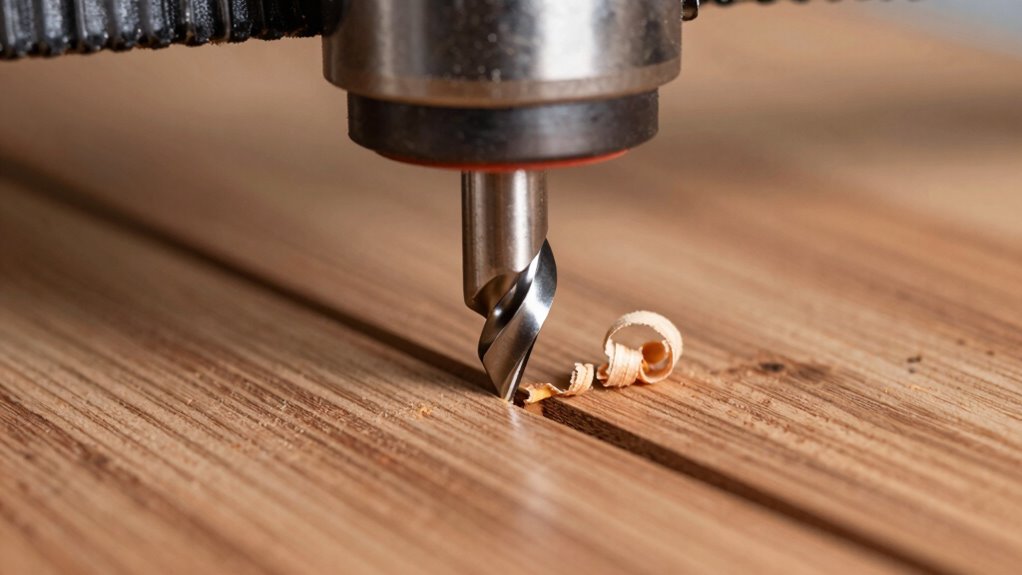

To pick the right CNC router bit and prevent tearout, you need to match the bit type and material to your project. Use upcut bits for chip evacuation on soft woods and plastics, downcut bits for cleaner top surfaces, and compression bits for laminated surfaces. Make certain your bits are sharp, properly maintained, and set your feed rates carefully. For intricate details, choose specialized bits like V-bits or ball nose tools. Keep exploring for more tips to master clean, precise cuts.
Key Takeaways
- Match bit material and coating to your material for cleaner cuts and longer tool life.
- Use the correct bit type (upcut, downcut, compression) based on your material and desired finish.
- Set optimal feed rates and cutting speeds to prevent tearout and burning.
- Regularly inspect and sharpen bits to maintain sharpness and cut quality.
- Adjust toolpath strategies and cooling methods to minimize fiber lift and splintering.

Eyryfui 5 Piece Engraving CNC Wood Carving Router Bit with Nano Blue Coated Tungsten Soild Carbide 15° 20° 30° 60° 90° V Groove Endmill Bit Profile Router Bits for Sign Making
- Set Includes Various Angles: 15°, 20°, 30°, 60°, 90° bits
- Durable Nano-Coated Tungsten Carbide: Resists wear and extends lifespan
- Precision and Smooth Cuts: Sharp, heat-treated edges for accuracy
As an affiliate, we earn on qualifying purchases.
As an affiliate, we earn on qualifying purchases.
Understanding the Different Types of CNC Router Bits
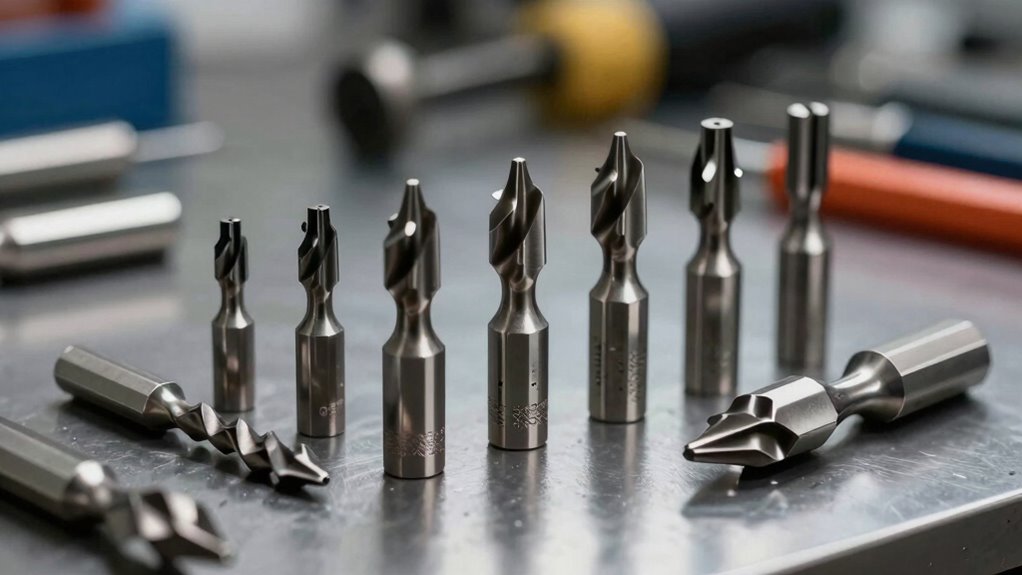
CNC router bits come in a variety of shapes and sizes, each designed for specific cutting tasks. The bit material plays a big role in durability and performance. High-speed steel (HSS) bits are common and affordable, suitable for softer materials. Carbide bits, however, are more robust and last longer, especially when working with harder materials. Tool coating further enhances a bit’s performance by reducing friction and heat buildup. Coatings like titanium nitride (TiN) or titanium carbonitride (TiCN) improve wear resistance and extend bit life. Selecting the appropriate coating can also help prevent tearout and achieve cleaner finishes. Using sustainable manufacturing practices and tools can also contribute to a more environmentally friendly workflow. Choosing the right combination of bit material and coating ensures cleaner cuts, less tearout, and better precision. Understanding these differences helps you select the appropriate bit for your project, maximizing efficiency and results. European cloud innovation also emphasizes the importance of sustainable and reliable tools in modern manufacturing processes.
How to Choose the Best CNC Router Bit for Your Material
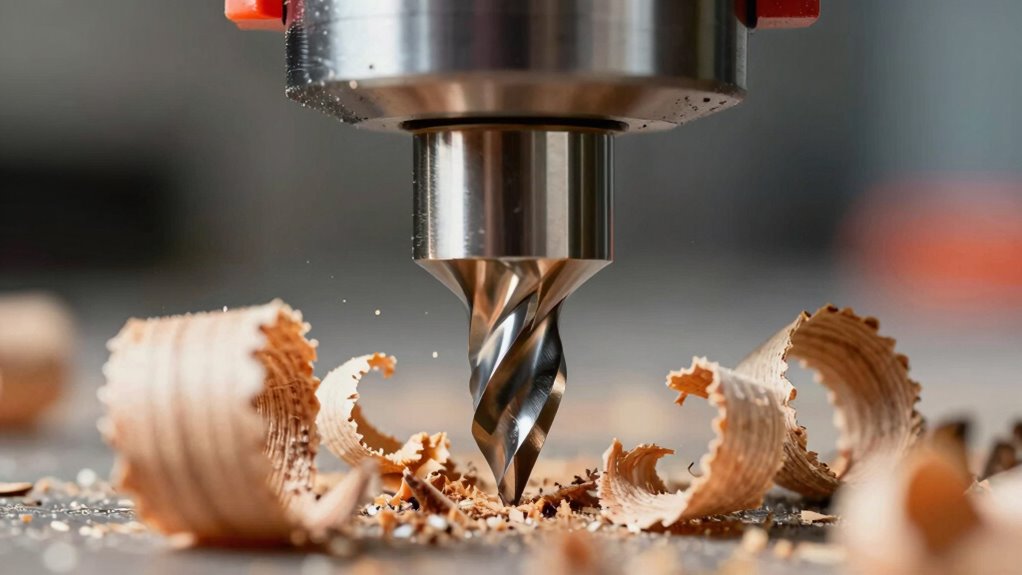
Choosing the right router bit depends heavily on the material you’re working with, as different materials require different cutting tools for ideal results. For softer woods, carbide-tipped bits are durable and provide clean cuts, while harder materials like plastics may need specialized bits with specific bit material to prevent melting or fuzzing. Consider the toughness and density of your material when selecting your bit material. Additionally, if your bit becomes dull over time, tool sharpening can restore its edge, extending its lifespan and maintaining cut quality. Sharp bits reduce tearout and improve precision, so regular maintenance is essential. Matching the bit material] to your material ensures cleaner cuts, less tearout, and less frequent tool replacement, saving you time and money in the long run.
Key Factors to Consider When Selecting CNC Bits
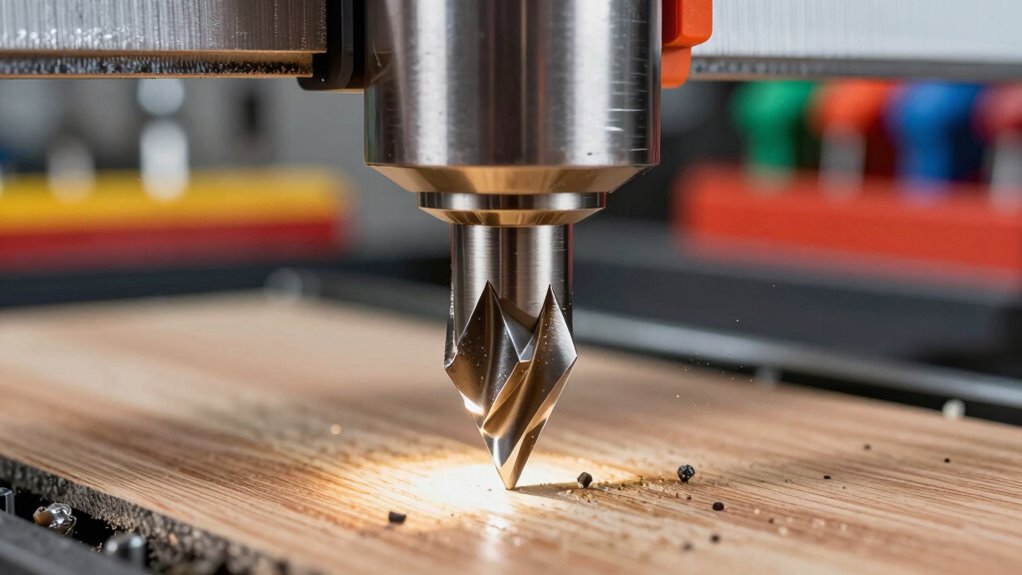
When selecting CNC bits, the key factors you need to consider include the material you’ll be working with, the type of cut you want to achieve, and the bit’s durability. The bit material is crucial—high-speed steel (HSS) offers versatility, while carbide provides longer life and better performance on harder materials. Durability influences how often you’ll need to replace or sharpen your bit; a more durable bit can save you time and money. Tool sharpening is essential for maintaining cut quality, especially with softer materials or frequent use. Regularly sharpening your bits ensures clean cuts and reduces tearout. Choosing the right bit material and maintaining it through proper sharpening will give you consistent results and extend the life of your tools. Additionally, understanding the tearout tendencies of different bit designs can help you select the most suitable bit for your project needs. Recognizing the importance of proper bit selection can also prevent costly mistakes and improve overall project quality. Being aware of cutting angles and how they influence tearout can further optimize your results and protect your workpiece from damage. Incorporating the right cutting parameters based on your material and tool choice can optimize efficiency and surface finish.
Avoid Common Mistakes That Cause Tearout
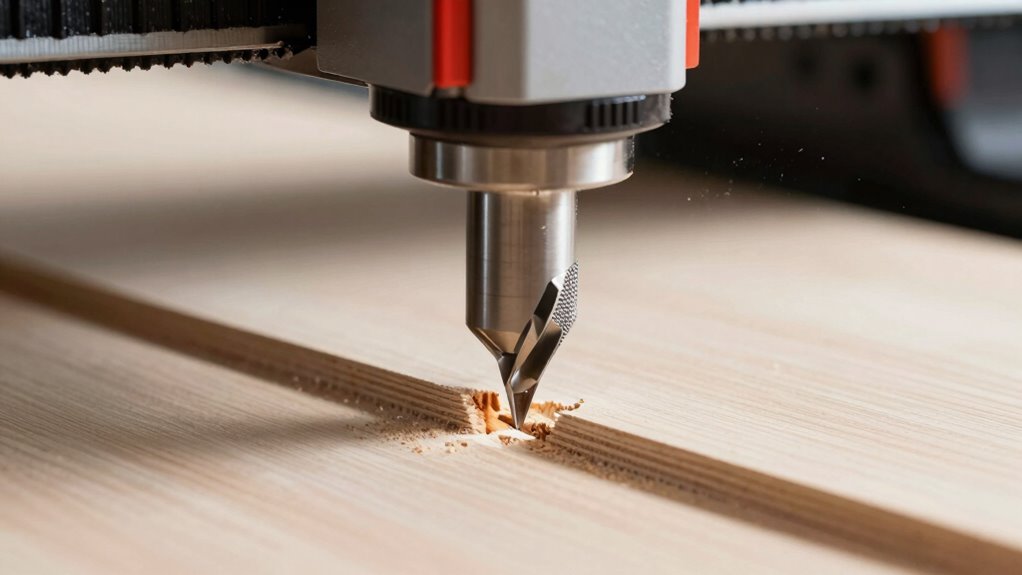
Tearout often occurs when the cutting parameters aren’t set correctly or the wrong bit is used for the material. To prevent this, ensure your machine is properly calibrated for consistent feed rates and depths. Proper dust collection reduces debris buildup that can cause tearout, especially on delicate surfaces. Use sharp bits suited for your material to maintain clean cuts. Avoid rushing through cuts; slow down for better control. Keep your bits well-maintained and replace dull ones promptly. Additionally, understanding feed rate optimization helps in achieving cleaner cuts and reducing tearout. Monitoring cutting speeds and adjusting them based on material type can further improve the quality of your cuts and prevent tearout. Incorporating material-specific settings into your workflow can also significantly reduce the likelihood of tearout and improve overall cut quality. Paying attention to toolpath strategies can also help minimize tearout by optimizing the cutting direction and entry points. Additionally, adjusting cutting depth properly can make a notable difference in preventing tearout and achieving a smoother finish.
Tips for Setting Up Your CNC Router Bits for Perfect Results
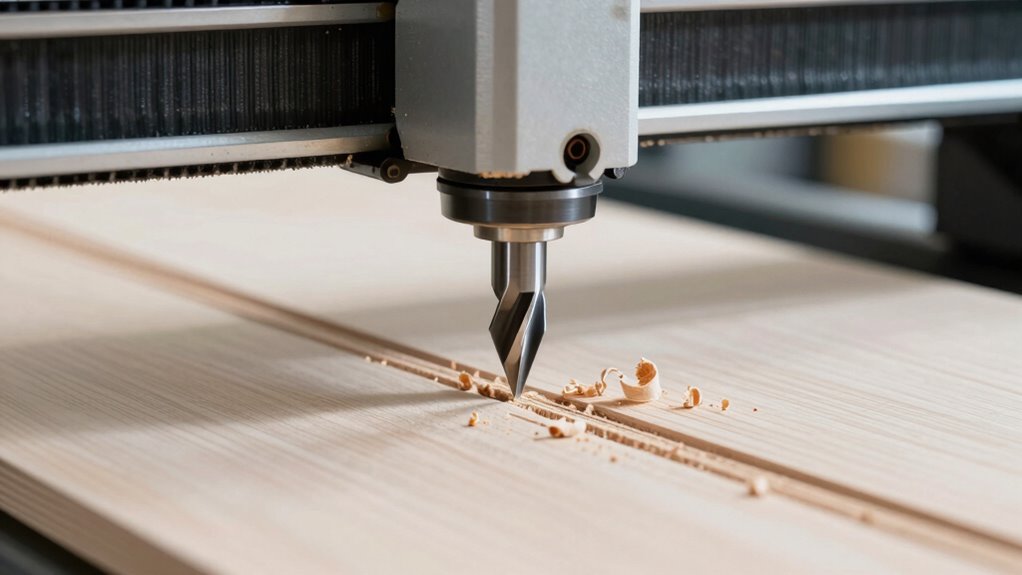
To get the best results, start by choosing the right bit for your project’s material and complexity. Then, set your feed rates carefully to guarantee clean cuts without burning or tearing. Properly adjusting these settings makes a big difference in the quality of your finished piece. Additionally, understanding the material properties can help prevent issues like tearout and ensure smoother cuts.
Proper Bit Selection
Choosing the right CNC router bit is vital for achieving precise and clean cuts. Your selection depends on the bit material, which impacts durability and performance. For softer woods, carbide bits work well, offering longevity and sharpness. Harder materials, like metals, require specialized bits with tougher compositions. Always consider the bit’s purpose—whether for profiling, slotting, or engraving—and match it accordingly. Proper tool sharpening is essential; dull bits cause tearout and rough edges. Keep your bits sharp to maintain clean cuts and extend their lifespan. Inspect your bits regularly, and sharpen or replace them as needed. Using the correct bit material and maintaining sharpness ensures better results, minimizes tearout, and improves overall efficiency in your CNC projects.
Optimal Feed Rates
Setting the right feed rate is essential for achieving smooth, accurate cuts with your CNC router. Proper feed rate refinement ensures your bit moves at the correct speed, preventing tearout and tool wear. To fine-tune your feed speed adjustments, consider these tips:
- Start slow and gradually increase to find the ideal balance.
- Match feed rates to the material and bit type for best results.
- Monitor cut quality and adjust accordingly to avoid burning or chipping.
How Bit Geometry and Coatings Impact Finish Quality

Your choice of bit geometry affects how clean and smooth your finish turns out, with sharper edges providing better results. Coating durability influences how well the bit resists wear, which directly impacts the consistency of your surface quality. By understanding how these factors work together, you can select bits that deliver a higher-quality, professional finish every time. Additionally, considering the advanced technology and design in modern pinball machines demonstrates the importance of precision and quality in manufacturing processes.
Cutting Edge Design
The design of the cutting edge plays a crucial role in determining the finish quality when using CNC router bits. Your choice of edge design influences how cleanly the material is cut and how smooth the surface remains. Different cutting profiles create varied chip evacuation and reduce tearout, especially on intricate edges. For ideal results, consider these key aspects:
- Edge geometry: Sharp, well-defined edges produce cleaner cuts and minimize splintering.
- Cutting profiles: Varying profiles, like straight or tapered, affect how the bit interacts with the material.
- Chipping prevention: Properly designed edges help prevent tearout, resulting in a smoother finish.
Coating Durability and Wear
Choosing the right coating and understanding how it interacts with bit geometry can markedly influence the durability and wear of CNC router bits. A high-quality coating enhances wear resistance, prolonging bit life and maintaining cutting performance. Coating durability determines how well the bit resists abrasives and heat, preventing premature failure. Different coatings suit various materials and cutting conditions. For example, TiN provides excellent hardness and wear resistance, while DLC offers superior durability for aggressive cuts. Consider this comparison:
| Coating Type | Best For | Durability & Wear Resistance |
|---|---|---|
| TiN | Softwoods, plastics | Good wear resistance, moderate durability |
| TiAlN | Hardwoods, metals | Excellent wear resistance, high durability |
| DLC | Hard materials, high-speed cuts | Superior durability, outstanding wear resistance |
| ZrN | Aluminum, non-ferrous metals | Good wear resistance, moderate durability |
Choosing thoughtfully ensures your bits last longer and perform better. Understanding coating interactions can help optimize your cutting results and reduce downtime, ensuring a more efficient workflow. Additionally, being aware of bit geometry can further enhance the effectiveness of your chosen coating.
Finish Quality Influence
Bit geometry and coatings work together to directly influence the finish quality of your CNC projects. The right combination ensures smooth surfaces and reduces the need for extensive finishing techniques. Sharp, well-designed bits promote better surface smoothing, resulting in cleaner edges and fewer tearouts. Coatings, on the other hand, minimize heat buildup and reduce friction, leading to a finer finish. When selecting bits, consider these factors:
- Proper flute design for smooth cut flow
- Coatings that reduce heat and wear
- Geometry optimized for minimal tearout
These elements work hand-in-hand to improve your finishing techniques, delivering a high-quality surface with less post-processing. Choosing the right bit geometry and coatings helps you achieve a professional finish faster and more efficiently.
Troubleshooting Tearout: Causes and Fast Fixes
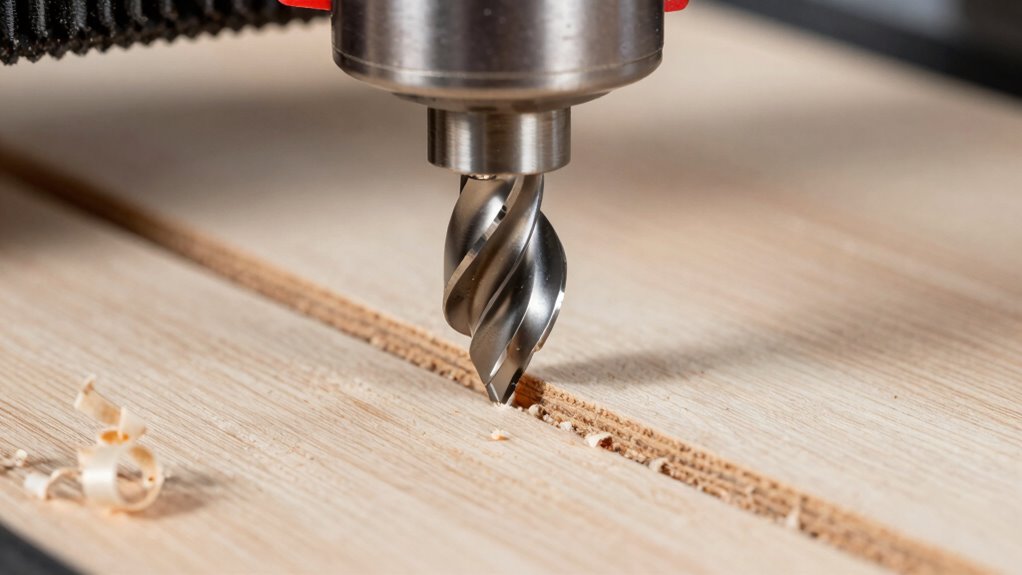
Tearout occurs when wood fibers lift or splinter during cutting, often ruining the finish and wasting material. To fix this quickly, check your tool condition and setup. Dull bits cause more tearout, so consider bit sharpening regularly. Using coolant can also reduce heat and friction, improving cut quality and decreasing splintering. Here’s a quick guide:
| Cause | Quick Fix | Tip |
|---|---|---|
| Dull bit | Sharpen or replace | Keep bits sharp |
| Insufficient coolant | Add coolant during cut | Use appropriate coolant |
| Improper feed rate | Adjust feed rate | Maintain consistent feed |
Focus on maintaining sharp bits and proper cooling to prevent tearout. These simple steps help you achieve cleaner cuts fast.
When to Use Upcut, Downcut, and Compression Bits

Choosing the right bit depends on the material you’re working with and the quality of cut you want. Upcut bits are great for clearing chips quickly, but they can cause tearout on delicate materials. Proper tool selection is essential for ensuring safety and achieving optimal results in your woodworking projects. Additionally, understanding the material characteristics can help you choose the most effective bit type for your specific application. For example, knowing the wood grain orientation can influence whether an upcut, downcut, or compression bit is most appropriate. Material properties such as density and grain direction play a crucial role in determining the ideal bit to minimize tearout and produce a smooth finish. Recognizing the cutting direction can significantly impact the quality of your cut and the amount of tearout experienced, especially on layered or veneered surfaces. Downcut and compression bits help improve finish quality and reduce tearout, especially on layered or veneered surfaces.
Material Compatibility Tips
Selecting the right CNC router bit depends on the material you’re working with, as each type offers distinct advantages. Upcut bits excel at evacuating chips from soft woods and plastics, preventing tearout. Downcut bits push material down, producing cleaner topsurfaces but can cause chip buildup in softer materials. Compression bits combine both, reducing tearout on laminated or veneered surfaces. To keep your bits performing well, regularly check for tool sharpening needs and store them properly to prevent damage. Proper bit selection and maintenance ensure ideal cut quality and longevity. Remember, using the correct bit for your material minimizes tearout and saves you time. Keep your bits in good shape, and you’ll improve results while extending their lifespan.
Cut Quality Considerations
Understanding when to use upcut, downcut, or compression bits is essential for optimizing cut quality. Upcut bits are ideal for chip evacuation, reducing tearout on the bottom surface, but they can lift material if feed rate isn’t properly optimized. Downcut bits push material down, producing cleaner top edges, but may cause heat buildup, increasing tool wear if feed rates are too high. Compression bits combine both, offering smooth top and bottom surfaces, especially on plywood or veneer. Adjust your feed rate to match the bit type; too fast can cause rough cuts and excessive tool wear, while too slow might lead to burn marks. Selecting the right bit for your material and maintaining proper feed rate ensures high-quality finishes and longer tool life. Proper feed rate management is crucial to prevent issues like burning, tearout, or premature tool failure.
Proper Maintenance and Replacement of CNC Router Bits

Proper maintenance and timely replacement of CNC router bits are essential to guarantee peak cutting performance and extend the lifespan of your tools. Regularly inspect your bits for signs of wear, such as dull edges or chips. When needed, perform bit sharpening to restore cutting efficiency and avoid rough finishes. Proper storage practices are equally important; keep bits in a dry, organized container to prevent rust and damage. To assure maximum performance, consider these tips:
Maintain your CNC router bits by regular inspection, proper storage, and timely sharpening for optimal performance.
- Store bits individually or in labeled cases
- Keep bits clean and free of debris after each use
- Sharpen bits regularly based on usage and wear
Understanding the importance of tool longevity can help you plan maintenance schedules effectively. Additionally, maintaining a clean workspace and avoiding contamination can prevent unnecessary tool wear and ensure consistent results. Incorporating proper tool care practices also promotes safety and efficiency during your woodworking projects.
Expert Tips for Choosing Bits for Fine Details and Complex Cuts
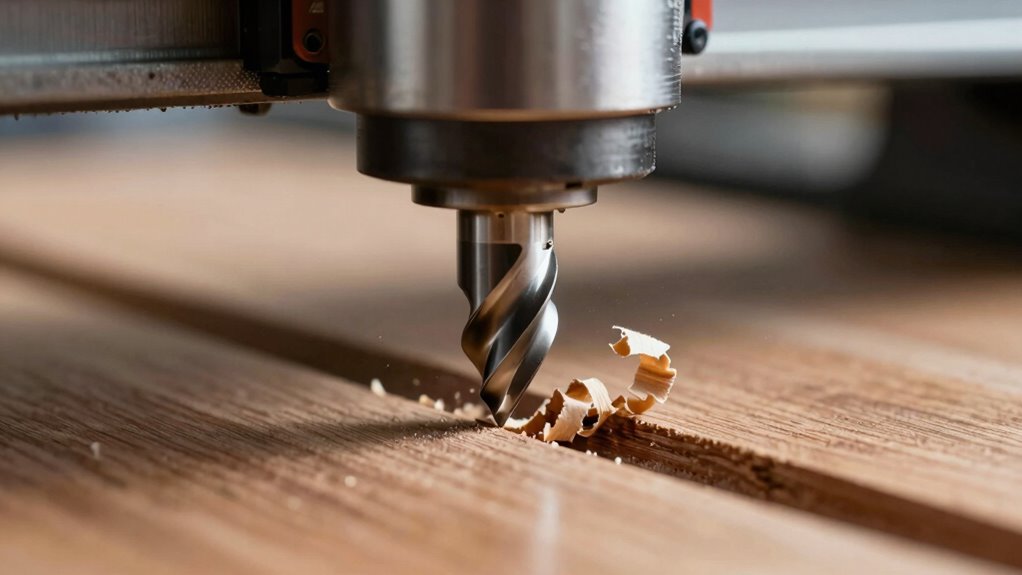
When working on fine details and intricate cuts, choosing the right CNC router bits can make all the difference in achieving clean, precise results. Focus on bit material—carbide bits are ideal for detailed work due to their hardness and durability, providing cleaner cuts and longer tool life. High-quality bits with sharp edges reduce tearout and produce smoother finishes. Keep your bits sharp through regular tool sharpening; dull bits cause chipping and rough edges, especially in delicate cuts. For complex designs, consider bits with smaller diameters and specialized profiles, such as V-bits or ball nose bits, to capture fine details accurately. Proper bit material combined with diligent sharpening guarantees your tools perform at their best, giving you crisp, professional results every time.
Frequently Asked Questions
How Do Environmental Factors Influence CNC Router Bit Performance?
Environmental factors greatly impact your CNC router bit performance. Dust accumulation can clog the bit’s cutting edges, reducing precision and causing tearout, so keep your workspace clean. Humidity effects also matter; high humidity can cause wood to swell, leading to increased resistance and potential bit wear. By maintaining a dry environment and regularly clearing dust, you guarantee smoother cuts and extend your bit’s lifespan.
Can Different Brands of CNC Bits Affect Tearout Differently?
Like a painter’s brush, different brands of CNC bits can influence tearout due to variations in quality and design. Brand consistency matters because reputable brands often guarantee better material compatibility and manufacturing precision, reducing tearout risks. Cheaper or inconsistent brands may cause uneven cuts or tearout, especially with delicate materials. Choose trusted brands to guarantee your bits perform reliably, maintaining quality and minimizing tearout during your projects.
What Are the Safety Considerations When Changing or Setting up Bits?
When changing or setting up bits, you should always wear personal protective equipment like gloves and safety glasses for safe handling. Turn off and unplug your CNC machine before any adjustments, and make sure the bit is cool to avoid burns. Handle bits carefully to prevent cuts and always double-check that they’re properly secured before starting. Following these safety steps helps prevent accidents and keeps your workspace safe.
How Do You Identify Worn or Dull CNC Router Bits Effectively?
You can identify worn or dull CNC router bits through thorough bit inspection, focusing on wear indicators like chipped edges, dull cutting surfaces, or discoloration. Check for uneven or excessive wear on the flutes or tips, which signal dullness. Regularly inspecting your bits helps you catch signs of wear early, ensuring peak performance and preventing tearout. Replace or sharpen dull bits promptly to maintain quality cuts and extend your tool’s lifespan.
Are There Specific Storage Techniques to Prolong Bit Lifespan?
To prolong your bit lifespan, focus on proper bit storage and routine maintenance. Store your bits in a dry, organized container to prevent rust and damage. Keep them separated by size or type for easy access. Incorporate regular maintenance routines like cleaning and inspecting for wear, and guarantee they’re stored in a way that minimizes impact. This approach helps maintain sharpness, reduces tearout, and extends the life of your CNC router bits.
Conclusion
Now that you’re armed with the knowledge of CNC router bits, you can confidently pick the right one for each project—no need to wield your tools like a blacksmith in a medieval forge. Remember, just like a wizard selecting the perfect spell, choosing the right bit and setup stops tearout in its tracks. With patience and practice, your craftsmanship will shine brighter than Excalibur itself. Happy routing!