
To get the best results, you need to match your machine to the material you’re working with. For paper, choose a machine with fine control to prevent tearing or wrinkling. Vinyl requires a robust cutter with precise pressure for durability. Felt needs adjustable blades or stronger motors due to its fibrous nature. Fabric demands specialized settings to avoid fraying and uneven cuts. Keep these factors in mind to guarantee clean, professional results—if you want to learn more, keep exploring how to optimize your machine for each material.
Key Takeaways
- Select machines with adjustable settings for pressure, speed, and blades to accommodate different material properties effectively.
- Ensure the machine’s cutting power and blade types match the durability and thickness of paper, vinyl, felt, or fabric.
- Use specialized equipment designed for delicate materials like paper and fabric to prevent tearing or fraying.
- Match sturdy, high-torque machines with durable materials like vinyl and felt for clean, precise cuts.
- Customize machine settings digitally or manually to optimize performance and extend tool lifespan across various materials.
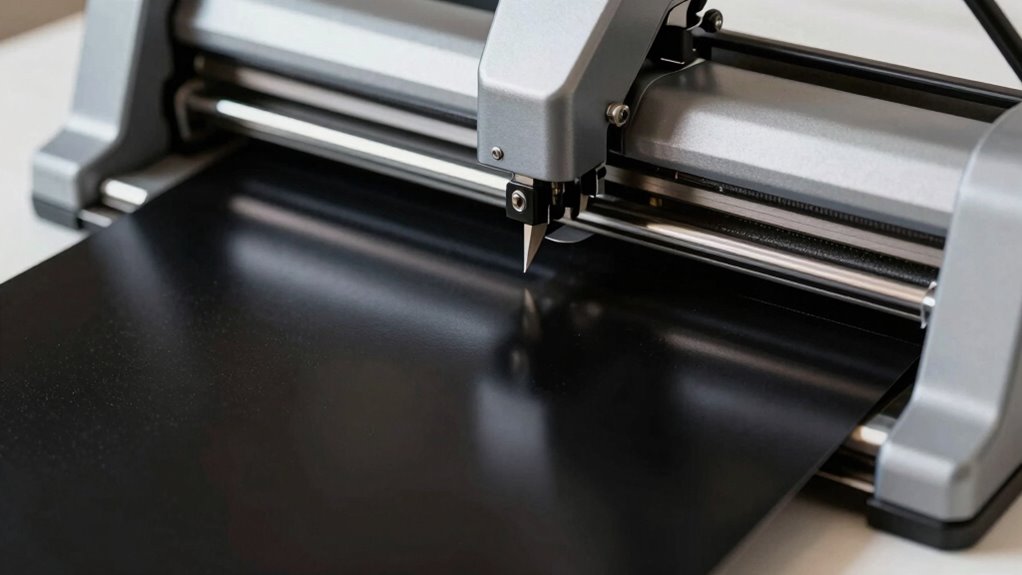
Have you ever wondered why some machines work perfectly with certain materials while others fail? The key lies in understanding the unique needs of each material and matching those needs with the right machine. When you choose a machine, you need to take into account the customization options available. These options can include adjustable speed, pressure, and blade types, all of which help optimize performance for specific materials. For example, if you’re working with paper, you want a machine that offers fine control to prevent tearing or wrinkling. On the other hand, vinyl requires a machine with more robust cutting power and precise pressure settings to handle its thicker, more durable surface.
Choosing the right machine depends on understanding your material’s unique needs and available customization options.
Material durability plays a crucial role in selecting the right equipment. Vinyl is known for its toughness and water resistance, so you need a machine capable of applying consistent pressure without damaging the material. Felt and fabric, however, have different needs. Felt, being thicker and more fibrous, might require a machine with adjustable blades or a stronger motor to cut through seamlessly. Fabric, depending on its thickness, may need a machine with specialized settings to avoid fraying or uneven cuts. Choosing a machine that complements the durability of your material ensures clean cuts, reduces waste, and extends the lifespan of your tools. Understanding these properties can also help you select appropriate tools that maximize efficiency and quality. Recognizing the material properties helps in making informed decisions for your projects. Additionally, considering the material’s flexibility can help prevent damage during cutting or shaping processes.
Your choice should also take into account how well the machine adapts to different material types through customization options. For instance, a versatile machine with multiple blade settings allows you to switch between delicate paper and sturdy vinyl easily. This flexibility saves time and money, especially if you work with various materials regularly. Additionally, some machines offer software adjustments that let you fine-tune settings digitally, ensuring more precise cuts tailored to each material’s thickness and texture. This level of customization can markedly improve your workflow and the quality of your finished product.
In essence, matching the right machine to your material isn’t just about compatibility—it’s about understanding the unique properties of each material and leveraging the customization options available. Whether you’re working with the fragile nature of paper, the resilience of vinyl, or the fibrous qualities of felt and fabric, selecting a machine designed to accommodate these differences makes your work more efficient, precise, and professional. Properly matching machines to materials can also help extend the lifespan of your tools and minimize waste. By paying attention to material durability and tailoring your machine’s capabilities accordingly, you’ll find that your projects turn out better, faster, and with less frustration. The right match enhances your craftsmanship and ensures your creations stand the test of time.

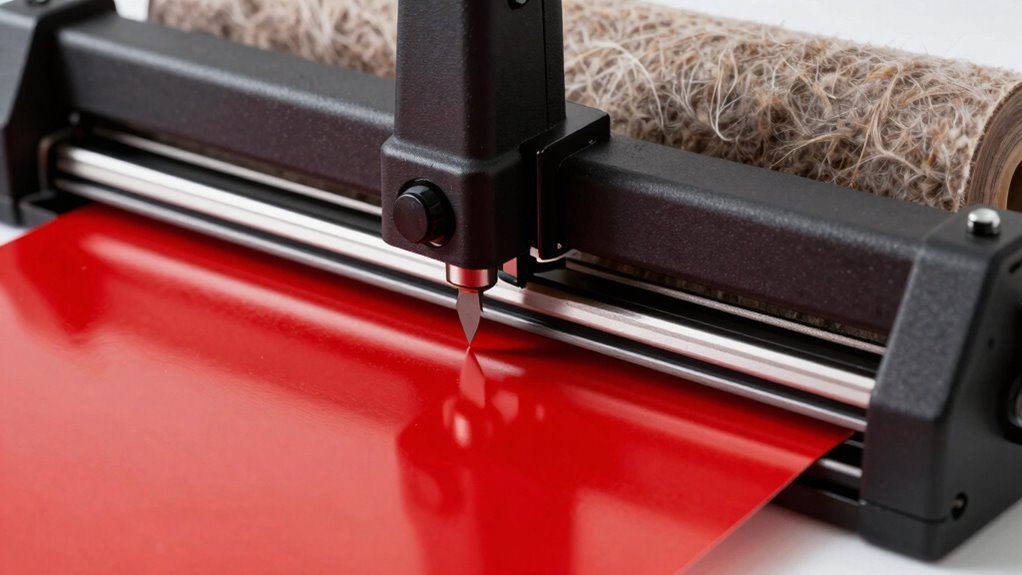
VEVOR 28-inch Cutting Machine for Vinyl, Features LCD Screen, Dual Adjustable Spring Rollers for Sign Crafting, Includes Signmaster for Creative Design & Cutting
- Maximum Feed Width: 28.3 inches / 720 mm
- Maximum Cutting Width: 24.8 inches / 630 mm
- LCD Control Panel: Adjust speed and force easily
As an affiliate, we earn on qualifying purchases.
As an affiliate, we earn on qualifying purchases.
Frequently Asked Questions
Can the Same Machine Cut All Types of Materials Effectively?
No, the same machine can’t cut all materials effectively. Material compatibility varies, and each type demands specific settings for ideal cutting precision. For example, a machine suited for paper may struggle with fabric or vinyl without modifications. To achieve the best results, you need a machine designed or adjustable for different materials, guaranteeing precise cuts and avoiding damage. Always choose equipment tailored to your material to guarantee quality and efficiency.
What Safety Precautions Are Necessary for Different Cutting Machines?
You should always wear appropriate safety gear, like goggles and gloves, when operating cutting machines. Make certain your machine’s material compatibility matches the material you’re cutting to prevent accidents or damage. Keep the workspace clean and well-lit, and follow manufacturer instructions carefully. Never bypass safety features, and turn off the machine when not in use. These precautions help keep you safe while achieving precise cuts for various materials.
How Do I Maintain and Clean My Cutting Machine Properly?
Did you know that properly maintaining your cutting machine can extend its lifespan by up to 30%? To keep it in top shape, regularly check and sharpen your blade to guarantee clean cuts, and clean the machine’s surface and blade area to prevent buildup. Always use compatible materials, and follow manufacturer guidelines for cleaning solutions. Proper blade maintenance and material compatibility are key to smooth operation and durable performance.
Are There Specific Blades for Different Materials?
Yes, there are specific blades for different materials to guarantee ideal blade compatibility and material versatility. For example, a fine-point blade works well for paper and vinyl, while a deep-cut blade is better for thicker materials like felt and fabric. Using the right blade prevents damage to your machine and material, providing cleaner cuts. Always check manufacturer recommendations to match your blade to the material you’re working with for best results.
Can These Machines Handle Custom or Intricate Designs?
Yes, these machines can handle custom or intricate designs, but it depends on their material versatility and build quality. You might face limitations with highly complex patterns or delicate materials, so choosing the right machine is essential. With the right setup and blades, you can achieve stunning, detailed results. Don’t underestimate the power of a well-matched machine—your creative ideas can truly come to life with the right tools.
Conclusion
Now that you know which machine suits each material, the real challenge begins. Will you choose the precision of a vinyl cutter or the versatility of a fabric machine? The possibilities are endless, and every choice could open a new level of creativity. Are you ready to bring your ideas to life? It’s time to decide—because the material waits for the perfect machine to transform it into something extraordinary. The next step is yours—what will you create?